Byron Bay Dolphins: Which Species You Meet From A Kayak
The two Byron Bay dolphin kayak tours sell the same idea: paddle out from the town beaches with surf lifesaver guides and look for the resident dolphins, with whales added in the migration months. Here is exactly what the operators, the national parks service and NSW rules say, and nothing they do not.
Short answer
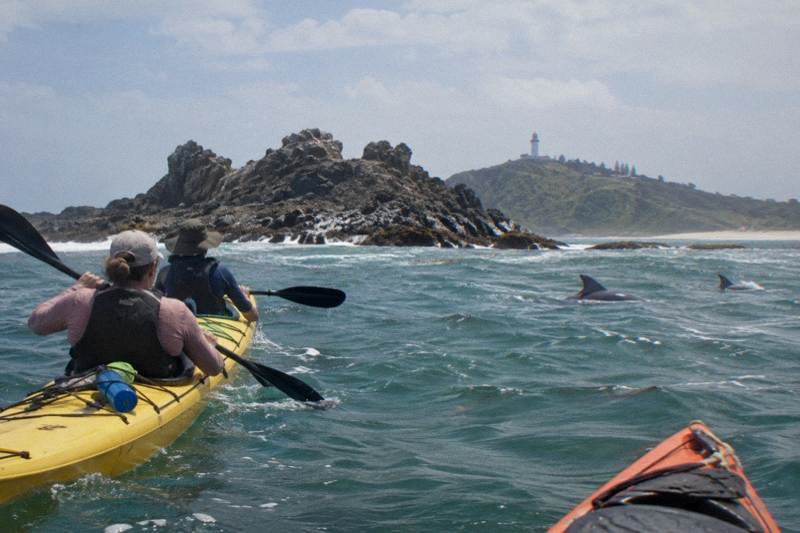
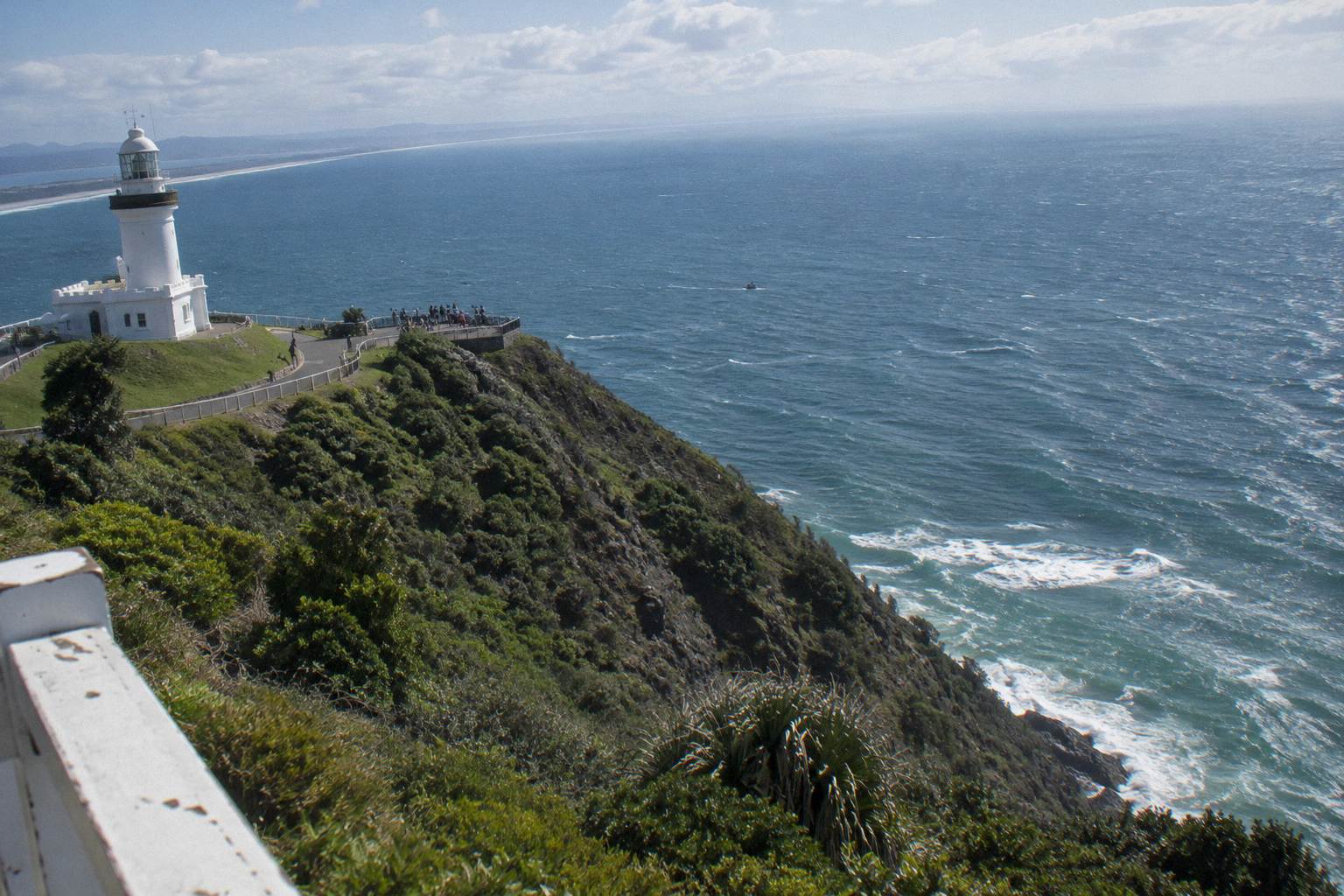
The kayak tours in Byron Bay look for dolphins, turtles and, in the migration season, humpback whales. Cape Byron Kayaks says dolphins appear on over 90% of its tours from a resident pod of around 300; Go Sea says dolphins appear on most tours. Whales are a June-to-November bonus, never guaranteed. NSW law keeps kayaks at least 50 m from dolphins and 100 m from whales.
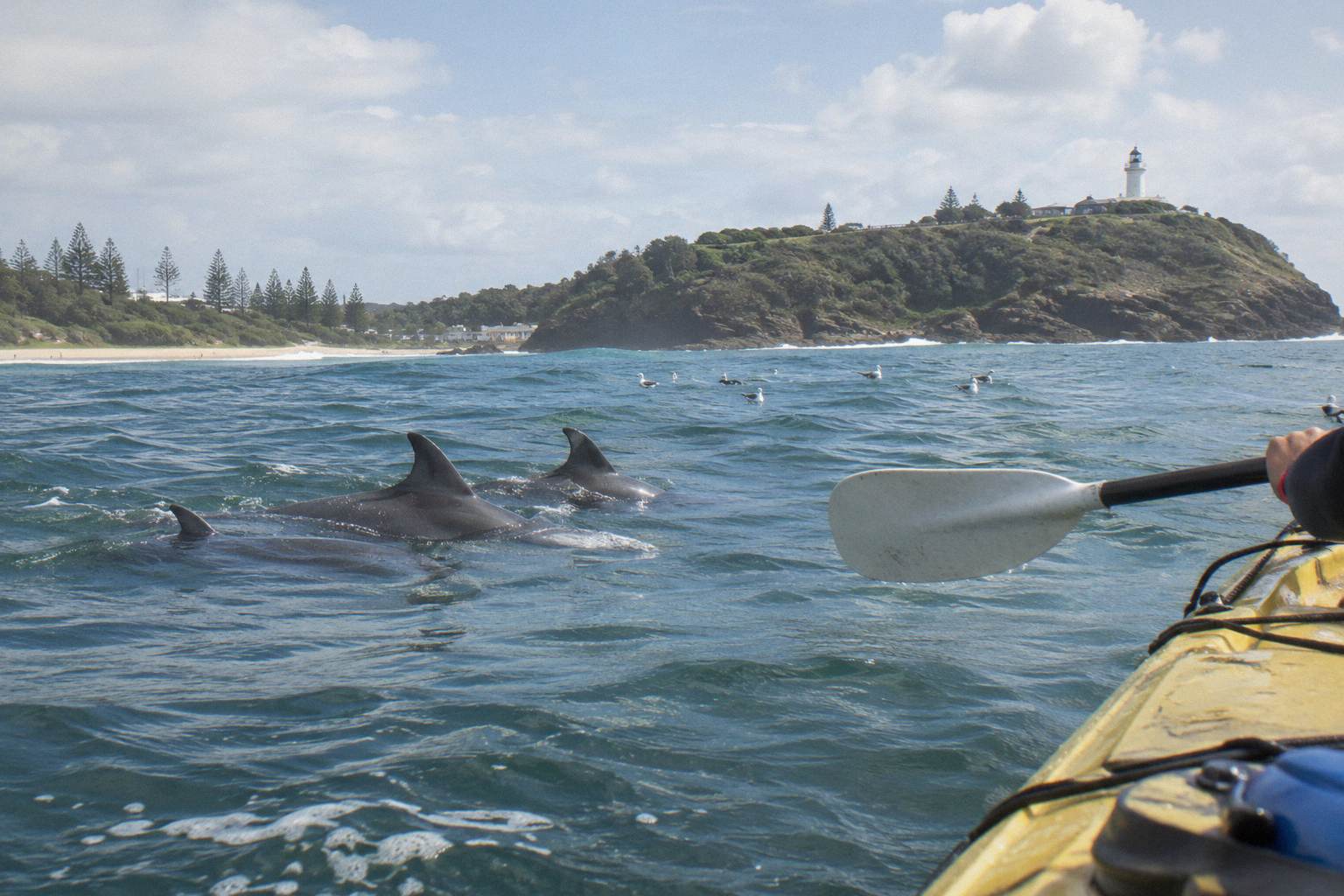
Dolphins are the reason most people book a kayak in Byron Bay, and the town has two operators built around them: Go Sea Kayak Byron Bay and Cape Byron Kayaks, both running guided paddles along the cape with surf lifesaver guides. The dolphins themselves are described by both operators as resident and around all year, which is what separates this paddle from whale watching, a strictly seasonal activity. The NSW National Parks and Wildlife Service names the drawcards plainly on its own tour pages: "playful dolphins, sea turtles, and, during migration season, majestic humpback whales" (see the NPWS Byron Bay sea kayak page).
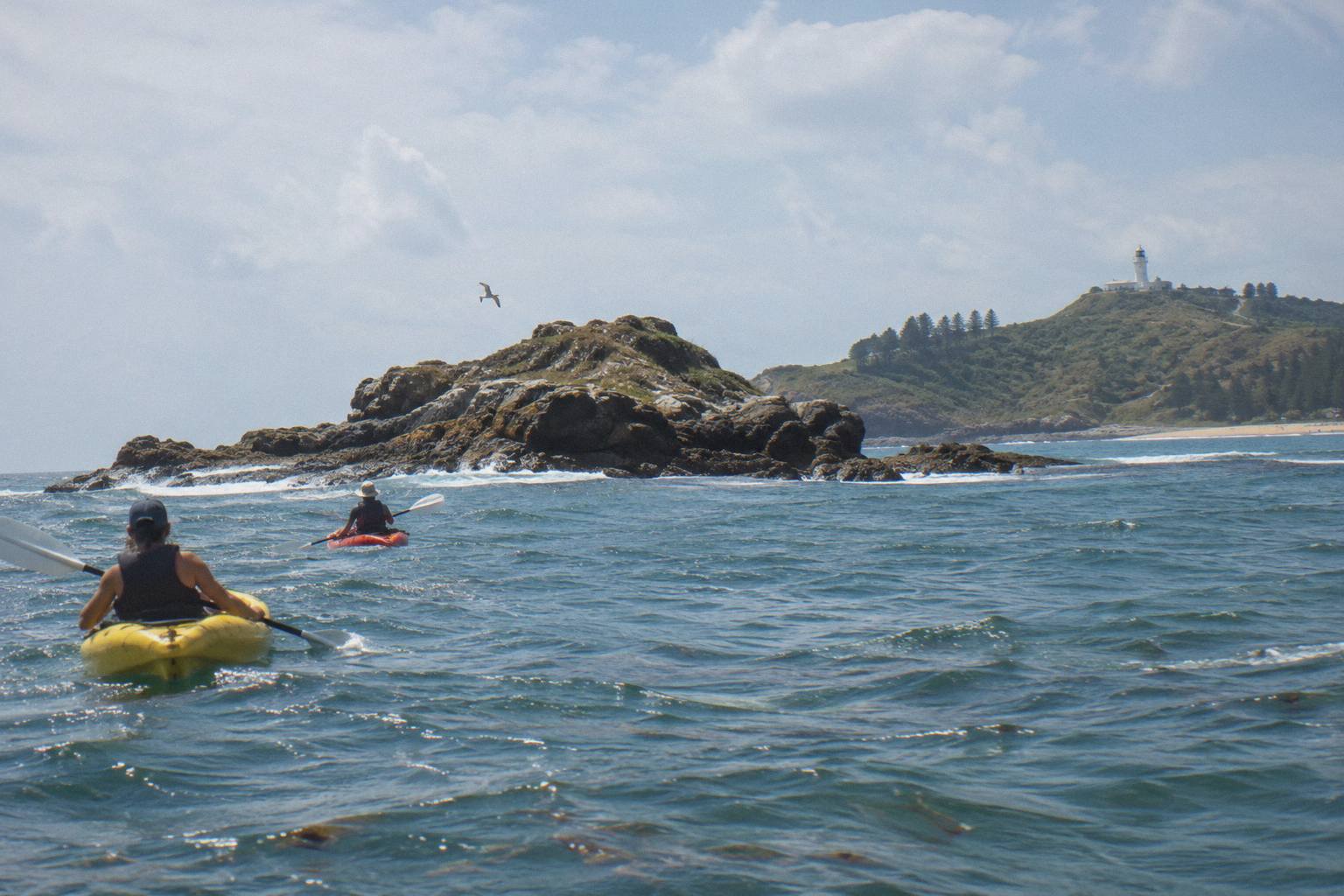
What the tours can promise is narrower than what people hope for. Neither operator guarantees a dolphin on the day. Both run a free return tour instead if the wildlife does not appear, and both operate inside NSW approach rules that decide how close a kayak may legally drift to a dolphin or a whale. That combination, honest operator claims plus firm legal distances, is what a would-be paddler actually needs to understand before booking.
| Quick fact | What the sources say |
|---|---|
| Main animals | Dolphins, turtles, humpback whales in season (NPWS wording) |
| Dolphin status | Resident and year-round, per both operators |
| Cape Byron Kayaks claim | Dolphins on over 90% of tours; pod of around 300 |
| Go Sea claim | "On most tours we spot dolphins" |
| Whale season | May to November per Cape Byron Kayaks; early June to late October per Go Sea's whale page |
| Legal distance | 50 m to a dolphin, 100 m to a whale (NSW Environment and Heritage) |
| Guarantee | Free return tour if wildlife is missed, per both operators; never a refund |
For choosing between the paddles, the side-by-side at Byron Bay Dolphin Kayak is the place to start, and the dolphin-focused pages linked below cover timing, launch points and what to wear.
Which Animals Do The Kayak Tours Look For?
The Byron Bay ocean kayak tours look for three kinds of animal: dolphins, turtles and humpback whales. That short list comes straight from NPWS, which names "playful dolphins, sea turtles, and, during migration season, majestic humpback whales" as local wildlife. Neither operator names a dolphin or turtle species, so any deeper identification is not something a booking page can confirm.
That may feel thin for a wildlife page, but it is the honest shape of it. The operators describe what their guides look for, and what they look for is dolphins first, with whales as the seasonal headline act and turtles as the surprise bonus. Go Sea's booking page puts dolphins and turtles in the tour title itself. Cape Byron Kayaks describes meeting "our dolphin friends at Wategos Beach" and following the coastline out to the Cape. Those two place names, Wategos Beach and the Cape, are the only sighting locations the operator material gives, and they are worth remembering: the paddle hugs the coastline rather than heading out to open water.
What the sources do not say matters just as much. There is no stated best hour for sightings, no behaviour guide, no animal counts beyond the pod figure, and no species identification anywhere in the operator or NPWS material. A reader who wants to know whether the dolphins are a particular species, or how big the turtles grow, will need to ask the guide on the day. The wildlife pages on this subject stay deliberately at the level the sources support; the broader picture of what swims past a kayak in these waters is covered in the marine wildlife you see from a kayak guide.
For planning purposes the three-animal list is enough. Dolphins are the year-round core product, turtles are a spoken-of extra that Go Sea's own guarantee even covers, and whales turn the winter paddle into something bigger, covered in the Byron Bay whale watching season guide. If all three appear on one paddle, that is a good day, not a contractual outcome.
| Animal | Status in operator wording | Season per the sources |
|---|---|---|
| Dolphins | Resident pod, core of both tours | Year-round, both operators |
| Turtles | Named by NPWS and in Go Sea's tour title and guarantee | Not stated |
| Humpback whales | "Often spot whales" in season, per Go Sea | Cape Byron Kayaks: May to November; Go Sea: early June to late October |
What Do The Operators Actually Say About Dolphin Sightings?
Cape Byron Kayaks says dolphins appear on over 90% of its tours, drawn from a resident pod of around 300. Go Sea says simply that dolphins are spotted on most tours. Neither claim is a guarantee: Cape Byron Kayaks' own FAQ answers "Do you always see dolphins?" with "No", and both operators back the promise with a free return tour rather than a refund.
The wording deserves to be read as written. Cape Byron Kayaks' home page says "We see dolphins on over 90% of our kayak tours", and its FAQ expands this to "a pod of around 300 resident dolphins, and we see them on approx. 90% of the tours" (Cape Byron Kayaks FAQ). Go Sea's FAQ takes the softer line: "On most tours we spot dolphins and from June to November, we often spot whales" (Go Sea FAQ). Two different framings of the same ocean, and a traveller should not flatten them into one number.
The guarantee is the safety net for the roughly one-in-ten miss. Cape Byron Kayaks offers a free return tour if no dolphins or in-season whales appear: non-expiring, non-transferable, rebooked by phone with a card hold. Go Sea's version, the Go Sea Guarantee, says that "if you don't see a Dolphin, Turtle or Whale you can paddle with us again for Free". Note the differences: Go Sea counts turtles in the guarantee, and both stop short of money back. The cancellation detail behind these policies is laid out in full in the what happens on a Byron Bay kayak tour guide.
Between those two dolphin tours, the choice often comes down to the fine print rather than the dolphins. The Guided Dolphin Kayak tour with Cape Byron Kayaks runs about 2.5 hours from check-in at Shed 2 opposite 60/62 Lawson Street, rated 4.4 across 402 reviews on its booking page, with a stated minimum age of 5 and a firm no-non-swimmers rule. Its own page says the tour leaves from Clarkes Beach. Go Sea's ocean tour, by contrast, accepts non-swimmers who tell the guide, carries a from AUD 59 per person price that moves with the date, and is rated 4.6 on its booking page. The side-by-side comparison of the two lives in the sea kayak tours compared guide.
One boundary neither tour crosses: swimming with dolphins. Cape Byron Kayaks says it plainly, citing "strict rules about approaching wild animals in NSW", and its paddlers observe the dolphins from the kayaks. No tour on the books here puts a swimmer in the water beside a dolphin, and the question of whether that is even possible in Byron Bay has its own answer in the swimming with dolphins post.
When Are Whales Around, And Are They Ever Part Of The Paddle?
Whales are a seasonal overlay on the dolphin paddle, and the season differs by operator: Cape Byron Kayaks says May to November on one page and June to November elsewhere, naming humpbacks and southern rights. Go Sea says early June through late October on its whale page and June to November in its FAQ. No kayak tour promises a whale, and both free-return guarantees cover whales in season.
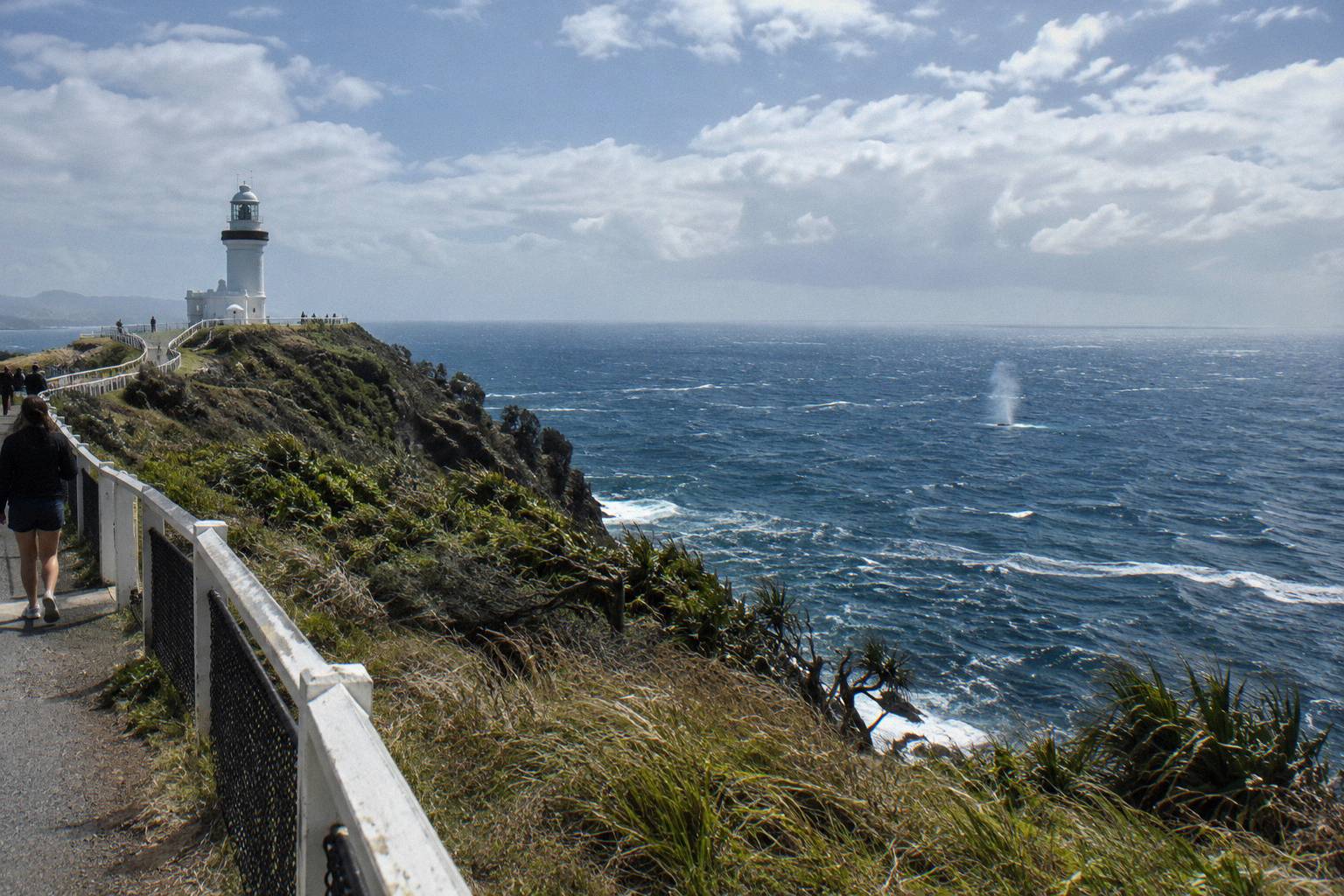
The mismatched months are not a typo to be smoothed over; the two operators genuinely publish different windows, and the honest move is to quote each one as its own. A traveller booking the edges of the season, late May or early November, should ask the operator directly whether whales are still passing. The dedicated whale boat tour lists June to November and departs from Ballina, about 30 minutes south of Byron Bay, a different proposition covered in the kayak or boat for whales comparison.
What the whale months add up to on the water is simple: the same dolphin paddle, in the same double sit-on-top kayaks, with a chance of something much larger passing further out. NSW law keeps kayaks 100 m from a whale, so the encounter is always at a distance. Go Sea's sunrise departures, which it restricts to near-perfect conditions with marine park approval, are a scheduling footnote rather than a whale tactic; the seasonal timing question is unpacked in the best time to see dolphins guide.
Booking the dolphin paddle for a whale-month date is a reasonable bet with the right expectations. The Cape Byron Kayaks tour carries its free return guarantee for dolphins or in-season whales, check-in is 15 minutes before departure at the Lawson Street shed, and under-16s paddle one-to-one with an adult. Availability on any given date is the thing to confirm early; the button above goes straight to the calendar. Rain does not stop these tours, only unsafe wind or large swell, and the swell and cancellations guide explains how those calls are made.
How Close Can A Kayak Get To Dolphins And Whales?
NSW law counts a kayak as a vessel, which sets the minimum approach distance at 50 m for a dolphin and 100 m for a whale, with caution zones extending 150 m and 300 m. Inside a caution zone a kayak must not approach from behind or wait in front, must approach from the side at least 30 degrees off the animal's direction of travel, and must hold slow speed. Only three vessels may share a caution zone at once.
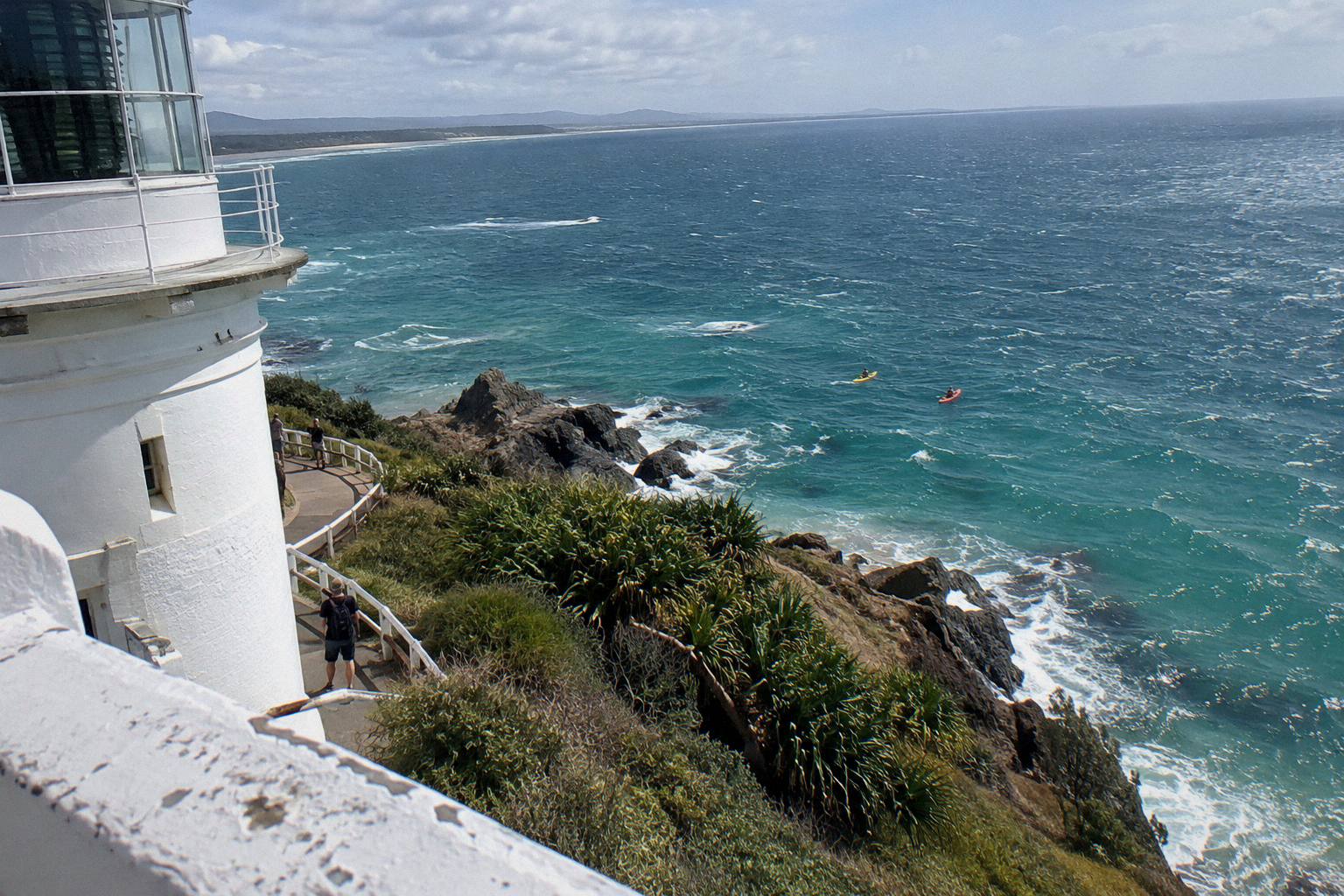
These figures come from the NSW Environment and Heritage page on approach distances for whales, dolphins and dugongs, which explicitly defines a vessel to include "non-motorised boats, surfboards, surf skis and kayaks". That definition is the whole ball game for a paddler: the gentle-sounding rules for boats apply identically to a plastic double kayak with a guide in the back. The guided tours handle compliance themselves, which is one quiet argument for going guided rather than solo in these waters.
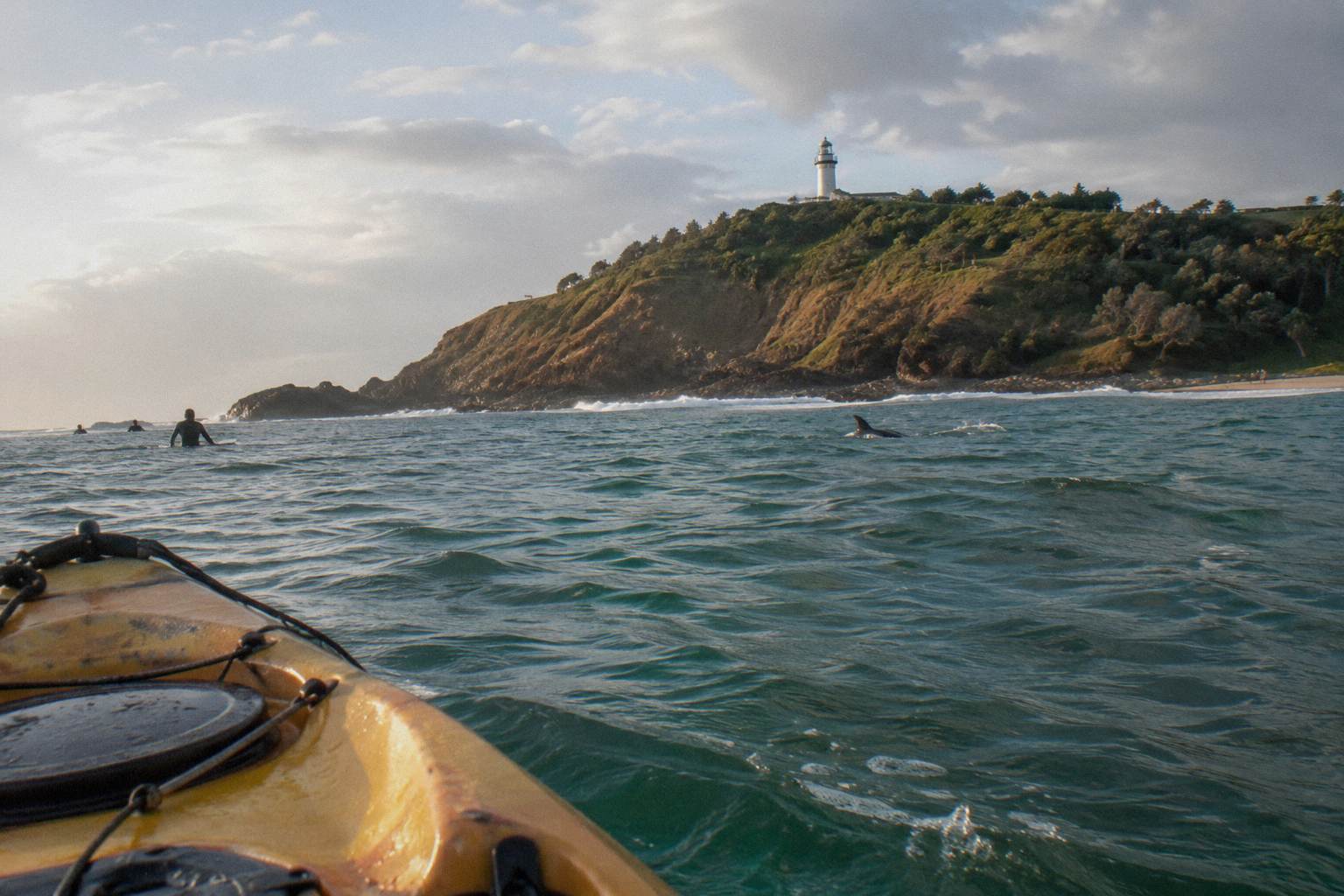
Two special cases in the rules surprise people. If dolphins choose to bow-ride, a vessel must keep its course and speed rather than steering away or slowing abruptly. And a mostly white whale, dolphin or dugong carries a 500 m buffer. Swimmers face their own numbers: entry to the water is barred within 50 m of a dolphin or 100 m of a whale, and once in the water a swimmer must keep 30 m from any of them, calf included. Drones must stay 100 m away.
The full rulebook for paddling these waters, including the marine park zoning that sits underneath the approach distances, is laid out in the Cape Byron Marine Park kayak guide. The short version for a dolphin-tour customer: the guide makes the decisions, the distances are legal minimums rather than suggestions, and no tour operator may promise a closer look.
For paddlers who like the look of the Go Sea ocean tour after reading the rules, the practical details are friendly ones: from AUD 59 per person on the booking page, about 2.5 hours on the water, minimum age 5, check-in opposite 58 Lawson Street at Shed 1 at least 20 minutes before departure. The tour runs daily all year, weather permitting, with wetsuits supplied in the cooler months.
Which Trip Fits Which Traveller?
A confident swimmer who wants the dolphin paddle at the cape books either ocean tour. A non-swimmer or a nervous first-timer should head to Go Sea's ocean tour, which accepts non-swimmers, or to the Brunswick River tours, which Go Sea recommends for them. Families with children under 5 have the river tours from age 3. Travellers chasing calm, flat water have the river and stand up paddle trips out of Brunswick Heads.
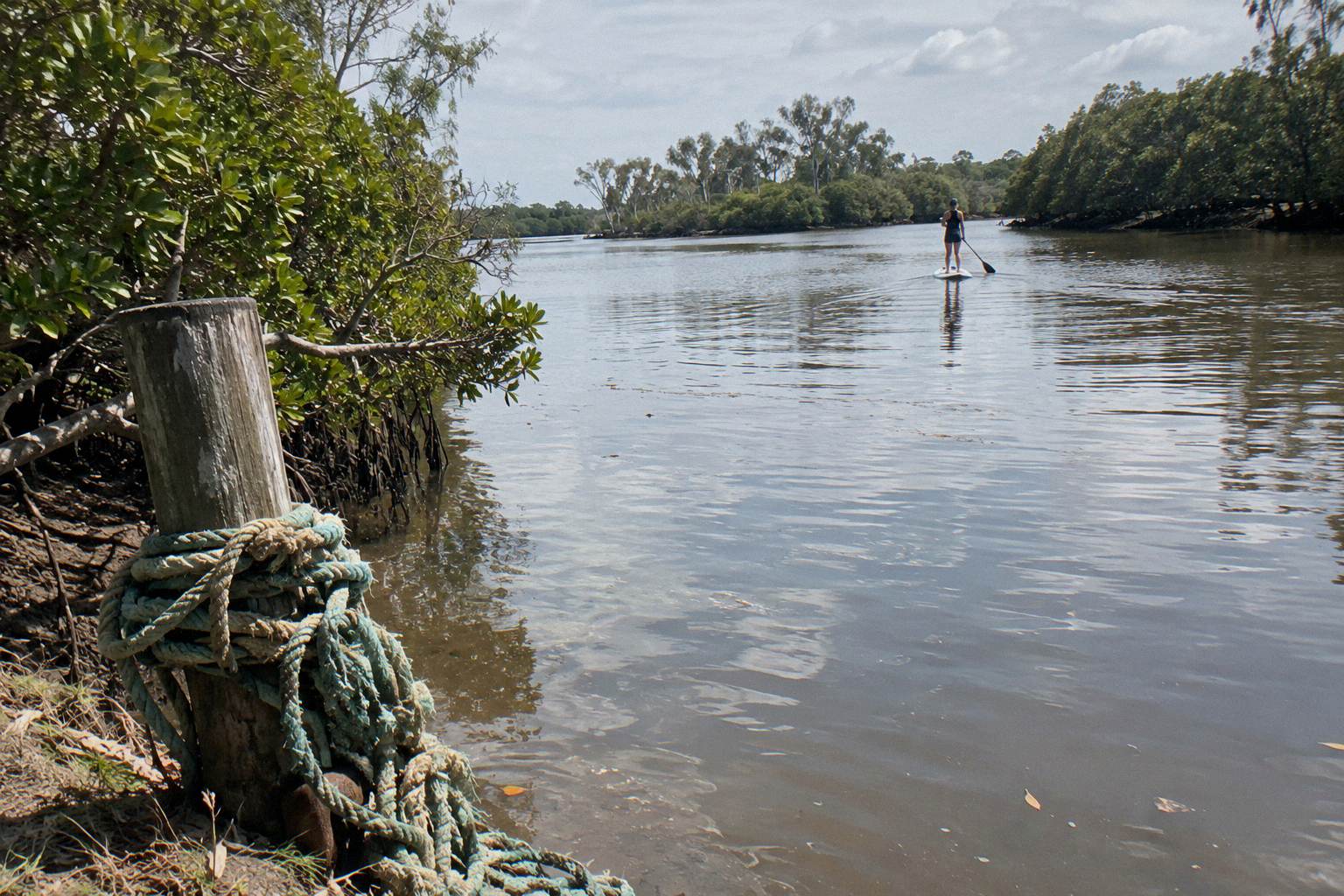
The fork in the road is the swim rule, and it differs sharply between the two ocean operators. Cape Byron Kayaks does not take non-swimmers at all and requires participants 16 and over to swim 25 m unassisted; confident open-water swimming is expected, and a non-swimmer who turns up is escorted back without a refund. Go Sea accepts non-swimmers who tell the guide, with life jackets for everyone. That single policy difference sorts most groups, and the full picture is in the can non-swimmers do the tour post.
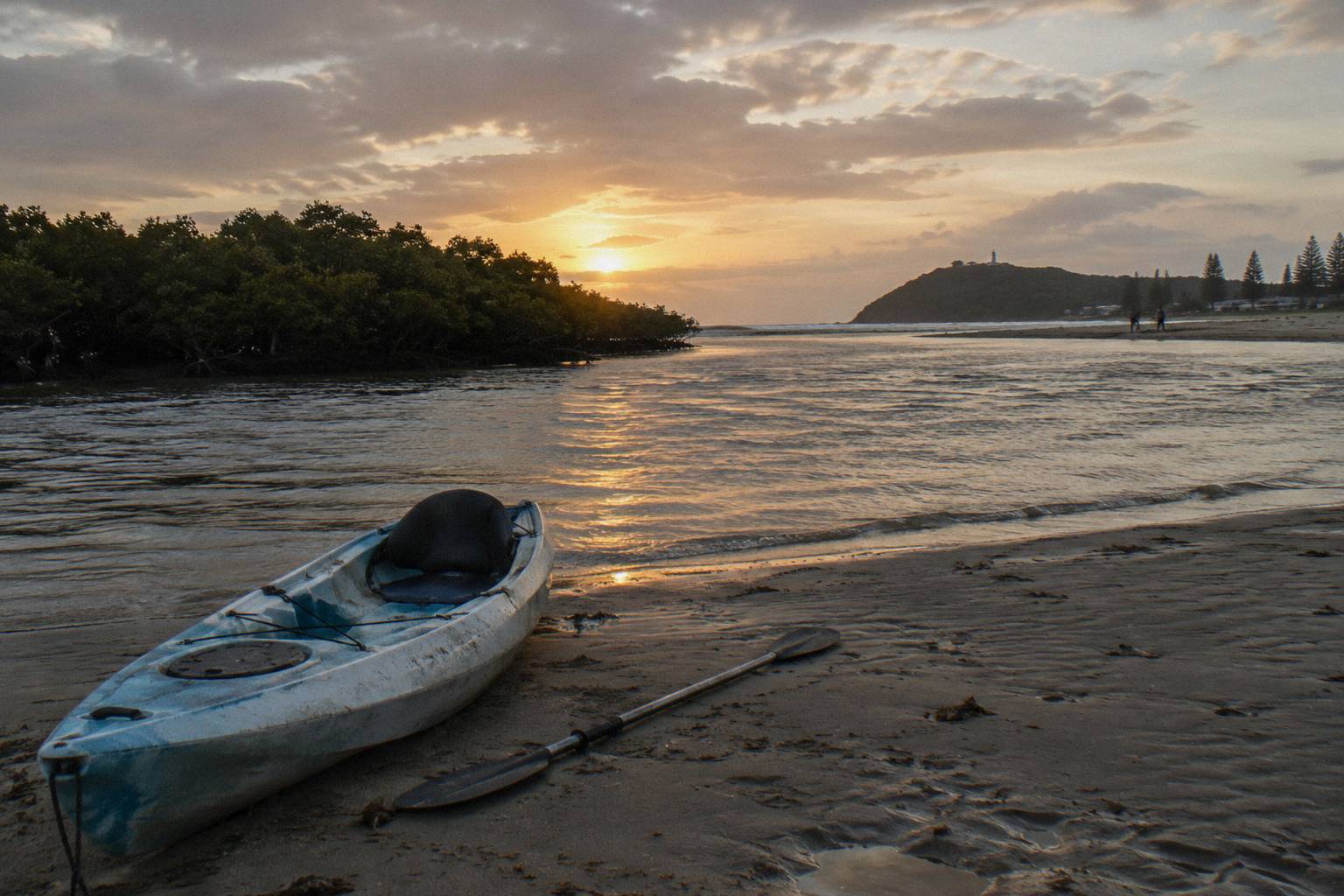
The river trips are a different day out entirely. Both run about 2 hours from Brunswick Heads, the scenic tour meeting at the Scout Hall on South Beach Road and the sunset tour meeting riverside of the same hall, with a minimum age of 3 and no surf launch. Neither carries a printed price or rating; ask the operator when booking. The stand up paddle nature tour, also from Brunswick Heads with the meeting address given after booking, runs about 2 hours, minimum age not stated, and is rated 5.0 across 391 reviews on its booking page.
| Traveller | Best fit | Why |
|---|---|---|
| Confident swimmer chasing dolphins | Either ocean tour | Both run the cape paddle with dolphin focus |
| Non-swimmer | Go Sea ocean tour or river tours | Go Sea accepts non-swimmers; it recommends its river tour for them |
| Family with a 3 or 4 year old | Brunswick River tours | Minimum age 3, flat water |
| Family with children 5 to 15 | Either ocean tour | Age 5 minimum; Cape Byron Kayaks needs 1 adult per child under 16 |
| Whale-month visitor | Ocean tour in season, or the Ballina boat | Free return tours cover in-season whales; the boat departs Ballina |
| Flat-water wildlife lover | Sunset river paddle | About 2 hours on the Brunswick River |
Older travellers and anyone with a bad back should read the operators' health wording closely before choosing. Cape Byron Kayaks asks for a reasonable level of fitness and lists back, neck, shoulder, hip and heart conditions and pregnancy as participate-at-own-risk; Go Sea says kayaking is not recommended after 15 weeks pregnancy, and NPWS calls its tour medium difficulty, not recommended for chronic back injury. The details sit in the older travellers and bad backs post, and any medical question deserves a word with a doctor and a note to the operator at booking.
The sunset river paddle suits the traveller whose priority is a calm water finish to the day rather than a surf launch: about 2 hours on the Brunswick River, meeting at 40 South Beach Road in Brunswick Heads, from age 3 up. It is a Go Sea trip, guided, with no ocean swell involved.
Common Mistakes When Planning A Dolphin Kayak Tour
The mistakes that cost people are booking the wrong operator for their swimming ability, arriving at the wrong shed on Lawson Street, expecting a refund when no dolphins appear, and assuming whales are part of a dolphin tour outside the migration months. Each is avoidable with a minute of checking: the swim rules, the check-in addresses, the guarantee terms and the operator's own whale-season wording.
The swim-rule mistake is the most expensive. A non-swimmer who books Cape Byron Kayaks discovers the 25 m requirement at the beach, is escorted back, and receives no refund under the operator's stated policy. The check-in mistake is smaller but stressful: the two operators use different sheds opposite different Lawson Street addresses, Go Sea at Shed 1 opposite number 58 and Cape Byron Kayaks at Shed 2 opposite 60/62, and both want paddlers present 15 to 20 minutes early. The launch-point question, including why neither operator page names Main Beach, is settled in the Clarkes Beach or Main Beach meeting point guide.
The guarantee mistake is the most common misunderstanding of all. Free return tour means exactly that: another date, booked by phone, non-expiring and non-transferable at Cape Byron Kayaks. It never means money back at either operator. The weather mistake runs the other way: rain alone does not cancel these tours, and Cape Byron Kayaks jokes that dolphins are always wet, so a cloudy forecast is not a reason to stay ashore.
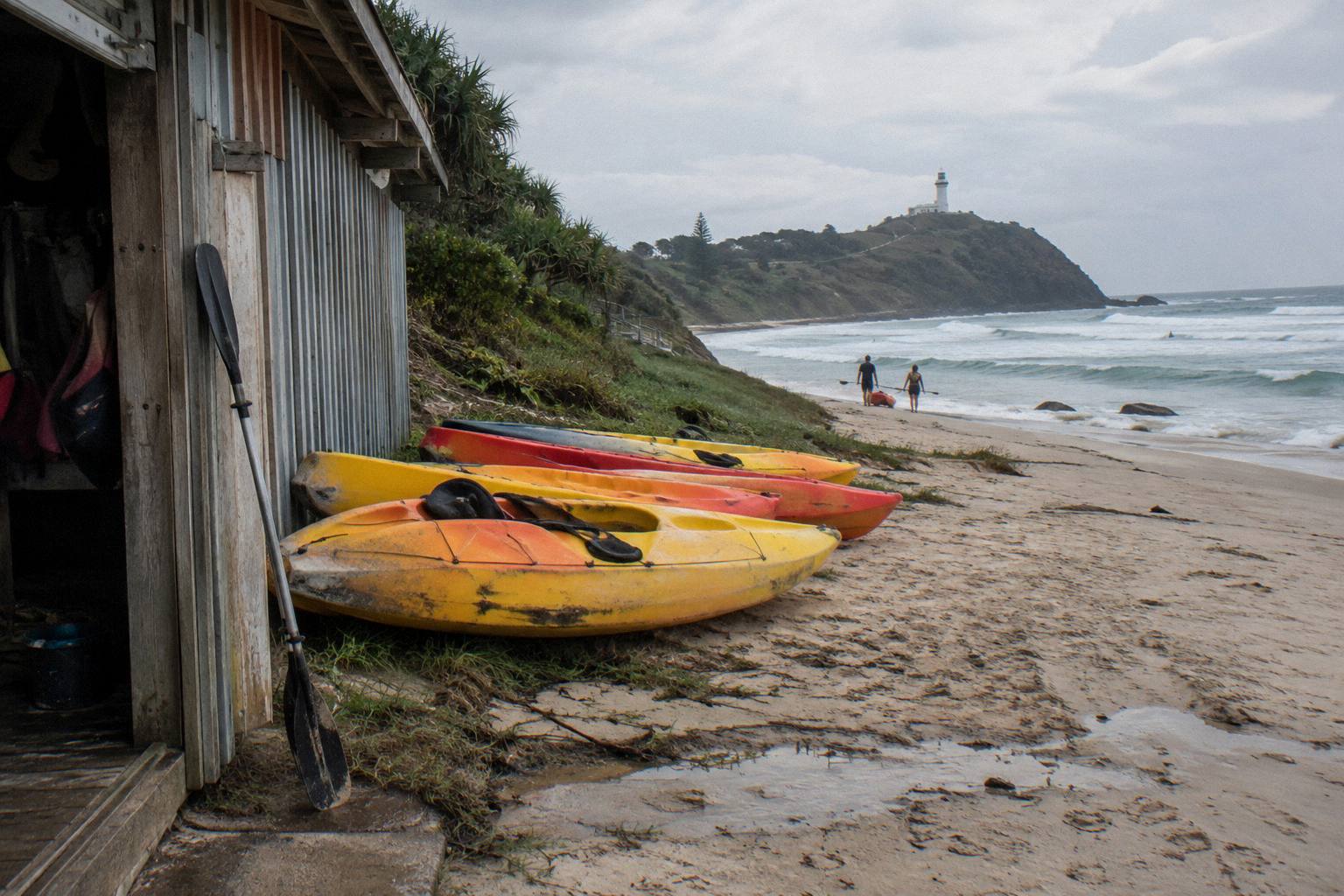
The last mistake is dressing for a boat cruise. Go Sea's FAQ answers "Will I get wet?" with "100% YES", and both ocean tours launch and land through the surf zone. Bathers, a towel, sunscreen, a hat and a change of clothes are the stated kit, with wetsuits supplied by the operators in the cooler months. The full list, including camera advice, lives in the what to wear and bring guide.
What To Ask The Booking Desk Before You Pay
Five questions cover the gaps: whether whales are still passing on your exact date, what the swell forecast means for your morning, the child ratio if you are booking a family, what happens to your booking if the operator cancels for wind, and whether your group's swimming ability fits the operator's rule. Each has a stated answer or policy somewhere; none is guesswork once you ask.
Ask about the whale window first if you are travelling in the shoulder weeks, because the operators publish different months and only the operator can say what the current week looks like. Ask about conditions second: Go Sea cancels for unsafe wind or large swell and refunds direct bookings in full when it cancels, while Cape Byron Kayaks rebooks by phone, and knowing which applies to your channel avoids surprises. The kayak tour safety guide collects the operators' own safety wording in one place.
| Question to ask | Why it matters | Who has the answer |
|---|---|---|
| Are whales passing this week? | Seasons differ by operator: May or June start, late October or November end | The operator |
| What happens if you cancel for swell? | Go Sea refunds direct bookings; Cape Byron Kayaks rebooks | The operator, per channel |
| One adult per child under 16? | Cape Byron Kayaks ratio for under-16s | Cape Byron Kayaks |
| Can everyone in the group swim 25 m? | Firm rule for 16 and over at Cape Byron Kayaks; non-swimmers not taken | Both operators state their own rule |
| Where exactly do we check in? | Different sheds, opposite 58 and 60/62 Lawson Street | Booking confirmation |
Beyond the questions, the practical unknowns are small. Cape Byron Kayaks states no price on the pages available here, so ask for the current fare when you enquire. The river and stand up paddle tours likewise carry no printed price; both Brunswick River trips run about 2 hours from Brunswick Heads. None of that blocks a good decision, it just moves the conversation to the booking desk, which is where it belongs.
Families leaning toward the flat-water option can also weigh the scenic river tour: same operator, same about-2-hour duration, meeting at the Scout Hall garage on South Beach Road, minimum age 3. Between the scenic and sunset versions, the choice is simply timing.
Dolphins, turtles and seasonal whales, one resident pod, two operators with different rules, and a set of legal distances that keep the encounter at arm's length: that is the complete picture the sources support, and it is enough to book well.
Common Questions About Byron Bay Dolphins
Are There Dolphins In Byron Bay?
Yes. Both kayak operators describe a resident dolphin population present year-round, and Cape Byron Kayaks puts the local pod at around 300 animals. NPWS names dolphins among the local wildlife on its Byron Bay tour pages.
Will I See Dolphins On A Byron Bay Kayak Tour?
Probably, but never certainly. Cape Byron Kayaks says dolphins appear on over 90% of its tours and simultaneously answers "No" to the question of whether that is every tour. Go Sea says dolphins are spotted on most tours. Both offer a free return tour if the wildlife does not appear.
What Time Of Year Are Whales In Byron Bay?
The operators differ: Cape Byron Kayaks says May to November on one page and June to November elsewhere, and Go Sea says early June through late October on its whale page and June to November in its FAQ. For the shoulder weeks, ask the operator directly.
Can You Swim With Dolphins In Byron Bay?
Not on any tour here. Cape Byron Kayaks cites strict NSW rules about approaching wild animals and its paddlers observe dolphins from the kayaks. NSW law also sets distance rules for swimmers in the water near dolphins. No tour on this site offers swimming with dolphins.
How Close Does The Kayak Get To The Dolphins?
NSW law sets a 50 m minimum approach distance from a dolphin for any vessel, a category that includes kayaks, with a 150 m caution zone around the animals. If dolphins come to the kayak and bow-ride, the rule is to keep course and speed. The guides manage all of this on the water.
What Happens If No Dolphins Appear On The Day?
Both operators offer a free return tour: Cape Byron Kayaks' version is non-expiring and non-transferable and covers dolphins or in-season whales, and Go Sea's Go Sea Guarantee covers a dolphin, turtle or whale miss. Neither operator refunds the fare for a wildlife miss.