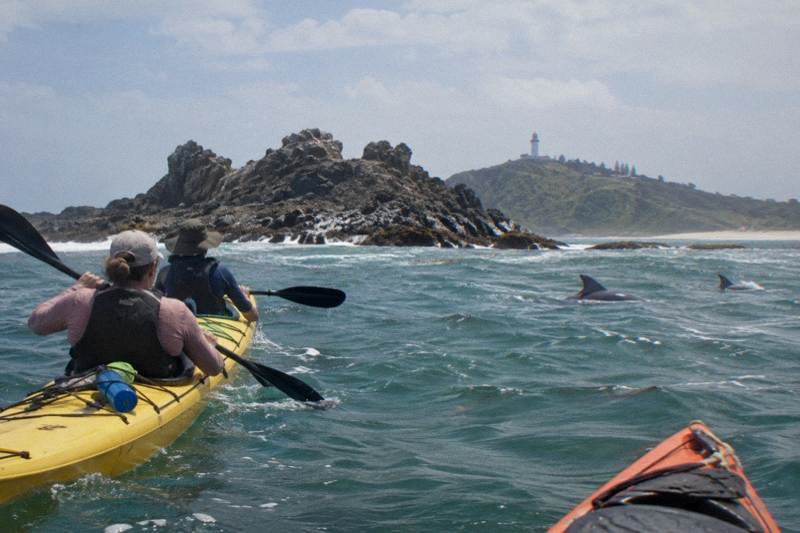
Byron Bay Marine Wildlife From A Kayak: Dolphins, Turtles, Rays And Whales
Dolphins, turtles and migrating humpbacks are the three animals the Byron Bay kayak operators and the National Parks service actually name. What each operator claims, what the rules allow, and which tour fits which wildlife hope.
Short answer
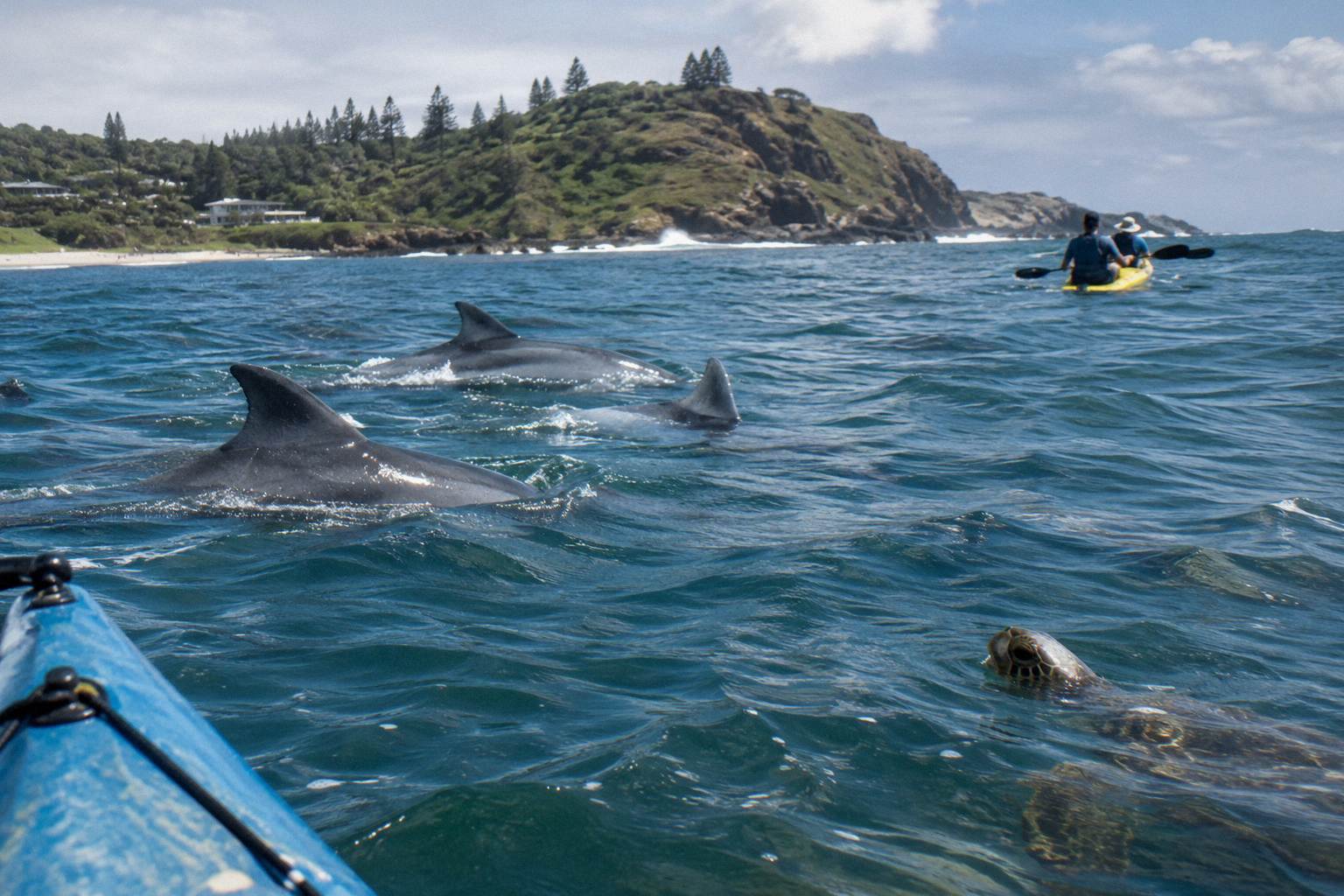
The wildlife named for Byron Bay kayak tours is dolphins, sea turtles and, in migration season, humpback whales. Cape Byron Kayaks says dolphins appear on over 90% of its tours; Go Sea says dolphins on most tours and whales often from June to November. NSW rules keep kayaks at least 50 m from dolphins and 100 m from whales.
For the full picture of how the tours compare, see the Byron Bay sea kayak tours compared breakdown, and for the wider planning picture the kayaking Byron Bay planning guide.
| Fact | Detail |
|---|---|
| Wildlife named | Dolphins, sea turtles, humpback whales (operator and NPWS wording) |
| Dolphin claims | Cape Byron Kayaks: over 90% of tours; Go Sea: most tours |
| Whale season wording | Cape Byron Kayaks: May to November; Go Sea: early June to late October, elsewhere June to November |
| Kayak distance rule | 50 m to a dolphin, 100 m to a whale (NSW Environment and Heritage) |
| Guarantee | Free return tour with both operators, never a refund |
| Tours naming wildlife | Two ocean kayak tours plus a river option |
What Marine Wildlife Do The Byron Bay Kayak Tours Actually Name?
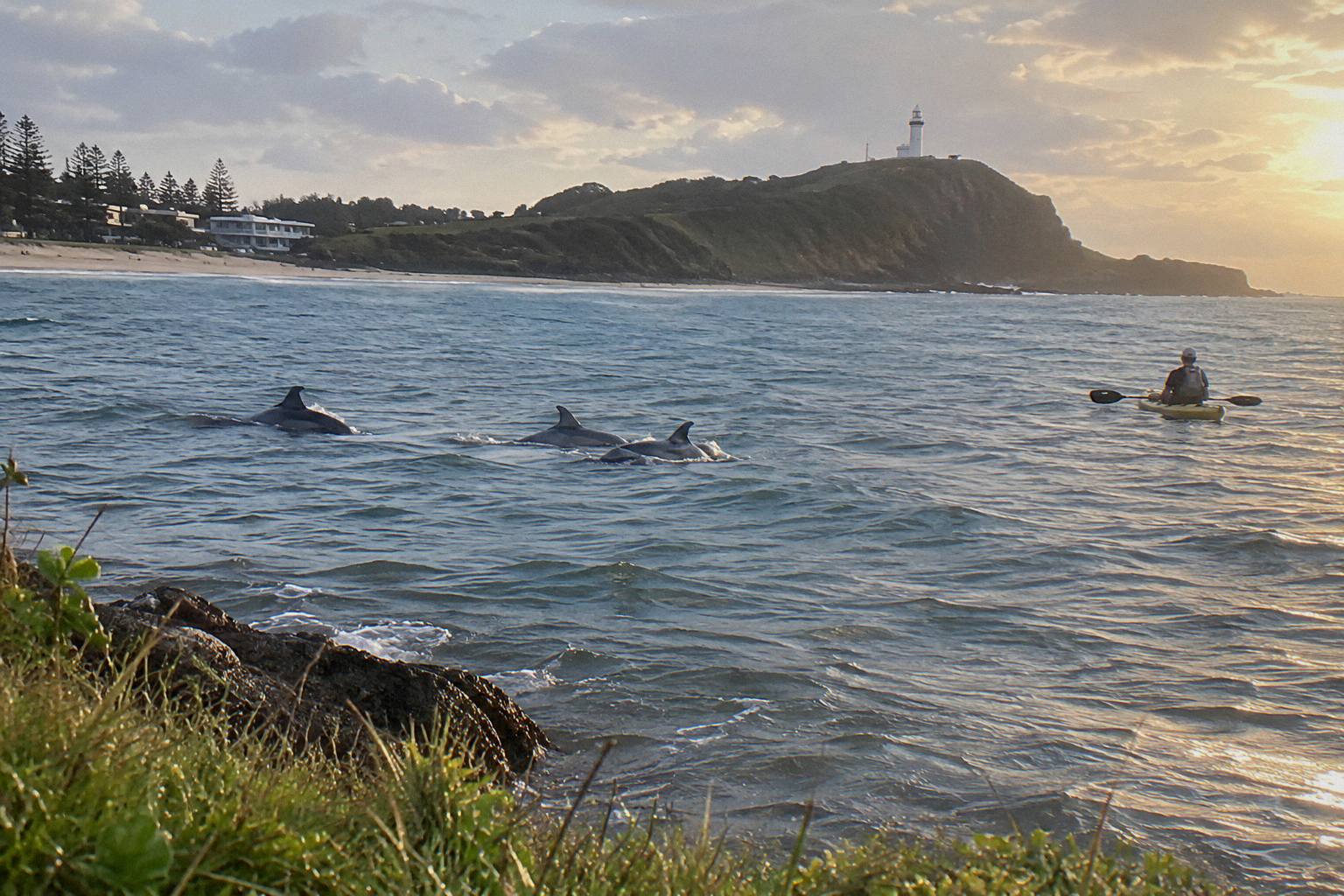
Three animals are actually named in the operator and National Parks wording for Byron Bay kayak tours: dolphins, sea turtles and humpback whales during migration season. The National Parks and Wildlife Service page for the Go Sea tour cites "playful dolphins, sea turtles, and, during migration season, majestic humpback whales," while Cape Byron Kayaks mentions dolphins and, in season, whales, and no source names any other animal for these ocean tours.
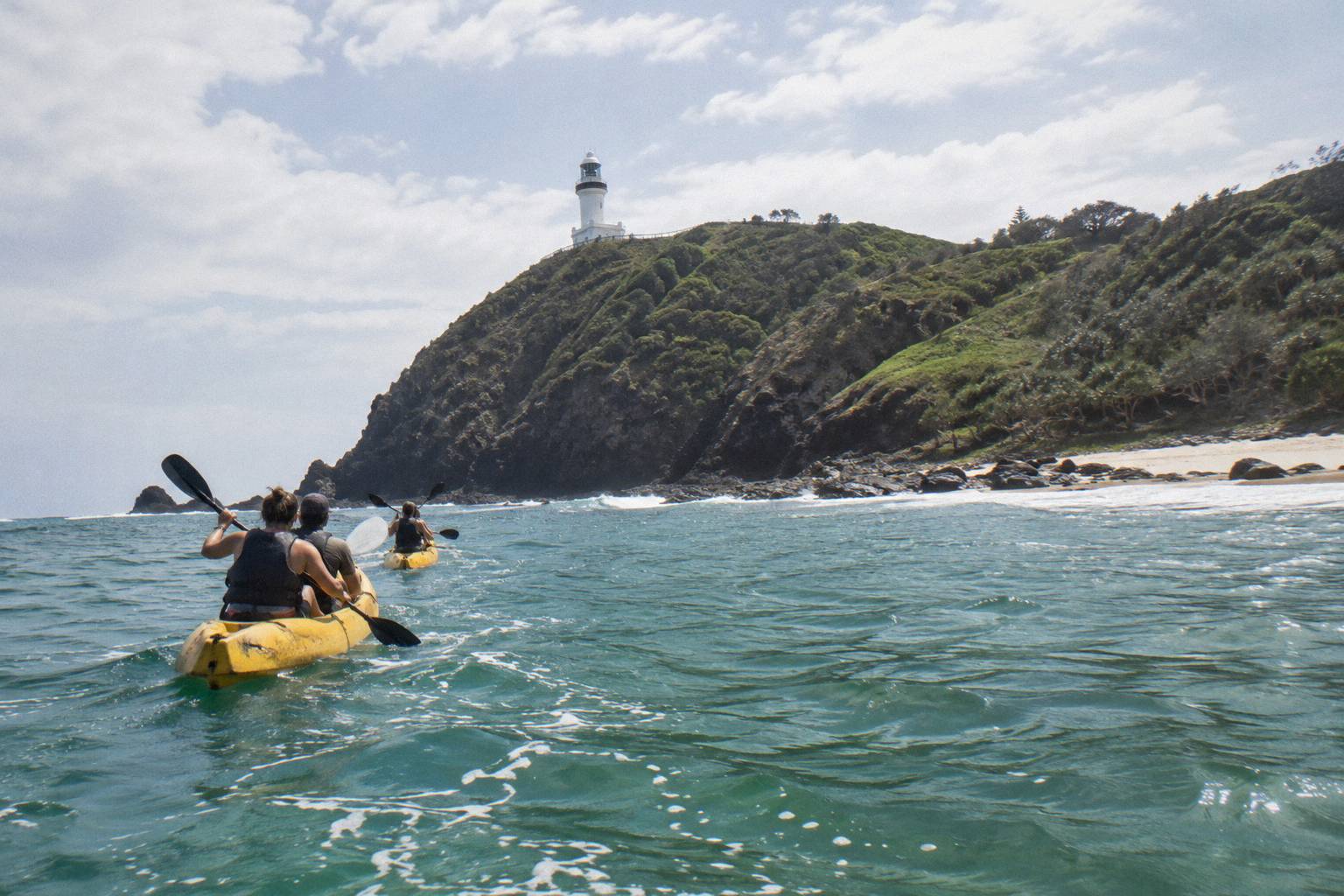
That is the honest starting point. A reader asking what else is out there is usually deciding whether the tour is worth booking, and the answer has to rest on what the operators and the parks service actually say rather than on hopeful embellishment. Go Sea's booking page title includes dolphins and turtles. Cape Byron Kayaks describes meeting its dolphin friends at Wategos Beach and following the coastline out to the Cape. Those are the geographic references the sources give, and they are the only ones.
The dolphin claims deserve their own reading, and the whale season wording differs between operators, so both get a full section below. Turtles are named by two of the three sources but with no counts, species or behaviour detail attached. Where a fact is not stated anywhere in the operator or official material, the right move is to ask the operator directly rather than to guess.
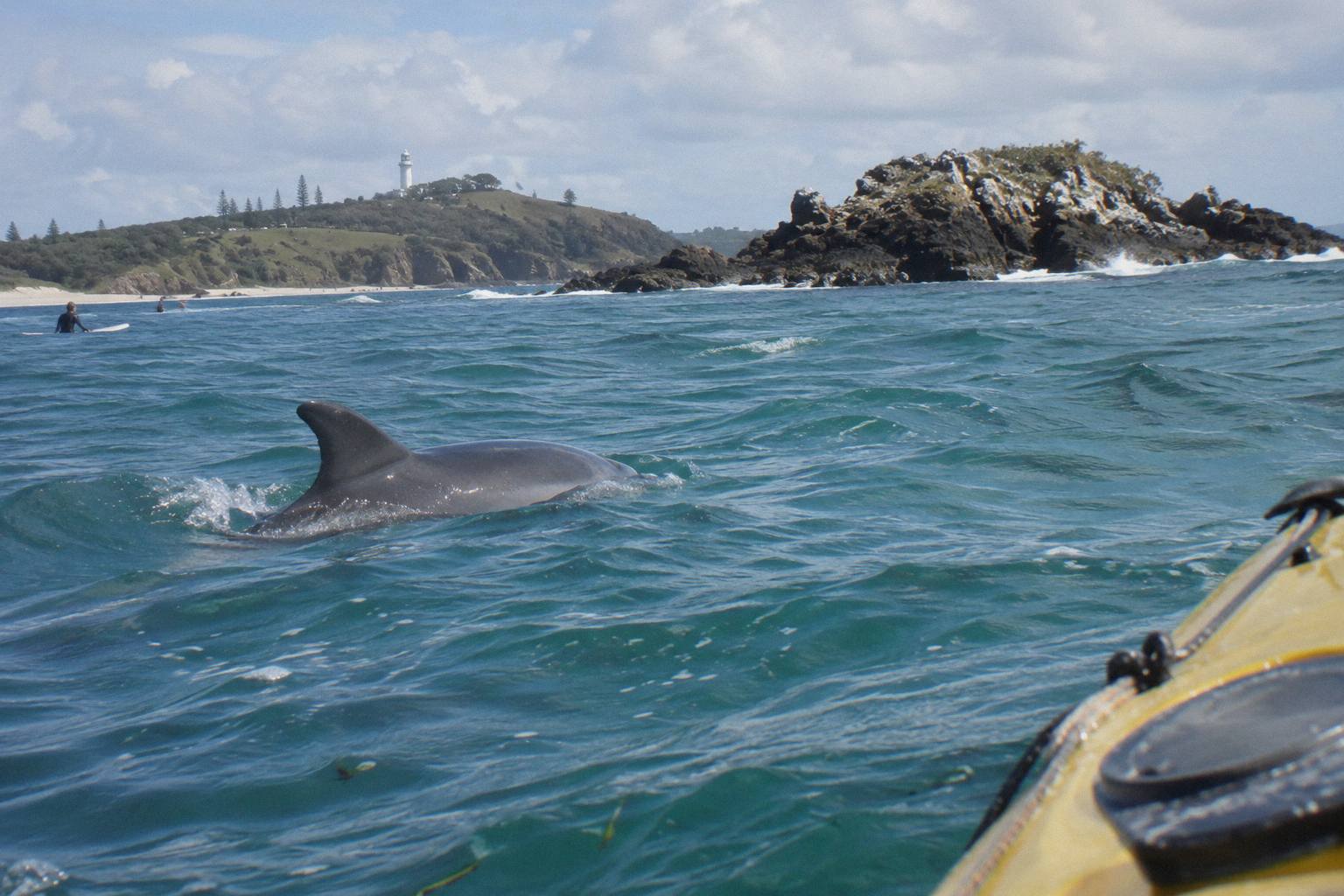
If the question behind the question is whether dolphins live in Byron Bay year round, the Byron Bay dolphins and humpback whales page covers what the sources say about the resident pod and the whale migration in one place.
What Do The Operators Actually Claim About Dolphins?
Cape Byron Kayaks says it sees dolphins on over 90% of its kayak tours and describes a pod of around 300 resident dolphins, while its own FAQ answers "No" to the question of whether dolphins are always seen. Go Sea says "on most tours we spot dolphins". Both are operator statements, not independent measurements, and neither amounts to a promise for any single day. Customer reviews on the operators' own sites show some tours with no dolphins in the water.
The two claims are close in spirit but different in form. Cape Byron Kayaks puts a number on it: over 90% on the home page, approximately 90% with the resident pod context in its FAQ. Go Sea keeps it qualitative. A paddler weighing the odds can take both at face value as the operators' own reporting of their season, which is exactly how they should be read.
The guarantee attached is the same in shape at both companies. If the wildlife does not appear, the answer is a free return tour: Cape Byron Kayaks offers a non-expiring, non-transferable return tour when dolphins, or whales in season, are missed, and Go Sea's guarantee lets you paddle again for free if you do not see a dolphin, turtle or whale. Neither is a refund. The details of what happens when the animals stay away are covered in the what happens if no dolphins appear guide.
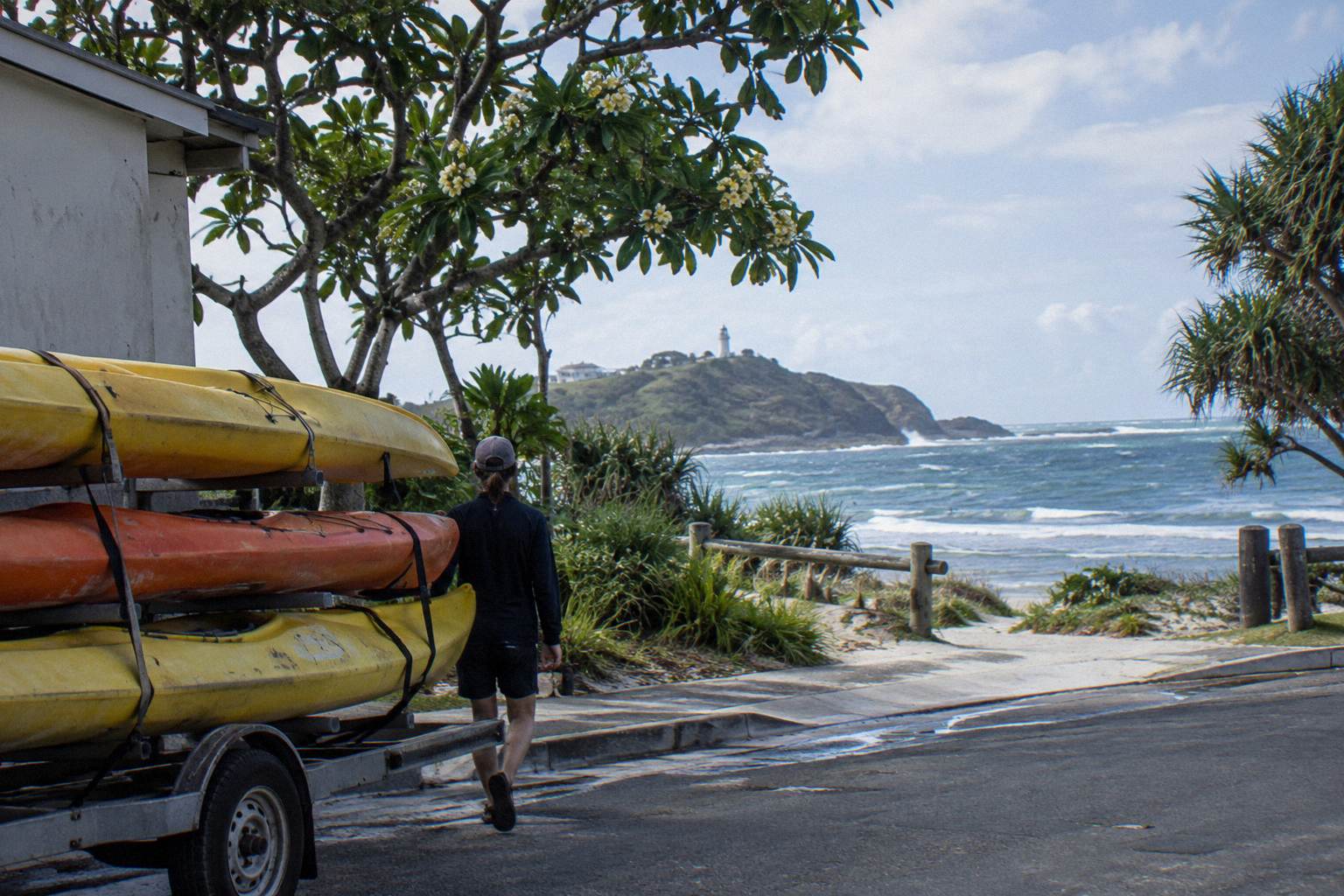
The two ocean tours that carry the dolphin claims are the Guided Dolphin Kayak by Cape Byron Kayaks, rated 4.4 across 402 reviews on its booking page, and the Go Sea Kayak Dolphins And Turtles ocean tour, from AUD 59 per person and rated 4.6 on its booking page. The from-price changes by date. Both check in at the Lawson Street sheds: Go Sea opposite number 58, Cape Byron Kayaks at Shed 2 opposite 60/62. Cape Byron Kayaks says its tour leaves from Clarkes Beach; the meeting-point detail is unpacked in the Clarkes Beach or Main Beach meeting point comparison.
When Are Whales Part Of A Byron Bay Kayak Tour?
Whales join Byron Bay kayak tours during migration season, roughly June to November, though sources differ: Cape Byron Kayaks says May to November (elsewhere June to November, naming humpbacks and southern rights), while Go Sea says early June through late October on its whale page and June to November in its FAQ, where whales are "often" spotted. No whale is ever promised on a dolphin kayak tour, but free return tours cover whales in season.
So the practical reading is a broad cold-month window, roughly June to October or November depending on whose page you read, with every operator framing whales as a seasonal possibility rather than a certainty. A paddler booking in, say, August can reasonably hope for whales on the ocean tours; a paddler booking in January should not factor them in at all. That is as far as the sources go. Nothing in the operator material names peak weeks, migration direction or calf timing.
For a dedicated whale trip rather than a dolphin tour that may include whales, the whale watching boat tour run by Out Of The Blue Adventures lists June to November and departs from Lance Ferris Wharf in Ballina, about 30 minutes south of Byron Bay, for about 2.5 hours on the water. That comparison, kayak versus boat for whales, is worked through in the whale watching by kayak or boat guide.
| Source | Whale season wording | Notes |
|---|---|---|
| Cape Byron Kayaks | "Whale season is May - November" | Elsewhere June to November, humpbacks and southern rights |
| Go Sea, whale page | "early June ... through late October" | Whales "often" spotted in the window |
| Go Sea, FAQ | June to November | Same operator, different page |
| Whale watching boat tour | June to November | Departs Ballina, about 2.5 hours |
After a paragraph on seasons, a note on the guarantee: the Cape Byron Kayaks return tour covers no dolphins or no whales in season, and Go Sea's guarantee covers dolphin, turtle or whale. Both are free return tours, non-refundable in form, and both need the standard cancellation notice to rebook.
For travellers whose main hope is dolphins specifically, the odds discussion above and the best time to see dolphins in Byron Bay guide pull the operator wording into one place, including the resident pod claim.
Are Turtles Named, And With What Detail?
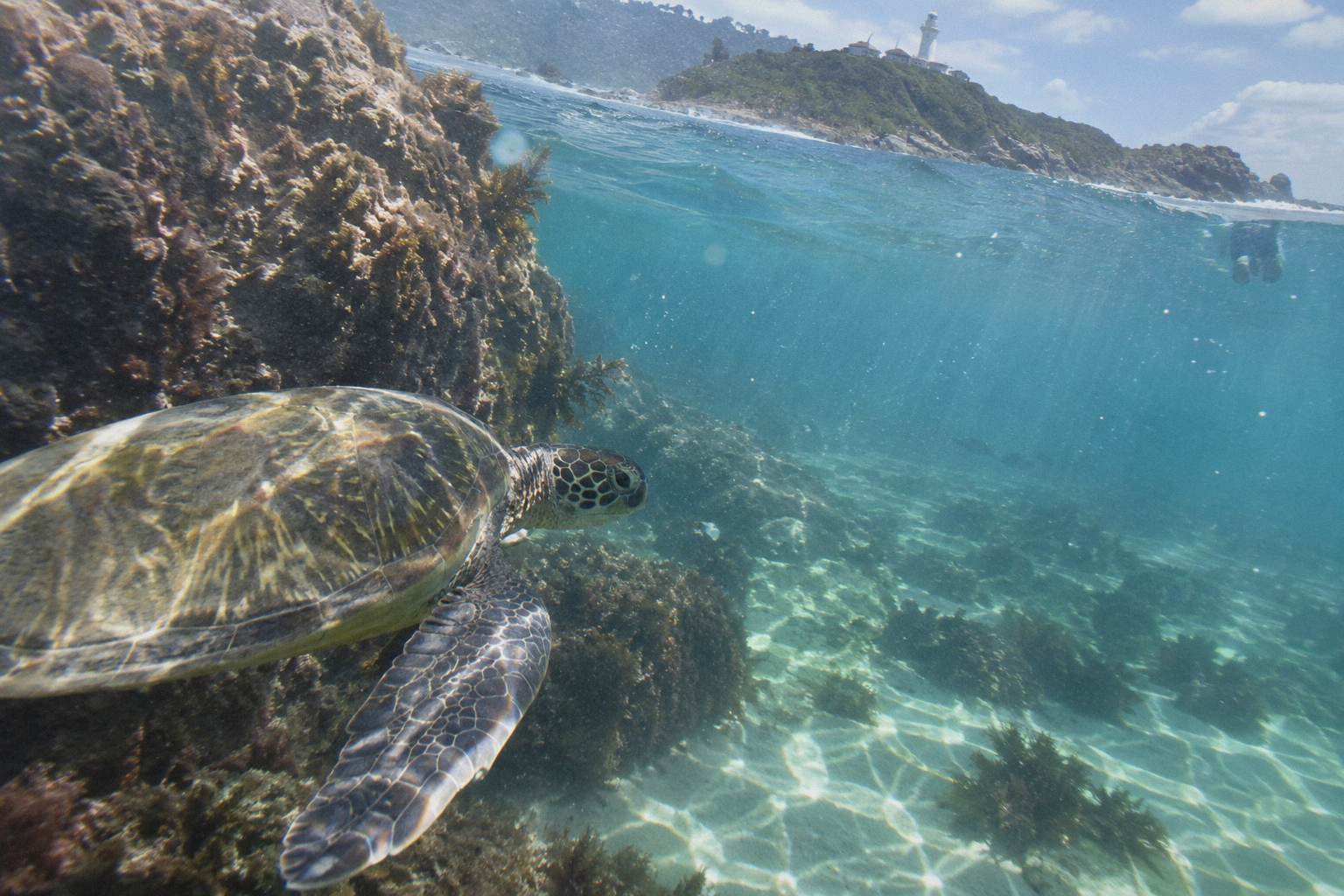
Turtles are named by two sources: the National Parks and Wildlife Service page for the Go Sea tour lists sea turtles as local wildlife alongside dolphins and humpback whales, and Go Sea's booking page title includes turtles, with the Go Sea guarantee naming turtle as one of the covered animals. No source gives a species, a count, a sighting rate, a behaviour or a location for turtles. Cape Byron Kayaks does not feature turtles in its dolphin tour wording.
So the turtle story is real but thin. A paddler on the Go Sea ocean tour can say turtles are part of the named wildlife and part of the guarantee; a paddler on the Cape Byron Kayaks tour is booking a dolphin-focused product where turtles are not part of the stated pitch. That distinction matters for anyone choosing between the two specifically because of turtles, and it is one of the few hard differences between otherwise similar tours.
What the sources do not say is just as relevant. There is no turtle species named, no seasonal pattern, no feeding or nesting detail, and no claim about how often turtles appear. The only guarantee wording is Go Sea's: paddle again for free if you do not see a dolphin, turtle or whale. Anyone who wants more than that should ask the operator when booking. The fuller picture of turtles as a booking factor is in the turtles on a Byron Bay kayak tour guide.
A short worked comparison by traveller type helps here. A family with young children whose hearts are set on a turtle sighting has one tour whose material names turtles: the Go Sea ocean tour, minimum age 5, from AUD 59. A solo traveller chasing the strongest dolphin odds as the operators state them reads the 90% claim at Cape Byron Kayaks, minimum age 5, price not stated, and weighs it against Go Sea's "most tours". A nervous or non-swimming paddler should note the two ocean tours differ sharply on swimming ability, a difference the can non-swimmers do a Byron Bay kayak tour post unpacks: Go Sea accepts non-swimmers with life jackets and a word to the guide, while Cape Byron Kayaks does not take non-swimmers and requires its over-16s, its FAQ says 16, its booking page 18, to swim 25 m unassisted.
How Close Can The Kayak Get To Dolphins And Whales?
In NSW a kayak counts as a vessel, so by law you must stay at least 50 m from a dolphin and 100 m from a whale, and if you are within 150 m of a dolphin or 300 m of a whale you enter a caution zone, where you may approach only from the side, at least 30 degrees off its direction of travel, at constant slow speed with negligible wake.
Those rules come from the NSW Environment and Heritage page on approach distances for whales, dolphins and dugongs, which explicitly defines a vessel as including non-motorised boats, surfboards, surf skis and kayaks. Two further conditions matter on a group paddle: if a calf is present, no vessel may enter the caution zone for closer viewing, and if dolphins choose to bow-ride, the vessel keeps its course and speed rather than turning toward them. A mostly white whale, dolphin or dugong carries a 500 m distance.
The swimmer rules answer the question people often ask next: swimmers may enter the water no closer than 50 m to a dolphin or 100 m to a whale, and once in the water must keep at least 30 m from any whale, dolphin or dugong, calf included. Cape Byron Kayaks says it in plain terms on its FAQ: dolphins cannot be swum with, there are strict rules about approaching wild animals in NSW, and paddlers observe the dolphins from the kayaks. No tour on this site includes swimming with dolphins, and none should be booked on that expectation. The separate question of whether swimming with dolphins is possible in Byron Bay at all is answered in the is it possible to swim with dolphins in Byron Bay post.
| Situation | Minimum distance | Rule source |
|---|---|---|
| Kayak to dolphin | 50 m | NSW Environment and Heritage |
| Kayak to whale | 100 m | NSW Environment and Heritage |
| Dolphin caution zone | 150 m | NSW Environment and Heritage |
| Whale caution zone | 300 m | NSW Environment and Heritage |
| Swimmer to dolphin or whale in the water | 30 m | NSW Environment and Heritage |
| Mostly white animal | 500 m | NSW Environment and Heritage |
| Drone over a marine mammal | 100 m | NSW Environment and Heritage |
The practical effect is that the guides run the encounter. Both operators use double sit-on-top kayaks, guided only, with no rental option, and both describe their guides as surf lifesavers. A licensed commercial operator holds the permits and makes the calls on the water; the parks service lists Cape Byron Kayaks as a licensed commercial tour operator on its NPWS tour page, which also places its launch at Clarkes Beach in Walgun Cape Byron State Conservation Area. More on the zoning side, including the sanctuary and habitat protection areas that cover the park, sits in the Cape Byron Marine Park kayak guide.
Which Tour Fits Which Wildlife Hope?
Dolphin-first paddlers have two ocean tours whose operators make dolphin claims; turtle hopefuls have one, the Go Sea ocean tour; whale watchers in the cold months have both ocean tours plus a dedicated Ballina boat trip; and calm-water paddlers who prefer flat water to open ocean have the Brunswick River tours, where the wildlife wording reflects the operator's nature framing rather than a dolphin claim. Matching the hope to the product is the single biggest lever on satisfaction.
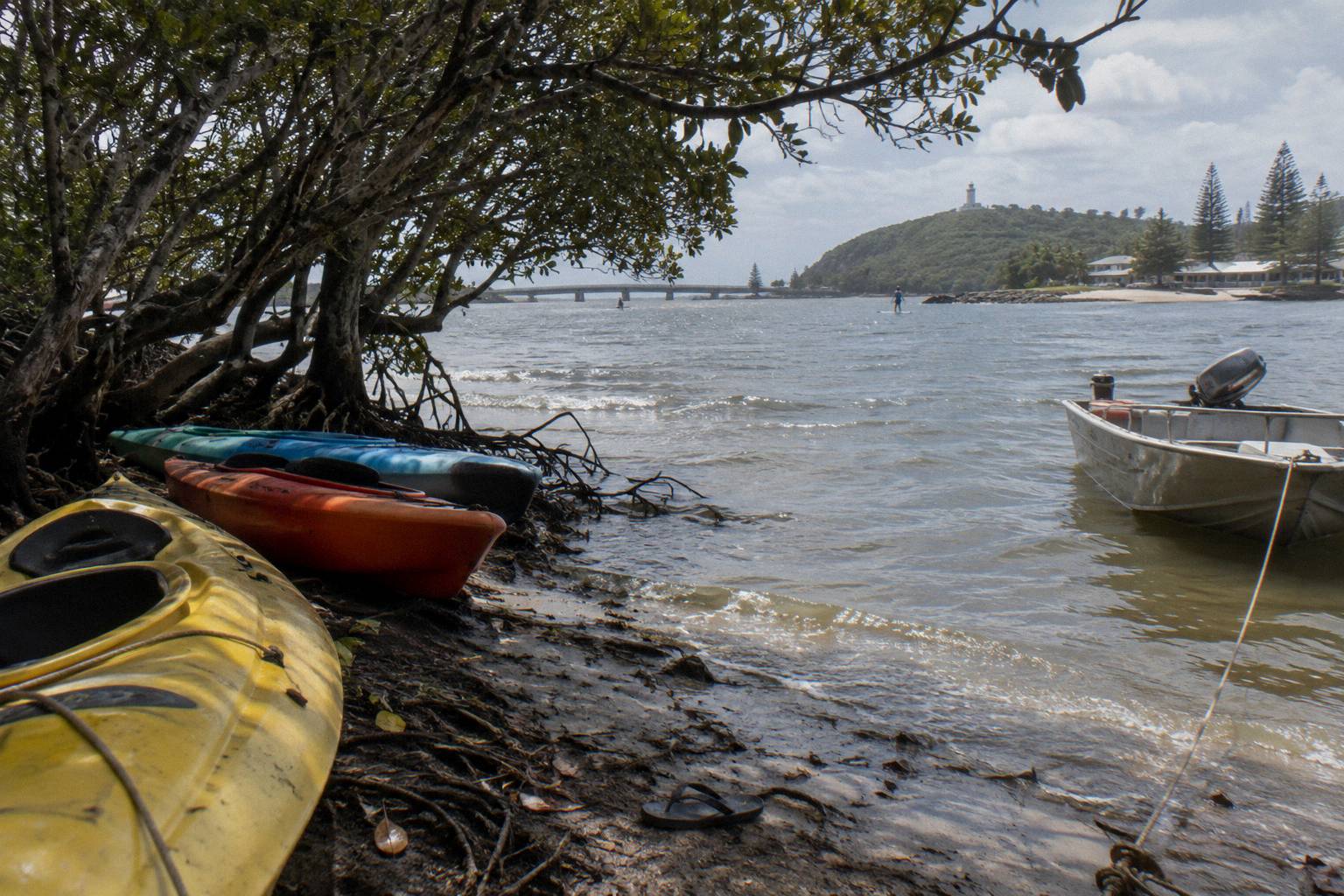
The Brunswick River scenic kayak tour, about 2 hours, minimum age 3, meets at the Brunswick Heads Scout Hall and is the family-friendly option when the ocean sounds like too much. It carries no dolphin claim and no printed rating. The sunset version of the river tour runs about 2 hours from South Beach Road in Brunswick Heads, also minimum age 3. Neither is a dolphin product, and booking either while expecting the 90% ocean claim is the classic mismatch. The stand up paddle nature tour, rated 5.0 across 391 reviews on its booking page, about 2 hours from Brunswick Heads, is a third flat-water option with its own appeal.
| Tour | Wildlife named | Duration | Min age | Rating on booking page |
|---|---|---|---|---|
| Go Sea ocean tour | Dolphins, turtles, whales in season | About 2.5 h (booking page) | 5 | 4.6, count not stated |
| Cape Byron Kayaks ocean tour | Dolphins, whales in season | About 2.5 h (booking page) | 5 | 4.4 across 402 reviews |
| Brunswick River scenic tour | Nature framing, no dolphin claim | About 2 h | 3 | Not stated |
| Brunswick River sunset tour | Nature framing, no dolphin claim | About 2 h | 3 | Not stated |
| Stand up paddle nature tour | Nature framing | About 2 h | Not stated | 5.0 across 391 reviews |
| Whale watching boat tour | Whales, June to November | About 2.5 h | Not stated | Not stated |
Price is a factor only on one of these: the Go Sea ocean tour shows from AUD 59 per person, a figure that changes by date. Cape Byron Kayaks states no price; ask the operator or check the booking page. Neither river tour, the stand up paddle tour nor the whale boat prints a price in the material held here. Durations differ by source even within one operator: the booking pages say about 2.5 hours for both ocean tours, while Go Sea's own site says about 2 hours for its guided tour, so quote the source that matters to your planning.
A decision checklist for the booking desk keeps the gaps honest in one pass: ask what the current price is, ask what happens if the wind or swell cancels the day, ask whether the departure time that month is the summer or winter schedule, ask what the swim requirement is for your group, and ask what the guarantee covers and how a return tour is rebooked. Both operators run in the rain and cancel for unsafe wind or large swell, and the swell detail is worth reading in full in the Byron Bay swell and tour cancellations guide.
What Trips People Up When Booking For Wildlife
The biggest booking mistakes are treating an operator's 90% claim as a personal guarantee, expecting whales outside the stated season windows, assuming turtles appear on both ocean tours, and mixing up the two operators' swim rules. The guarantee at both companies is a free return tour, never a refund, and season wording differs by operator and even by page within one operator, so checking the claim, season, and swim rule for your specific tour prevents nearly every disappointment.
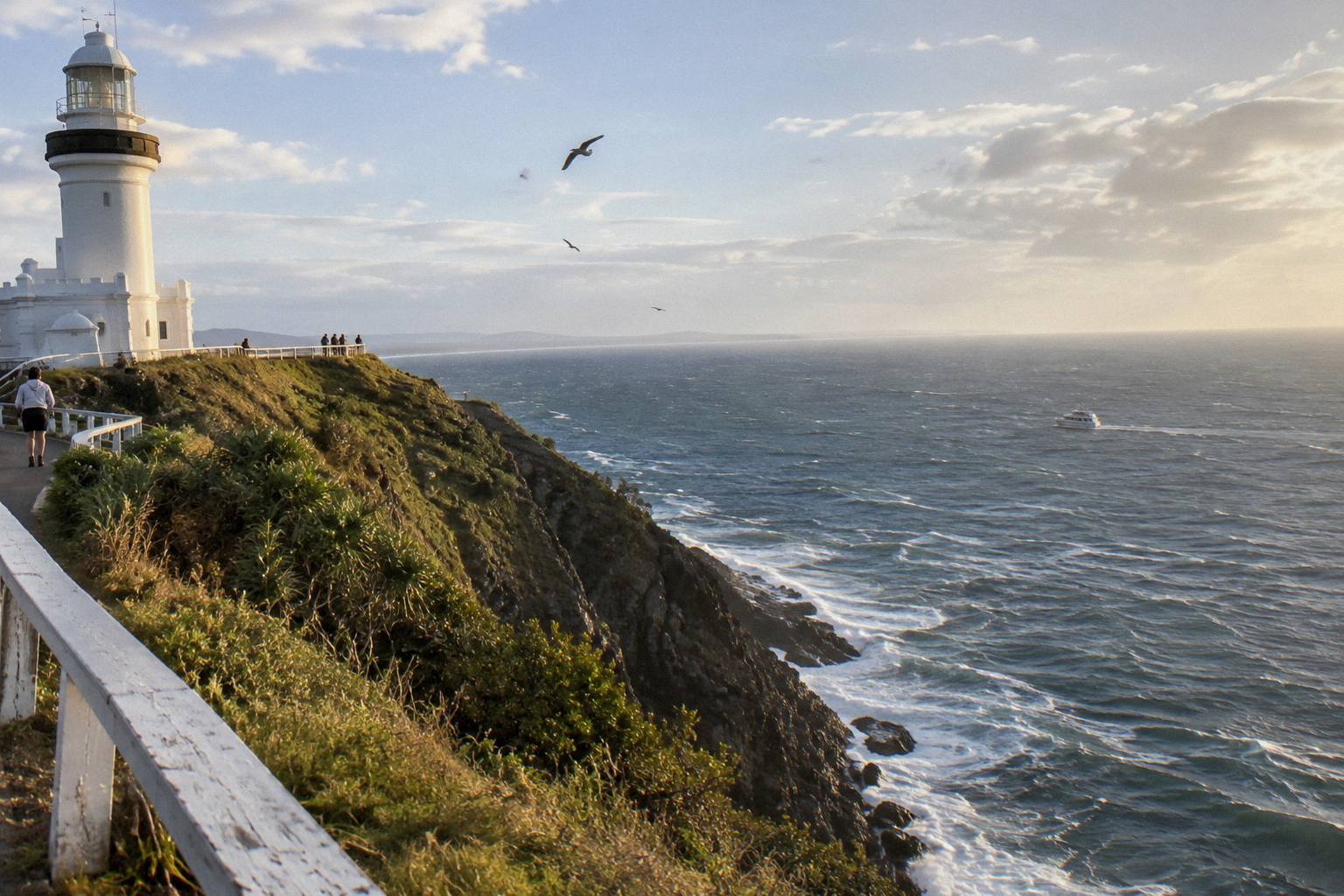
The first trap is the percentage. Cape Byron Kayaks' own FAQ answers "No" to whether dolphins are always seen, so the 90% figure is a season-level statement by the operator, not a promise for Tuesday. The second trap is whale timing: a booking in December hoping for humpbacks has no basis in any operator wording. The third is the turtle assumption, covered above: one ocean tour names turtles, the other does not. The fourth is the swim rule, where the two operators are opposites: Go Sea accepts non-swimmers, Cape Byron Kayaks escorts non-swimmers back with no refund. The fifth is dressing wrong for a trip where Go Sea's FAQ answers the getting-wet question with "100% YES"; the what to wear and bring guide covers the operator-stated kit list.
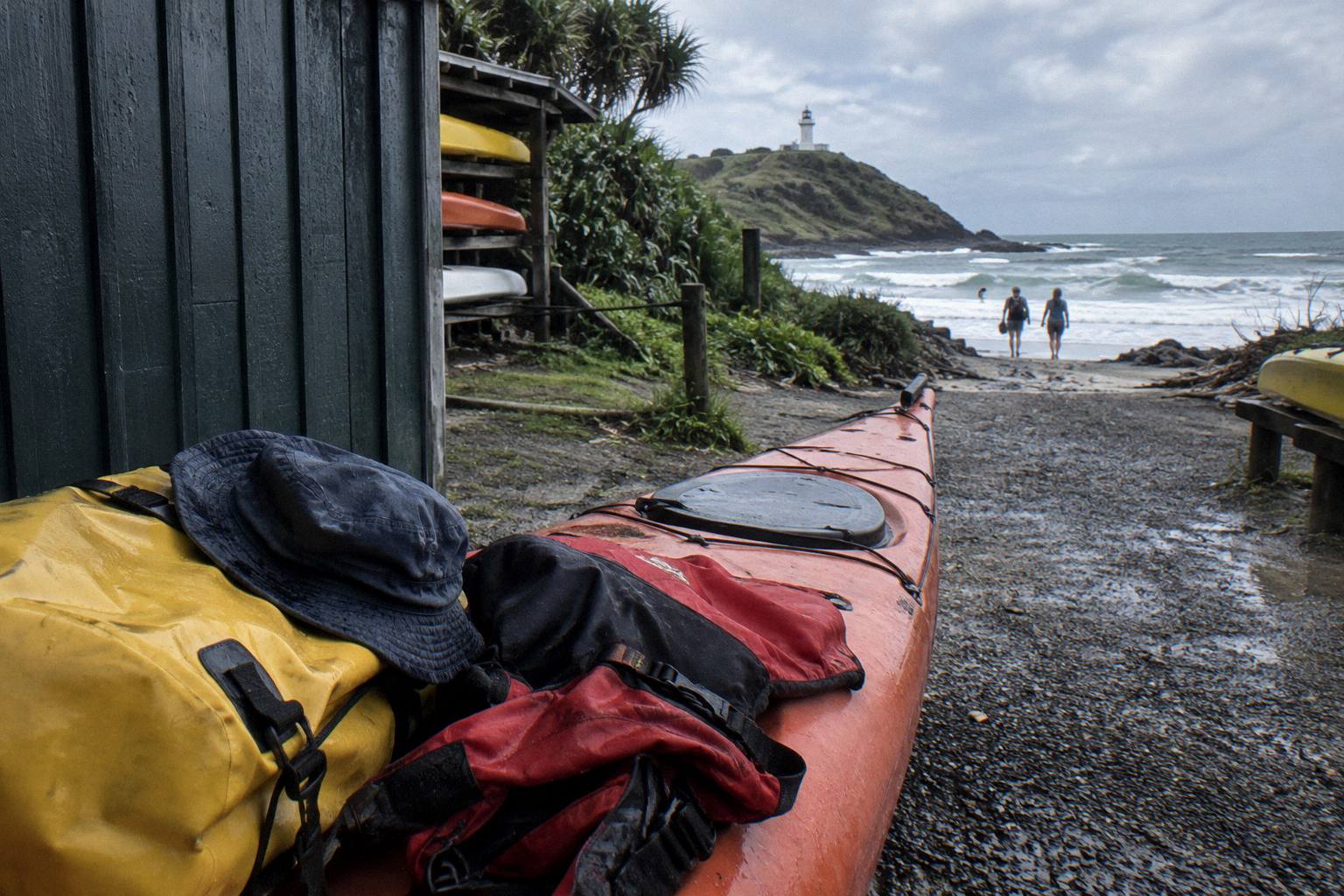
Beyond the ocean tours, the marine park itself sets the frame: sanctuary zones cover 6,118 ha, about 27.5% of the park, and are no-take, per the DPIRD zones and regulations page, and fish feeding is prohibited in the marine park. A paddler who understands the park is protected, and that the operators work inside licence and approach rules, reads the wildlife claims with the right amount of confidence.
For the broader question of whether the money is well spent, the is a Byron Bay kayak tour worth it post works through the value case, and Byron Bay Dolphin Kayak exists to keep these comparisons grounded in what the operators and the parks service actually say.
Common Questions About Marine Wildlife On A Byron Bay Kayak Tour
Will I See Dolphins On A Byron Bay Kayak Tour?
Cape Byron Kayaks says dolphins are seen on over 90% of its tours and Go Sea says dolphins appear on most tours, but no operator guarantees a sighting on any given day. Cape Byron Kayaks' own FAQ answers "No" to whether dolphins are always seen. If the wildlife does not appear, both operators offer a free return tour rather than a refund.
What Time Of Year Are Whales In Byron Bay?
The operator wording differs and should not be merged: Cape Byron Kayaks says May to November, elsewhere June to November naming humpbacks and southern rights; Go Sea says early June through late October on its whale page and June to November in its FAQ. No whale is promised on a dolphin kayak tour.
Are There Turtles On A Byron Bay Kayak Tour?
Turtles are named as local wildlife on the NPWS page for the Go Sea tour and in Go Sea's booking page title, and a turtle is covered by Go Sea's free-return guarantee. No source gives a species, count or sighting rate, and Cape Byron Kayaks does not feature turtles in its dolphin tour wording.
How Close Can A Kayak Get To Dolphins In Byron Bay?
NSW rules treat a kayak as a vessel: no closer than 50 m to a dolphin and 100 m to a whale, with caution zones at 150 m and 300 m. Inside a caution zone the approach must be from the side, at constant slow speed, and no vessel may enter when a calf is present. The guides manage the encounter within these rules.
Can You Swim With Dolphins In Byron Bay?
No tour on this site includes swimming with dolphins. Cape Byron Kayaks states that strict NSW rules about approaching wild animals apply and that paddlers observe the dolphins from the kayaks. Swimmers who are in the water near marine mammals must keep at least 30 m away under NSW rules.
What Happens If You Do Not See Dolphins On A Byron Bay Kayak Tour?
Both ocean operators offer a free return tour: Cape Byron Kayaks' is non-expiring and non-transferable and covers dolphins or in-season whales, and Go Sea's covers dolphin, turtle or whale. Neither is a refund, and the standard 24-hour cancellation notice applies to rebooking a return tour.