What Happens On A Byron Bay Kayak Tour, From Briefing To Beach Landing
The check-in sheds, the beach lesson, the double kayaks, the wildlife watched from the paddle and the run back through the surf: what the operators themselves say happens on the day.
Short answer
A Byron Bay ocean kayak tour runs about 2.5 hours from check-in. You meet at the Lawson Street sheds, get gear and a beach lesson from surf lifesaver guides, paddle a double sit-on-top kayak out along the Cape, watch for dolphins and turtles from the water, and ride a wave back to the beach. The Go Sea tour is from AUD 59.
In short: a Byron Bay ocean kayak tour runs to a set rhythm. You check in at a shed on Lawson Street 15 to 25 minutes before departure, gear up with life jacket, helmet and a wetsuit if the day needs one, get a kayaking lesson on the beach, then paddle a double sit-on-top kayak out with a guide along the Cape. Dolphins and turtles are watched for from the kayak, never chased, and the tour ends with a run back through the surf to the sand. Both operators promise a free return tour, not a refund, if the wildlife does not show.
That is the whole arc, and both ocean operators, Go Sea Kayak Byron Bay and Cape Byron Kayaks, follow it. The details differ between them: where exactly you check in, who can swim well enough to go, what snacks appear at the end, and how the wildlife claims are worded. What follows is the day as the operators and their booking pages describe it, stage by stage, so you know exactly what you are signing up for before you check availability on the Go Sea tour or read further down for the Cape Byron Kayaks version.
| Tour | Check-in | Duration | Minimum age | Price and rating |
|---|---|---|---|---|
| Go Sea Kayak, Dolphins And Turtles | Opposite 58 Lawson St (Shed 1), meet at least 20 minutes before | About 2.5 hours on the booking page; about 2 hours on the operator site | 5 | From AUD 59 per person; rated 4.6 |
| Guided Dolphin Kayak, Cape Byron Kayaks | Shed 2, opposite 60/62 Lawson St, check in 15 minutes before | About 2.5 hours from check-in | 5 | No price stated; rated 4.4 across 402 reviews |
| River Kayak, Brunswick River | Brunswick Heads Scout Hall, South Beach Road, meet 10 minutes before | About 2 hours | 3 | Not stated |
| Stand Up Paddle, Nature Tour | Brunswick Heads, own transport, address given after booking | About 2 hours | Not stated | Rated 5.0 across 391 reviews; no price stated |
| Whale Watching, June To November | Lance Ferris Wharf, Ballina, arrive 30 minutes early | About 2.5 hours | Not stated | Not stated |
Where Do The Ocean Kayak Tours Meet And Check In?
Both ocean kayak tours check in at small sheds on Lawson Street, on the town side of the beach park, and neither operator offers pick-ups. Go Sea Kayak Byron Bay meets at Shed 1, opposite 58 Lawson Street, at least 20 minutes before departure (its own site says 25), while Cape Byron Kayaks checks in at Shed 2, opposite 60/62 Lawson Street, 15 minutes before the tour.
The sheds sit a short walk apart on the same street, which matters if you are staying in town centre accommodation and weighing up the Clarkes Beach or Main Beach meeting point question. Cape Byron Kayaks says in its own words that it leaves from Clarkes Beach and follows the coastline out to the Cape, and that it catches up with its dolphin friends at Wategos Beach. The NSW National Parks and Wildlife Service page for the tour describes the launch as Clarkes Beach, in Walgun Cape Byron State Conservation Area, a short walk from the town centre, and lists the operator as a licensed commercial tour operator. Go Sea names the park opposite Lawson Street on its own site.
Two practical points come from the booking pages. First, arrive early rather than on time: the 15, 20 and 25 minute buffers exist so the beach lesson can start when the tour is meant to leave, not so you can stroll in at the departure minute. Second, sort your own transport. Neither ocean operator runs pick-ups, so if you are staying out of town you need a car, a bike or a walk planned around the check-in time.
The timing of the paddle itself is fixed by the operators rather than chosen by you. Go Sea departs daily at 9:30am and about 1:00pm all year, weather permitting; one page on its site reads 1:30pm, so treat the afternoon departure as early afternoon and confirm when booking. Sunrise tours run only in near-perfect conditions and with Cape Byron Marine Park approval, which is why most paddlers land on the standard morning slot. Cape Byron Kayaks shifts its times seasonally: earlier in summer to beat the heat or the north winds, later in winter to miss the south-westerlies, in the operator's own words.
What Happens At Check-In And In The Beach Lesson?
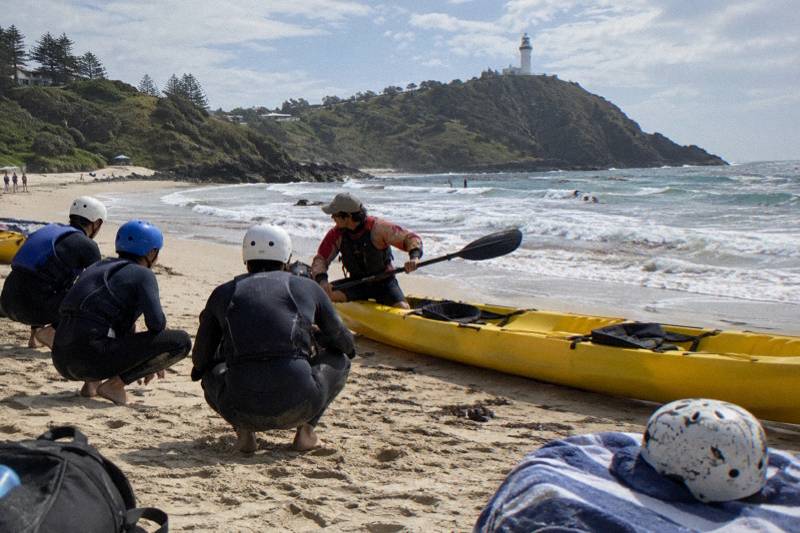
Check-in is where you meet your guide, get fitted with a life jacket and helmet, and store anything that cannot get wet. Cape Byron Kayaks supplies life jackets, helmets, wetsuits on request, secure storage and National Park fees. Go Sea includes a life jacket and helmet, a wetsuit on cooler days, a kayaking lesson on the beach with a local guide, and sunscreen, with phone pouches sold separately at check-in.
The lesson happens on the sand before anyone touches the water. Go Sea's booking page lists the kayaking lesson on the beach as part of the tour, and Cape Byron Kayaks includes wave-surfing instruction, since the return leg of its tour finishes by riding a wave back to the beach. Neither source breaks the lesson into timed segments, so expect a practical demonstration of paddling, steering and what to do in the surf, delivered by guides who are surf lifesavers. Both operators describe their guides this way, and Go Sea notes it is owned by Kurt Tutt of the Byron Bay Surf Life Saving Club.
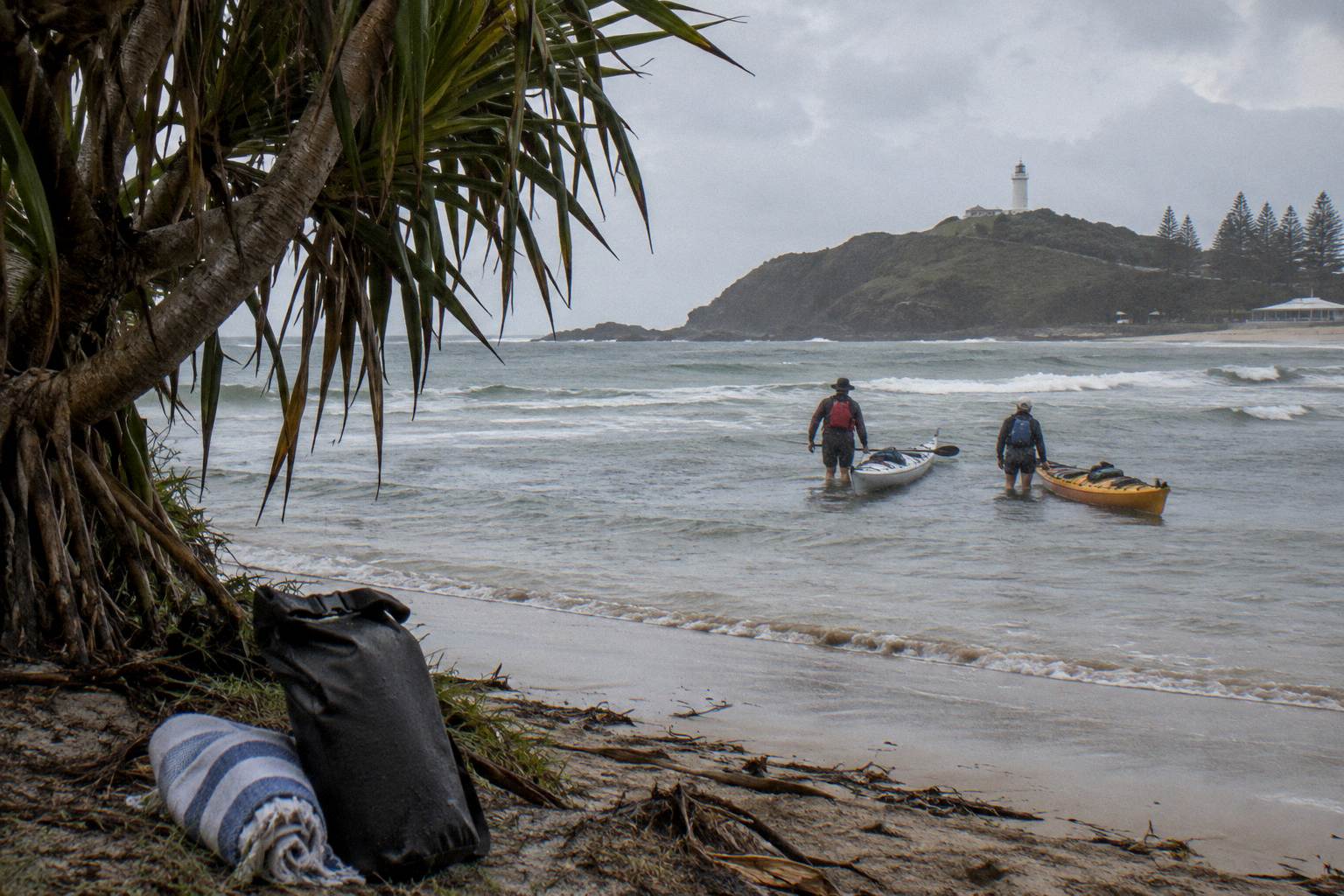
The craft matter as much as the lesson. Both ocean tours use sit-on-top double kayaks: Cape Byron Kayaks says all of its kayaks are doubles, with solo guests paired with another solo guest or a guide, a guide not guaranteed; Go Sea says it mostly uses doubles, with singles paired or seated with a guide, and a combined weight limit of 190 kilograms per double. Neither operator rents kayaks without a guide, and Go Sea says the coastline is not suitable for rental kayaks at all, so every paddler on the water is on a guided group tour.
What you leave behind is as important as what you wear. Go Sea's FAQ tells paddlers to bring bathers, a towel, sunscreen, a small reusable water bottle, a hat and a change of clothes, and warns that you will get wet, in the operator's blunt phrasing, 100% yes, so only waterproof cameras are suitable. Cape Byron Kayaks allows phones and cameras but requires them attached to the life jacket, and recommends against bringing valuables. The full kit list, including what to leave at home, is covered in the what to wear and bring guide.
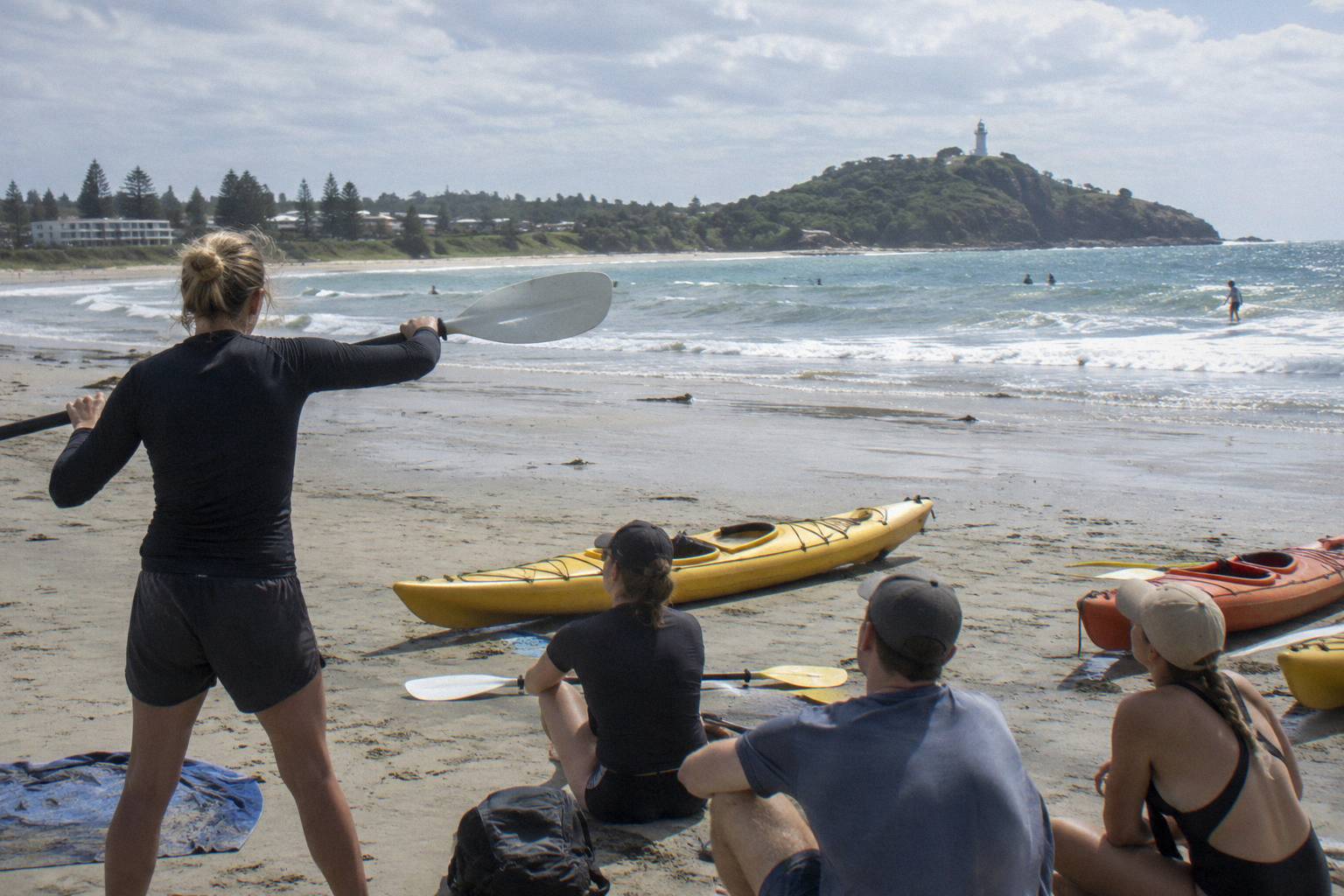
What Is The Paddle Out Actually Like?
In practice, the paddle out is a guided open-water trip along the headland: you leave from Clarkes Beach in double sit-on-top kayaks, follow the coastline at a pace set by your guide, and catch up with the dolphins at Wategos Beach by the Cape. No source gives a timed segment breakdown beyond that, so that is the honest shape of it.
It is open ocean, not a flat-water float. Cape Byron Kayaks states plainly that you must be confident in the open water, and its FAQ requires all participants aged 16 and over to be capable of swimming 25 metres unassisted; it does not take non-swimmers, and a non-swimmer who turns up is escorted back without a refund. Go Sea differs: it accepts non-swimmers, who wear life jackets and tell the guide, and the operator itself recommends its Brunswick River tour for non-swimmers who want calmer water. That difference alone decides the booking for plenty of travellers, and it is covered properly in the can non-swimmers do the tour question.
Fitness expectations are stated in similar, moderate terms by both operators. Cape Byron Kayaks asks for a reasonable level of fitness and says people with back, neck, shoulder, hip or heart conditions, or who are pregnant, participate at their own risk. Go Sea's National Parks listing grades the tour Medium in difficulty and says it is not recommended for people with a chronic back injury or pregnant women, and Go Sea's own FAQ draws the line at kayaking after 15 weeks of pregnancy. If any of that applies to you, tell the operator when you book and check with your doctor first.
Weather calls sit with the operator, not the customer. Both ocean tours run in the rain; unsafe wind or large swell cancels them. Go Sea's terms give direct bookings a full refund when the operator cancels for unsafe conditions, and its sea sickness policy is worth knowing before you go: sea sickness is not refundable, so a traveller prone to it should plan accordingly, as the seasickness question explains.
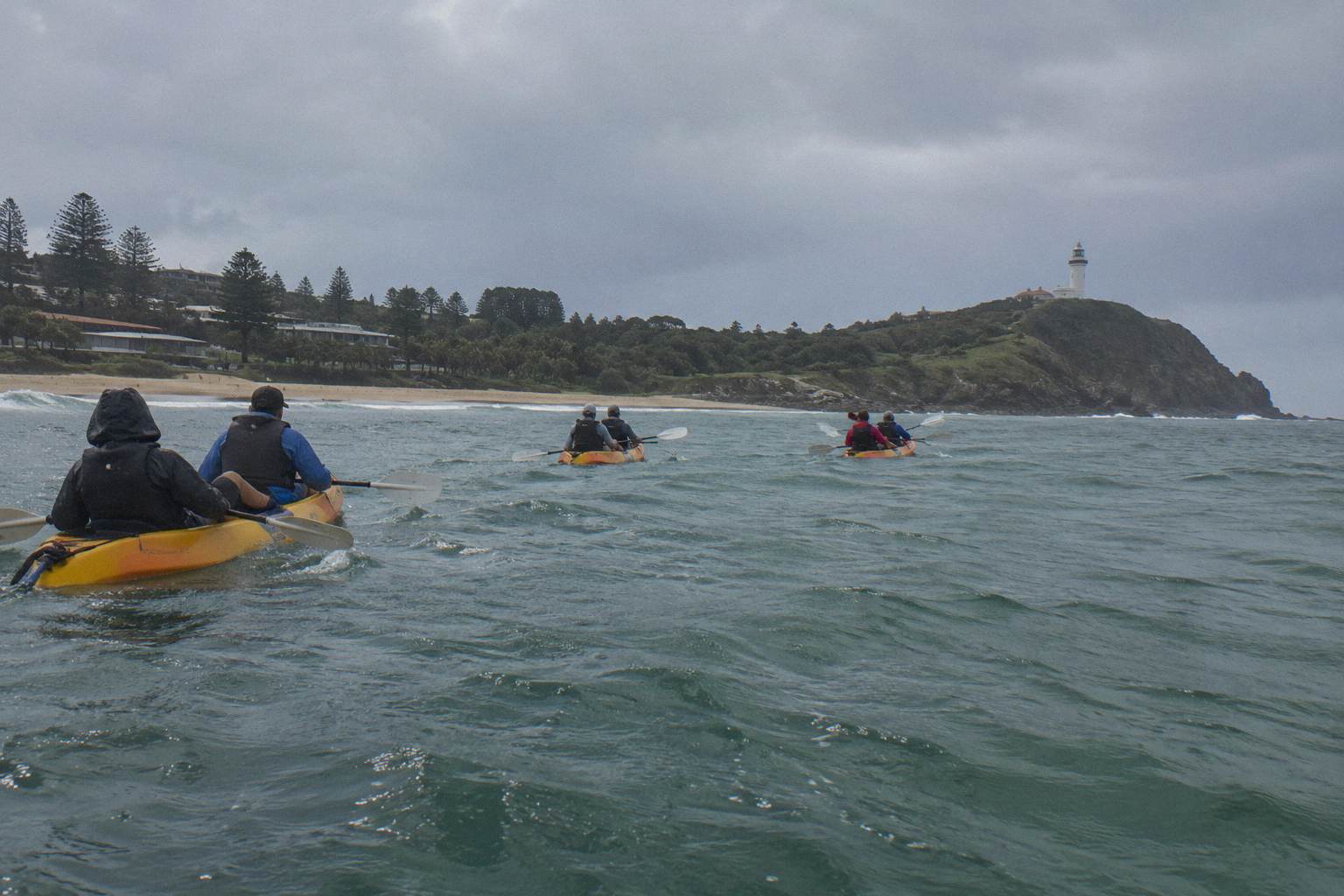
What Wildlife Do The Tours Look For From The Kayak?
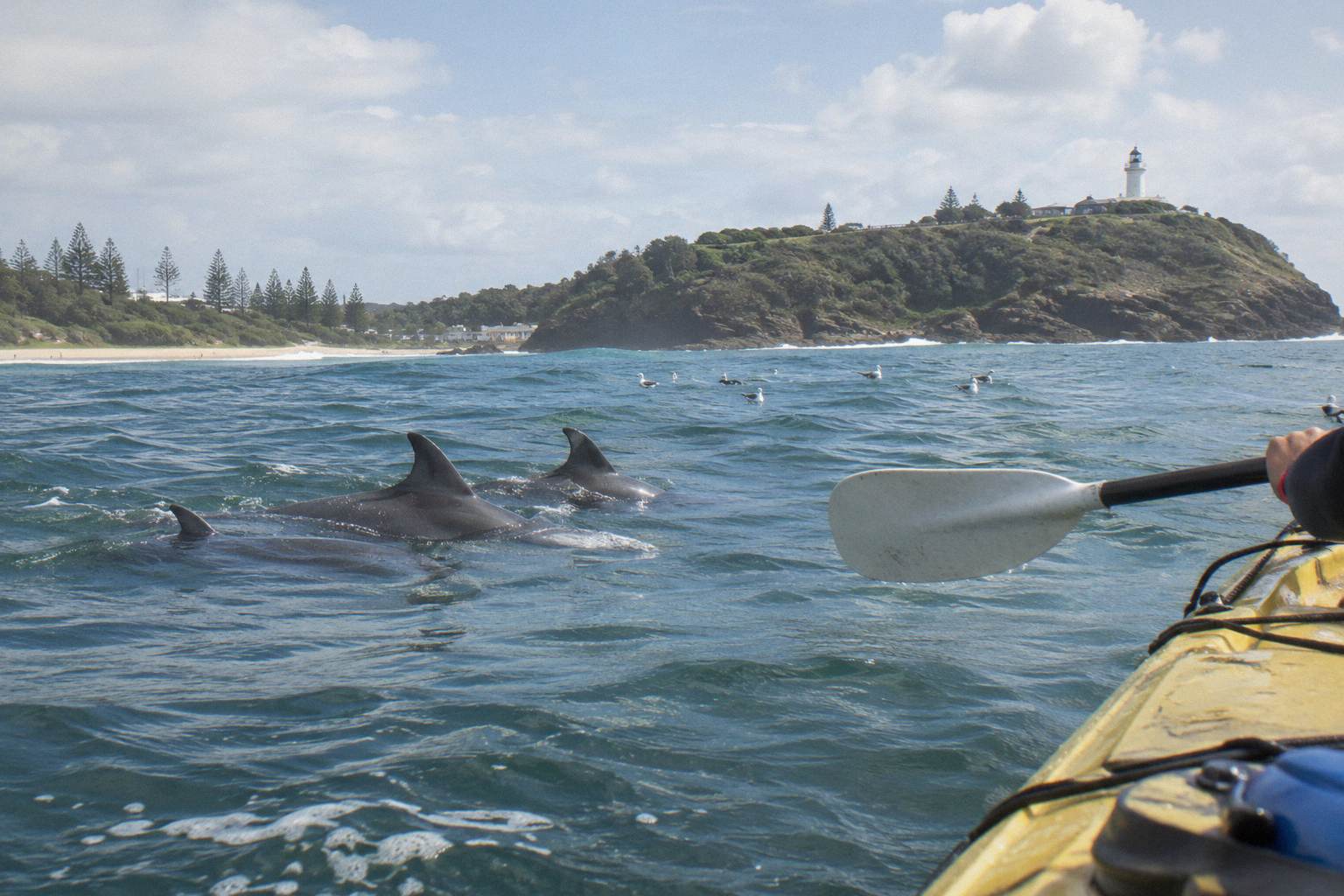
Dolphins are the headline, and both operators word their claims carefully rather than promising sightings: Cape Byron Kayaks reports dolphins on about 90% of its tours and names a resident pod of around 300, Go Sea spots dolphins on most tours and often sees whales from June to November, and turtles also appear on Go Sea's booking page and in the National Parks listing of local wildlife.
Every one of those figures belongs to the operator that said it. They are sighting records and marketing claims, not guarantees, and neither operator writes them as one. What both do guarantee, in identical structure, is a free return tour if the wildlife is missed: Go Sea's guarantee covers dolphins, turtles and whales, and Cape Byron Kayaks' guarantee triggers if no dolphins or in-season whales appear. Both are return tours, never refunds, and Cape Byron Kayaks' version is non-expiring and non-transferable, rebooked by phone with a card hold. The fuller mechanics are in what happens if you see no dolphins.
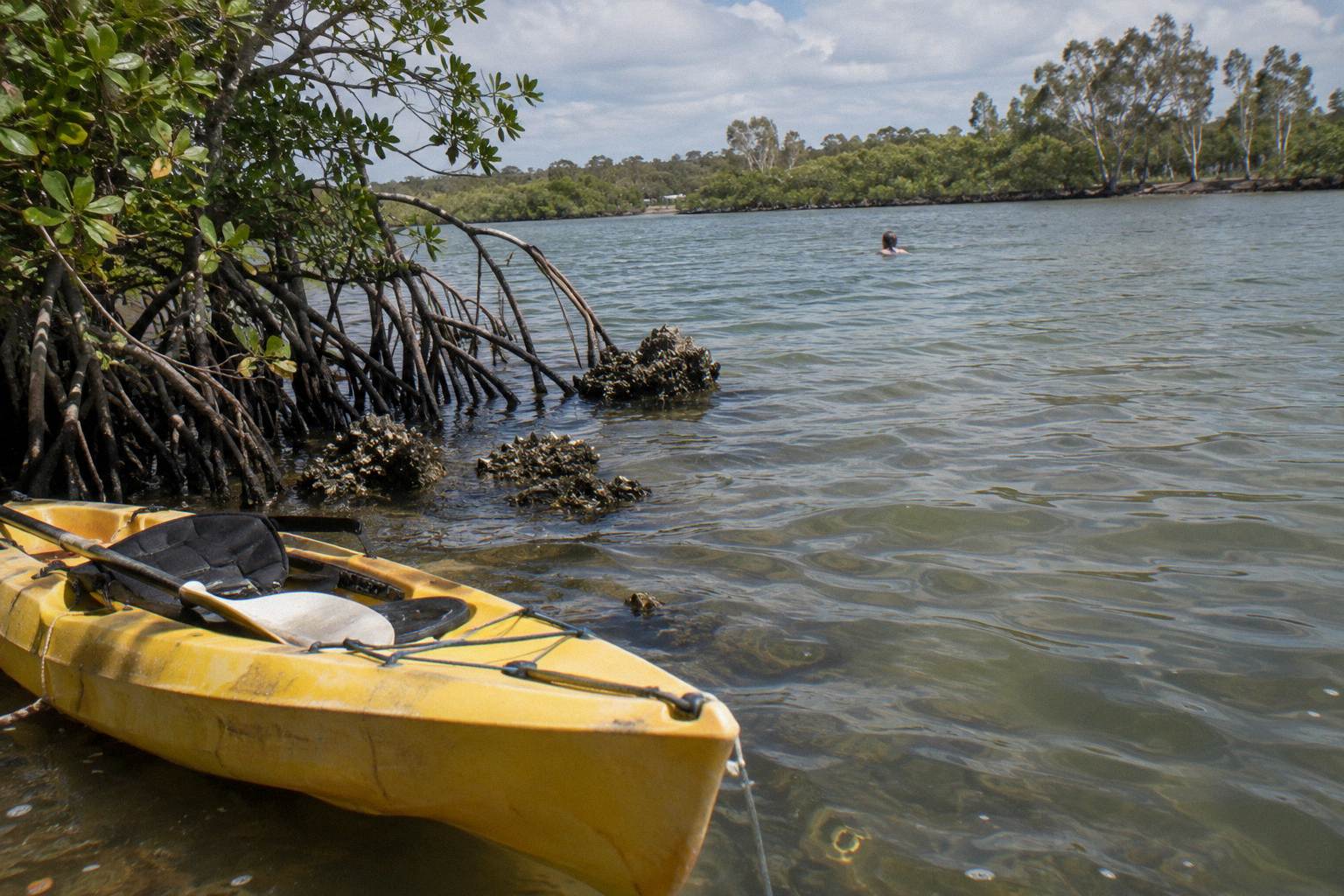
How close the kayaks get is regulated, not improvised. NSW Environment and Heritage defines a vessel to include non-motorised boats, surfboards, surf skis and kayaks, so the approach rules that bind boats bind paddlers too. Within the caution zone a kayak must never approach a dolphin from behind or wait in front of it, must approach from the side at least 30 degrees to its direction of travel, and must hold constant slow speed with negligible wake. If dolphins bow-ride, the rule is to keep course and speed; if a whale approaches, the vessel slows to minimal wash speed. Cape Byron Kayaks puts the practical version on its FAQ: dolphins cannot be swum with, because of the strict rules about approaching wild animals in NSW, and paddlers observe them from the kayaks.
| Situation | Minimum distance (NSW Environment and Heritage) |
|---|---|
| Vessel approaching a dolphin | No closer than 50 m |
| Vessel approaching a whale | No closer than 100 m |
| Dolphin caution zone | 150 m |
| Whale caution zone | 300 m |
| Swimmer in the water, any marine mammal | At least 30 m |
| A mostly white whale, dolphin or dugong | 500 m |
The guides are the ones managing those distances on the water, which is part of why the tours are guided-only. Whale season wording differs by operator and should not be merged into one: Cape Byron Kayaks says May to November in one place and June to November in another, Go Sea says early June to late October on its whale page and June to November in its FAQ. Whales are never promised on a kayak tour, only looked for in season.
For a different angle on the same wildlife, the stand up paddle nature tour runs about 2 hours from Brunswick Heads with boards, paddles and leg ropes included, a combined lesson and tour, digital photos, homemade snacks and cold water. It is rated 5.0 across 391 reviews on its booking page, carries no price on the page, and suits a traveller who wants the wildlife without the open-ocean surf.
How Does The Tour End: The Wave Surf Back To The Beach?
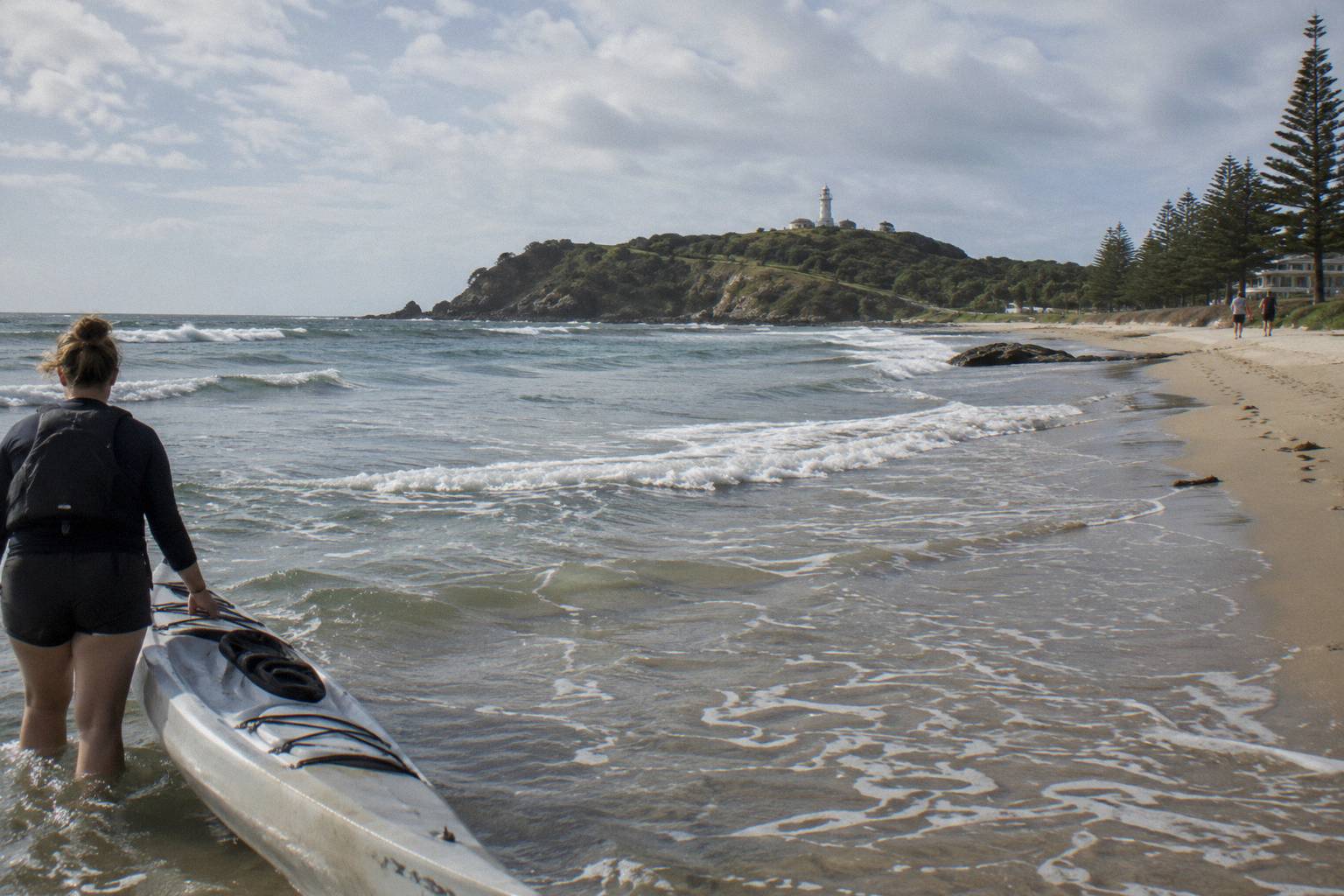
The tour ends by riding a wave back through the surf to the sand in the double kayak, with the guide running the landing. Cape Byron Kayaks says its tour includes wave-surfing instruction and finishes this way, while Go Sea's booking page lists the kayaking lesson on the beach at the start instead, and neither operator describes the return leg step by step or states wave sizes or how individual landings are handled.
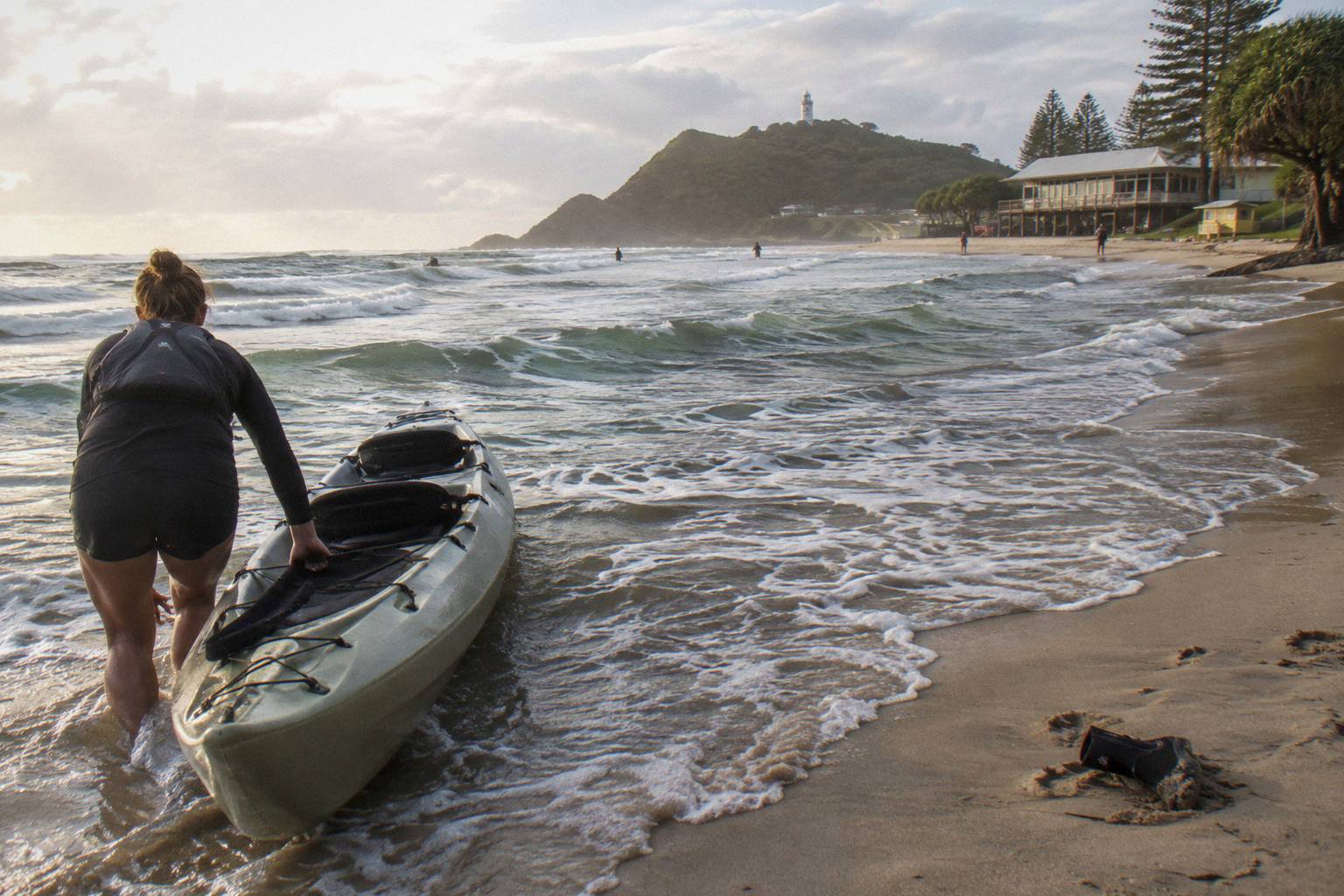
That closing run is the part of the day the operators sell hardest, and also the part the sources describe least. Cape Byron Kayaks pairs its wave-surfing instruction with the phrase all the Tim Tams you can eat, its snack of choice at the end of the tour, and says it has operated since 1995. Go Sea's inclusions stop at gear, guide, lesson and wetsuit; its FAQ's snack and pick-up lines contradict other pages on its own site, so rely on the booking page for what is actually included. Photos are handled differently too: Cape Byron Kayaks posts its tour photos online each day under the morning or afternoon tour, and the stand up paddle and river tours include digital photos, while Go Sea asks paddlers to bring only waterproof cameras.
Once you are back on the sand, the day unwinds quickly: gear comes off, dry clothes go on, and the group disperses. The two Brunswick River tours by the same operator, Go Sea, run on a similar clock at about 2 hours each from Brunswick Heads, timed to the high tide, with the scenic tour meeting at the Scout Hall on South Beach Road and the sunset tour meeting at the riverside of the same hall; both take children from age 3 and both list snacks, a contrast with the ocean tours.
What Do The Different Tours On The Day Actually Compare Like?
The ocean dolphin tours are the core product: about 2.5 hours, double kayaks, surf lifesaver guides, dolphins looked for along the Cape, from AUD 59 with Go Sea. The river and stand up paddle tours swap surf for calm water at Brunswick Heads in about 2 hours. The whale watching boat tour is a different day entirely: about 2.5 hours with a marine biologist guide, departing Ballina, about 30 minutes south of Byron Bay, with transfers not included.
| What is supplied | Go Sea ocean tour | Cape Byron Kayaks ocean tour | Whale watching boat |
|---|---|---|---|
| Craft | Mostly double sit-on-top kayaks | All double sit-on-top kayaks | Vessel, maximum 20 travellers |
| Gear | Life jacket, helmet, wetsuit on cooler days, sunscreen | Life jacket, helmet, wetsuit on request, secure storage, National Park fees | Life jacket, waterproof poncho |
| Guide | Local guide, surf lifesaver | Professional guide, surf lifesaver | Marine biologist, live commentary |
| Food and extras | Phone pouches sold at check-in | Tim Tams, photos posted online by the operator | Free photos |
| No-show policy | Free return tour if no dolphin, turtle or whale | Free return tour if no dolphins or in-season whales | Not stated |
Choosing between them comes down to water confidence and the reason for going. A confident swimmer who wants the surf and the dolphins books either ocean tour. A non-swimmer, or a family with very young children, is pointed by Go Sea itself toward the Brunswick River tours, from age 3, on flat water. A traveller whose real interest is whales rather than paddling gets a closer seat, a biologist commentary and a Ballina departure on the boat trip, with the trade-off of no kayaking at all. The decision logic for the last pair is worked through in the kayak tour or boat cruise comparison.
Timing matters as much as the choice of tour. The ocean tours leave on the operators' seasonal schedules, the river tours run to the tide, and the best slot for wildlife is its own question, covered in the best time to see dolphins guide. Book the slot that fits your energy: the morning departure is the standard one, and the sunrise paddle exists but only runs in near-perfect conditions with marine park approval.
What Trips People Up Before The Dolphin Paddle?
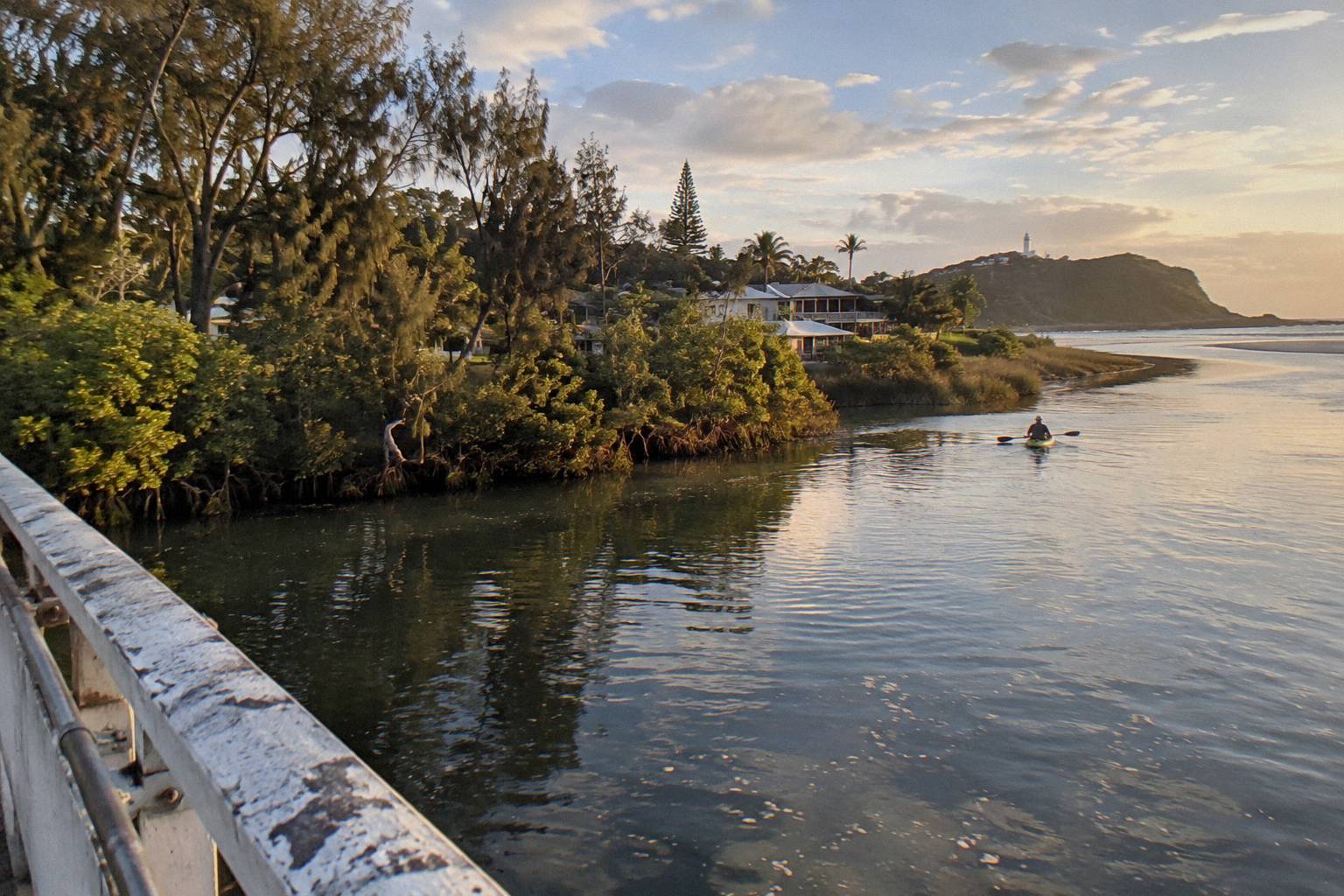
The mistakes that most often derail the day are showing up at the wrong address, misreading the swim rules, and expecting money back when the dolphins stay away. Both operators check in on Lawson Street but at different addresses, the two ocean tours carry sharply different swim requirements, and both wildlife guarantees offer a free return tour rather than a refund, so booking a tour beyond your swimming ability is the one mistake that cannot be fixed on the day.
Read the meeting instructions the booking page gives you and follow them exactly. Go Sea checks in opposite 58 Lawson Street at Shed 1; Cape Byron Kayaks at Shed 2, opposite 60/62 Lawson Street; the river tours meet at Brunswick Heads, about twenty minutes north, and the whale boat departs Ballina. Turning up at the wrong shed, or the wrong town, with ten minutes to spare is a self-inflicted problem the operators cannot absorb.
Then read the swim rules before you pay, not at the beach. Cape Byron Kayaks requires swimmers aged 16 and over to manage 25 metres unassisted and turns non-swimmers away without a refund, while Go Sea takes non-swimmers with a life jacket and a word to the guide. And keep expectations calibrated: the operator that quotes a 90% dolphin sighting rate is the same operator that answers No when asked whether you always see dolphins. Both sides of that sentence are true, and both are worth holding at once.
Which Rules Apply While You Are On The Water?
The rules that shape the paddle are the NSW marine mammal approach distances, enforced through the marine park, plus the marine park's own zoning. In the Cape Byron Marine Park, sanctuary zones covering 6,118 hectares are no-take, fish feeding is prohibited, and commercial operators need permits; the NSW approach rules govern how close the kayaks may go to dolphins and whales. The operators hold the licences, and the guides manage compliance on the water.
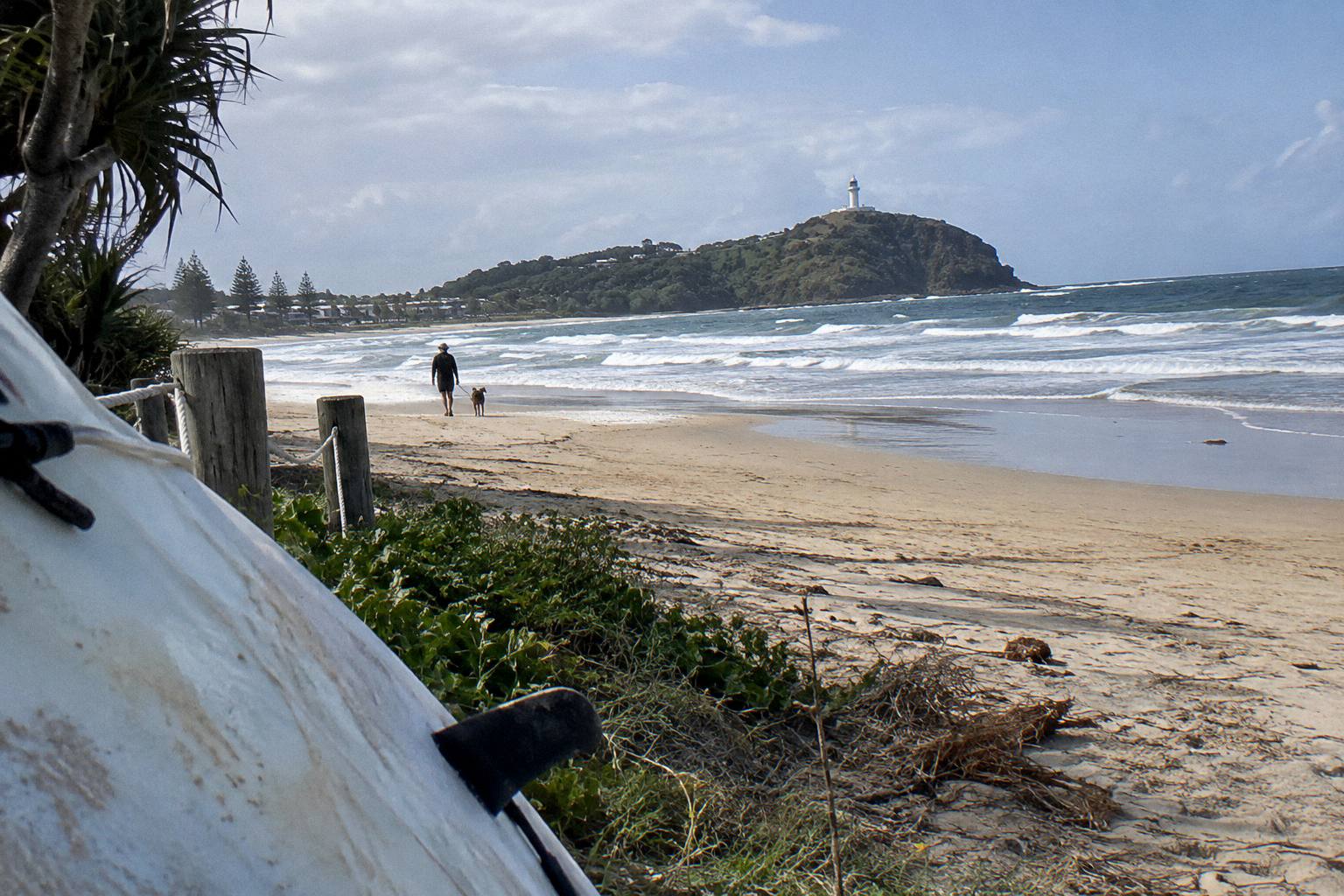
The zoning background is worth a sentence. The Cape Byron Marine Park zoning plan sets aside sanctuary zones and habitat protection zones, with activities that do not harm animals, plants or habitat permitted in the latter, and the user guide restates that the NSW approach rules apply inside the park. A paddler on a licensed tour does not need to hold any of this in their head, which is the point of the guided-only format, but it explains why the tours follow the lines they do and why feeding or touching wildlife never happens. The full picture is in the Cape Byron Marine Park kayak guide.
If a kayaker with a spare afternoon wonders whether to just rent a craft, the answer from both operators is no hire exists: Cape Byron Kayaks runs fully guided group tours, and Go Sea says the coastline is not suitable for rental kayaks. The guided format is the product, not an add-on, and it is what puts a surf lifesaver beside every double kayak that goes out.
For travellers weighing the whole day against its cost, the is a Byron Bay kayak tour worth it question gets its own treatment, and the price side of the ledger is laid out in how much a tour costs. What can be said here is plain: one operator prints a from price of AUD 59, the other prints none, and neither the experience nor the guarantee differs by what the page shows.
The day, in the end, is a loop: shed to sand, sand to Cape, Cape back through a wave to the sand. Operators that have run it since 1995, guides who are surf lifesavers, double kayaks built to be forgiving, and wildlife watched from a legal distance rather than chased. If that is the day you want, Byron Bay Dolphin Kayak exists to help you book it on the right tour for your swimming ability and your dates, with a free return tour behind you either way if the ocean keeps its animals to itself.
Common Questions About A Byron Bay Kayak Tour
How Long Is A Byron Bay Kayak Tour?
Both ocean tours run about 2.5 hours from check-in on their booking pages, though Go Sea's own site says approximately 2 hours and the National Parks listing says 2 hours. The Brunswick River and stand up paddle tours run about 2 hours each.
Will I Get Wet On A Byron Bay Kayak Tour?
Yes. Go Sea's FAQ answers the wetness question with 100% yes, which is why only waterproof cameras are suitable and a change of clothes is on the bring list. Wetsuits are supplied on cooler days by Go Sea and on request by Cape Byron Kayaks.
What Happens If No Dolphins Appear On The Day?
Both operators offer a free return tour rather than a refund. Go Sea's guarantee covers dolphins, turtles and whales; Cape Byron Kayaks' guarantee is non-expiring and non-transferable and covers dolphins and in-season whales, rebooked by phone with a card hold.
Do The Tours Run In The Rain?
Yes. Both operators say rain does not stop the tours; Cape Byron Kayaks notes the dolphins are always wet. Unsafe wind or large swell is what cancels, and Go Sea gives direct bookings a full refund when it cancels for unsafe conditions.
Can I Bring My Phone Or Camera?
Go Sea says only waterproof cameras are suitable and sells phone pouches at check-in. Cape Byron Kayaks allows phones and cameras attached to the life jacket and posts its own tour photos online each day, but recommends leaving valuables at home.
Is There Kayak Hire Without A Tour?
No. Cape Byron Kayaks runs fully guided group tours only, and Go Sea says the coastline is not suitable for rental kayaks. Every paddle out is with a guide.