What To Wear And Bring On A Byron Bay Kayak Tour
The two Byron Bay ocean kayak operators give short, specific packing lists, and they differ in a few ways that matter: one hands you a wetsuit in cooler months, the other asks you to attach your camera to a life jacket. Here is what each one says, what is already included, and what you can safely leave at home.
Short answer
Wear bathers and bring a towel, sunscreen, a hat, a small reusable water bottle and a change of clothes: that is Go Sea Kayak's own list. Cape Byron Kayaks supplies life jackets, helmets, wetsuits on request and secure storage, so you mainly need swimwear and dry clothes for after. Go Sea's ocean tour is from AUD 59 per person.
Go Sea Kayak answers the question "Will I get wet?" on its FAQ page with a single line: "100% YES". That one word sets the tone for everything on this page. A Byron Bay ocean kayak tour is an open, sit-on-top double paddle in the Pacific, and both operators build their packing advice around the certainty that you, your clothes and anything loose on the kayak will end up wet.
The good news is that the lists are short. Go Sea Kayak Byron Bay asks for bathers, a towel, sunscreen, a small reusable water bottle, a hat and a change of clothes. Cape Byron Kayaks supplies life jackets, helmets, wetsuits if required, secure storage and Tim Tams, and asks mainly that you attach any phone or camera to your life jacket and leave valuables behind. Neither operator asks you to buy specialist clothing, and neither names a fabric, a colour or a brand. This page stays strictly inside what the two operators and their booking pages actually say, and flags the handful of places where the two tours differ.
The detailed comparison lives in the Byron Bay sea kayak tours compared guide, and the wider choice of launches is mapped in where to kayak in Byron Bay.
What To Wear Kayaking In Byron Bay: The Short Answer
Wear bathers as your base layer: both ocean operators run sit-on-top double kayaks and you will get wet, and Go Sea says so in exactly those terms. Add a hat, sunscreen, a small reusable water bottle, a towel and a change of clothes. Wetsuits are supplied rather than brought: Go Sea provides them in cooler months, Cape Byron Kayaks hands them out on request. No other clothing item is on either operator's list.
That is the whole of the stated clothing advice. Go Sea's FAQ page lists bathers, towel, sunscreen, a small reusable water bottle, a hat and a change of clothes as what to bring, and mentions wetsuits in cooler months. Cape Byron Kayaks does not publish a comparable clothing list; its booking page instead lists what is supplied, which covers life jackets, helmets, wetsuits if required, secure storage, National Park fees, a professional guide and Tim Tams.
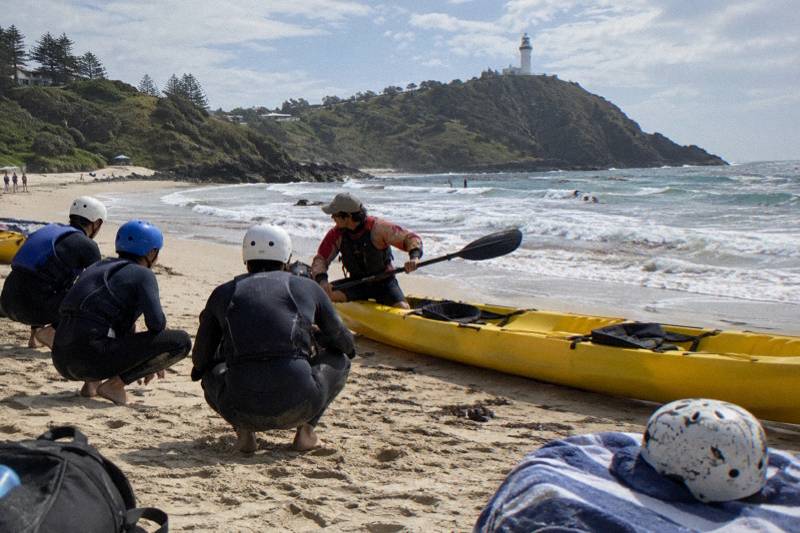
The reason the list is so short is the format of the tour. Both operators use double sit-on-top kayaks, guided only, with no rental option: Go Sea says the coastline is not suitable for rental kayaks, and Cape Byron Kayaks describes its trips as fully guided group tours. You are not outfitting yourself for a solo expedition. You are dressing for roughly two and a half hours on the water with a guide who carries the safety gear, hands you the paddles, and in Cape Byron Kayaks' case teaches the wave-surfing technique on the beach before launch.
Two questions dominate everything else on this page: whether you need a wetsuit, and what to do with your phone and camera. The wetsuit answer depends on the month and the operator, and is covered in full further down with the sea temperature averages. The camera answer is where the two operators diverge most sharply, and it is worth reading both before you zip anything into a pocket.
A quick reference table before the detail:
| Item | Go Sea Kayak | Cape Byron Kayaks |
|---|---|---|
| Base clothing | Bathers | Not stated beyond supplied gear |
| Towel | Yes, bring | Not stated |
| Sunscreen | Bring; also available from the operator | Not stated |
| Hat | Yes, bring | Not stated |
| Water bottle | Small reusable bottle | Not stated |
| Change of clothes | Yes, bring | Not stated |
| Wetsuit | Supplied in cooler months | Supplied if required, on request |
| Life jacket and helmet | Included | Included |
| Storage for belongings | Lock-up | Secure storage |
| Food on tour | Not stated | Tim Tams included |
Cells reading "Not stated" simply mean the operator has not published a position; if the item matters to you, ask when you book.
What Go Sea Kayak Tells Paddlers To Bring
Go Sea's FAQ page gives a six-item list: bathers, towel, sunscreen, a small reusable water bottle, a hat and a change of clothes, plus wetsuits in cooler months. Its booking page adds what is included in the price: life jacket and helmet, a kayaking lesson on the beach, a local guide, a wetsuit on cooler days if needed, and sunscreen available. Phone pouches are not included but can be bought at check-in.
That is the complete picture from the operator's own pages, and it is unusually tidy. The kayaking lesson on the beach matters for the clothing question, because it means you spend time standing on sand before you paddle: a hat and sunscreen do real work before the kayak ever reaches the water. The change of clothes earns its place at the other end of the tour, once you are back on the beach and wet.
The wetsuit clause is worth pausing on. Go Sea provides wetsuits in cooler months, and the booking page repeats this as "wetsuit on cooler days if needed". There is no stated thickness, no fit service, and no charge mentioned either way. You do not need to bring your own. If you own one and love it, nothing on the operator's page forbids it, but the stated default is that the tour supplies it.
Go Sea runs daily at 9:30am and about 1:00pm all year, weather permitting, with sunrise tours only in near-perfect conditions and with Cape Byron Marine Park approval. The ocean tour is from AUD 59 per person on the booking page, rated 4.6 there, and runs about 2.5 hours by the booking page's wording while the operator's own home page says approximately 2 hours. Minimum age is 5. Full tour detail, including the meeting point opposite 58 Lawson Street, Shed 1, is on the Go Sea Kayak, Dolphins And Turtles page, and the deeper marine-park context is in the Cape Byron Marine Park kayak guide.
One item deserves special attention: the camera clause. Go Sea's FAQ says only waterproof cameras are suitable, in the same breath as the 100% wet warning. A phone in a jacket pocket is not a waterproof camera. The booking page sells phone pouches at check-in for exactly this reason, which tells you the operator expects phones to come on the water and expects them to need protection you may not own yet. If photos matter to you, budget a moment at check-in or bring your own pouch.
The lesson, the guide and the safety gear are all in the ticket price. What is not in it, per the booking page, is the phone pouch. Everything else Go Sea names is either on your body, in your day bag, or handed to you on the beach.
What Cape Byron Kayaks Supplies And What It Asks Of You
Cape Byron Kayaks takes the opposite approach to packing: it publishes a longer list of what it supplies and a shorter list of rules about what you carry. Life jackets, helmets, wetsuits if required, secure storage, National Park fees, a professional guide and Tim Tams are all included. Phones and cameras are allowed but must be attached to the life jacket, and the operator says valuables are not recommended.
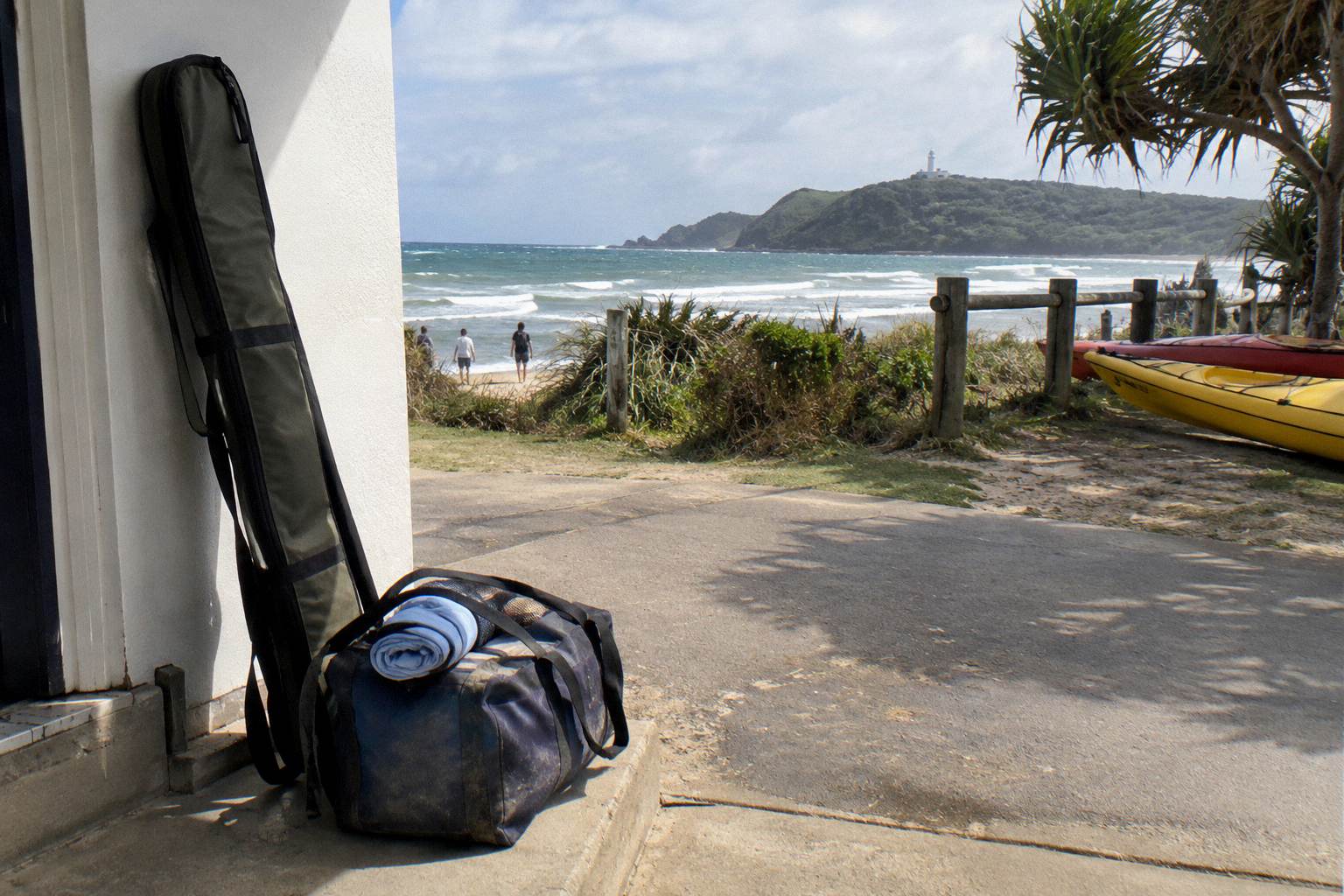
The attachment rule is the one packing decision Cape Byron Kayaks is explicit about. Its FAQ allows phones and cameras on the water, but requires them fixed to the life jacket rather than loose in a pocket or a hatch, and separately advises against bringing valuables at all. Put together, that reads as: bring the camera if you want the photos, secure it, and leave the rest in the secure storage the operator provides at check-in.
Cape Byron Kayaks states no price on its booking page, so ask the operator when you book. What it does publish is a rating of 4.4 across 402 reviews on the booking page, an operating history the operator describes as running "since 1995", and a tour length it frames as "allow 2.5hrs from check-in". Check-in is at Shed 2, opposite 60/62 Lawson Street, 15 minutes before the tour, and the operator says in its own words that tours leave from Clarkes Beach and follow the coastline out to the Cape. The National Parks page for the tour confirms the Clarkes Beach start, in Walgun Cape Byron State Conservation Area. The Clarkes Beach or Main Beach meeting point guide covers the geography if you are choosing between the two operators partly on launch point.
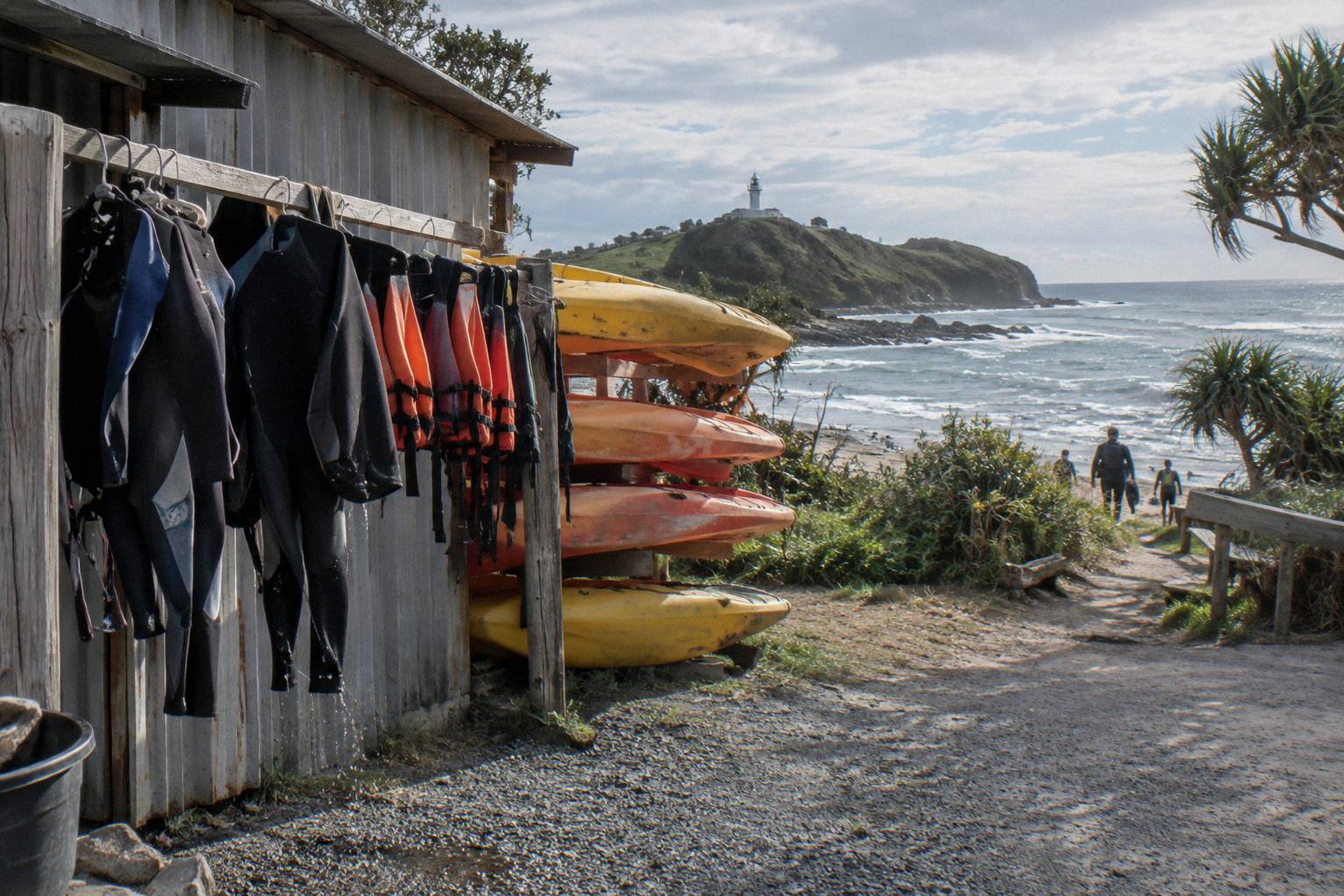
The Tim Tams line is operator wording, from its own pages: the tour includes wave-surfing instruction and "all the Tim Tams you can eat". The wave-surfing instruction matters for clothing, because it tells you the return leg can involve riding waves back to the beach, which is another way of saying the wet is not incidental. The question of what that surf back is like is covered in its own depth in what the wave surf back to the beach is like alongside the after-paddle options.
Photography is handled differently here than at Go Sea. Cape Byron Kayaks posts its tour photos online each day, filed under the AM or PM tour, so there is a built-in alternative to carrying your own camera: the operator's photos exist, and your job is simply to find yours afterwards. Between the attachment rule, the advice against valuables, and the daily photo post, the operator is quietly steering you toward bringing less, not more.
The wetsuit wording also differs. Where Go Sea ties wetsuits to cooler months, Cape Byron Kayaks supplies them "if required" and on request, with no season named. In practice that means the decision sits with you and the guide on the day rather than with the calendar, and if you feel the cold, the thing to do is ask at check-in rather than assume.
Do You Need A Wetsuit, And When?
Neither operator asks you to bring a wetsuit: Go Sea supplies them in cooler months and Cape Byron Kayaks supplies them on request, and no thickness, fit or price is stated by either. Whether one is welcome depends on the month, and the only water-temperature source available is seatemperature.org's monthly averages for Byron Bay, which are satellite-based approximations of recorded years, not a forecast or a reading for your tour day.
Those averages run from about 21.5 degrees Celsius in July and August to about 27.1 degrees in February. Presented month by month:
| Month | Average Sea Temperature (C, approximate) |
|---|---|
| January | 26.0 |
| February | 27.1 |
| March | 26.3 |
| April | 25.4 |
| May | 24.1 |
| June | 22.6 |
| July | 21.6 |
| August | 21.5 |
| September | 21.9 |
| October | 22.6 |
| November | 24.4 |
| December | 25.3 |
These figures come from seatemperature.org's Byron Bay averages page, which compiles satellite sea-surface temperatures over recorded years. Treat them as a planning guide for which month you are travelling in, not as a promise about the water on any given morning. No air temperature, wind or rain figures are available from any source on this page, and none are invented here.
The wetsuit decision therefore has three honest inputs: the month, the operator's own policy, and how you personally feel in the water. Go Sea's framing, wetsuits in cooler months, matches the cooler half of that table. Cape Byron Kayaks' framing, on request, leaves the judgement to the day. Neither operator charges a stated fee for a wetsuit, and neither specifies a suit type. If you paddle in February, the average says the water is at its warmest; if you paddle in August, it is at its coolest and a wetsuit request is the obvious move. Neither statement is a comfort guarantee, because an average is not your tour.
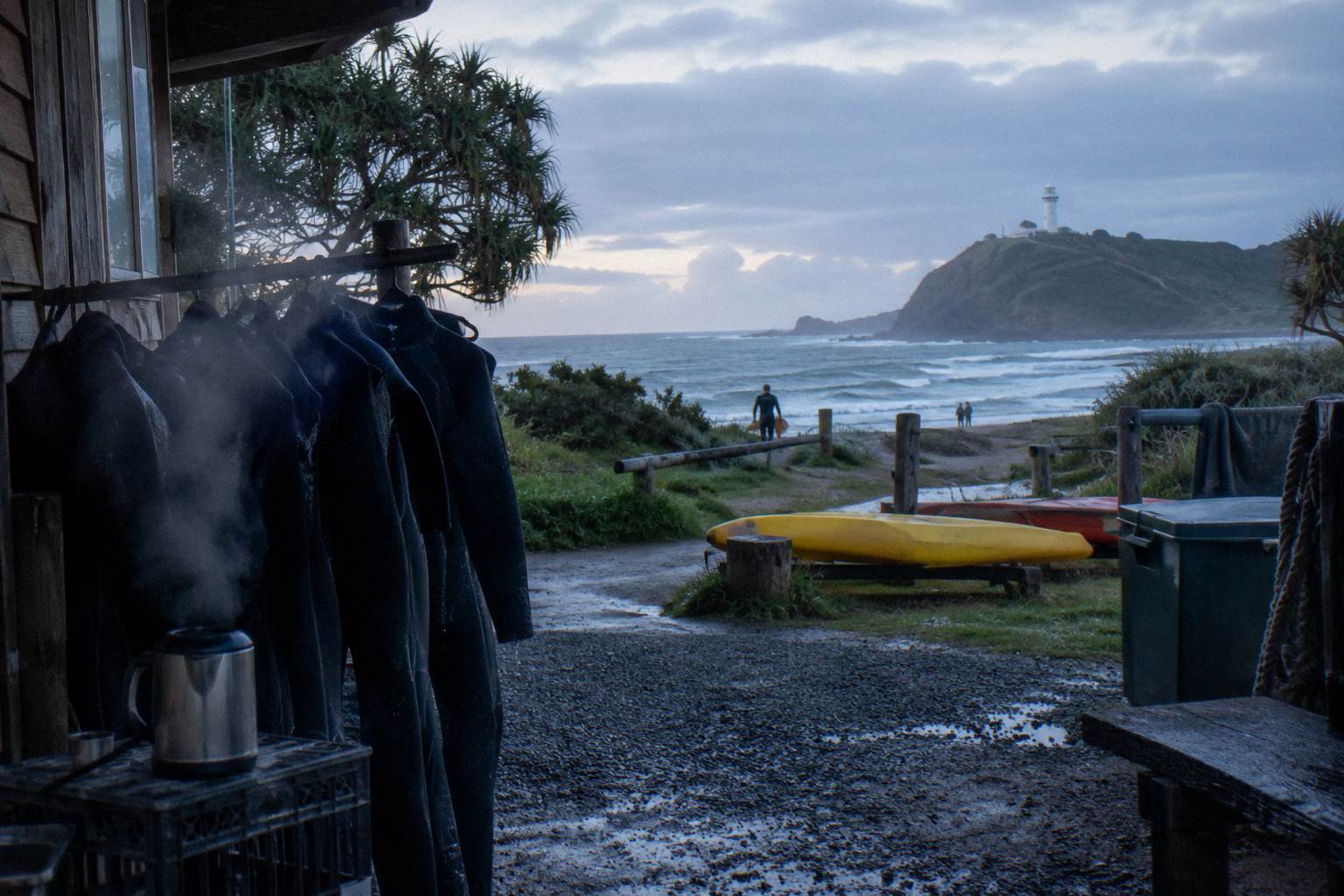
What you should not do is buy a wetsuit for this trip. Both operators stock them, both include them in the tour as described, and no source on either page suggests a personal suit is expected or even common. The same logic applies to paddle gear generally: the operators supply the kayaks, paddles, life jackets and helmets, so the only equipment decision you genuinely own before the day is the phone-or-camera question.
Cameras, Phones And Belongings On The Water
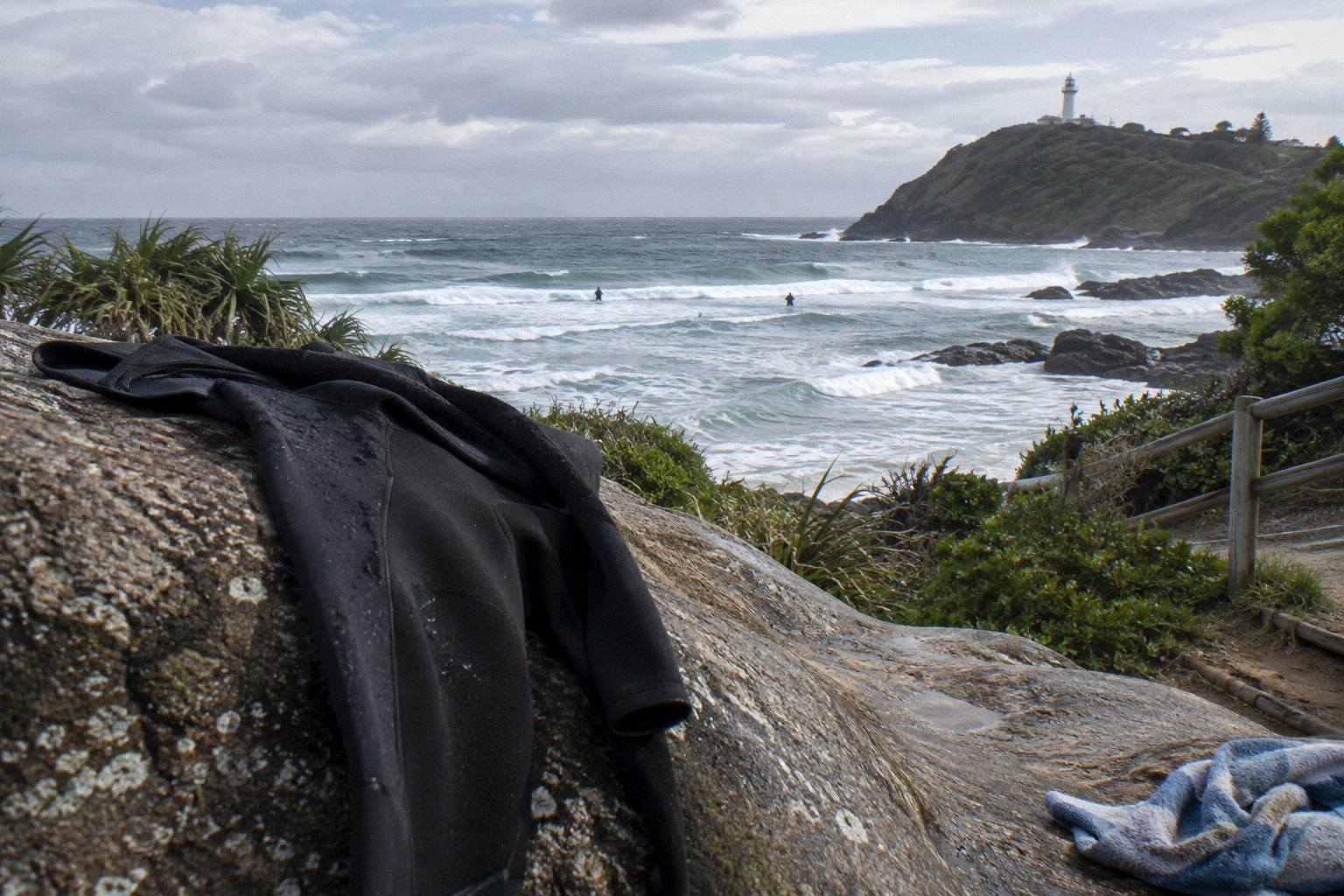
Go Sea says only waterproof cameras are suitable and sells phone pouches at check-in; Cape Byron Kayaks allows phones and cameras attached to the life jacket, advises against valuables, and posts its own tour photos online daily. Both provide storage for what stays ashore: a lock-up at Go Sea, secure storage at Cape Byron Kayaks. That is the entire stated picture, and it points to bringing less, not more.
The two camera policies are close cousins with one difference. Go Sea's version, waterproof cameras only, is a hard line: anything else risks the water. Cape Byron Kayaks' version is a condition: bring it, but fix it to the life jacket where it cannot separate from you. Both amount to the same underlying fact, that loose items on a sit-on-top kayak in open water get wet or lost, but they give you different levels of permission for an ordinary phone.
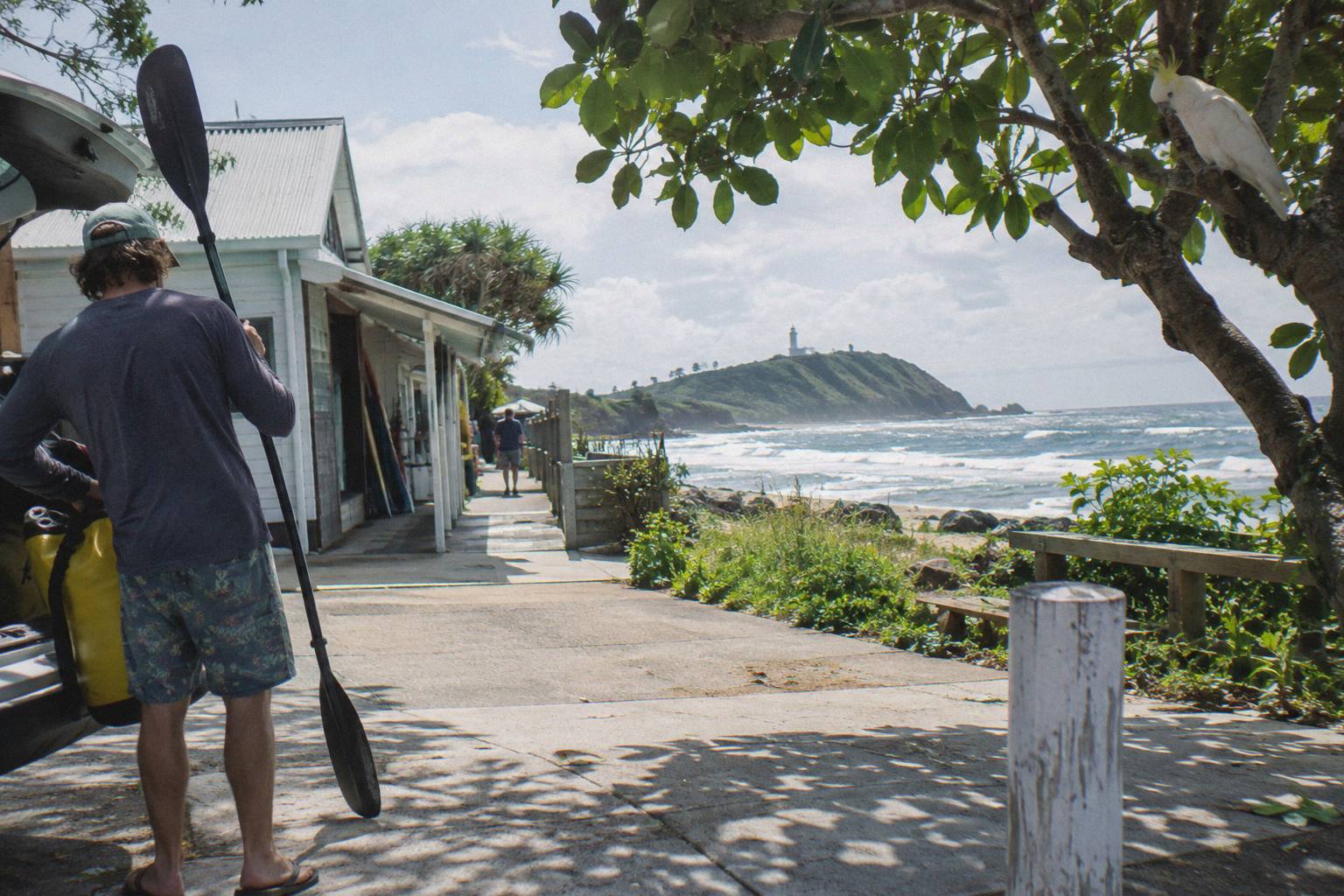
The belongings question has the same shape. Go Sea offers a lock-up for your things at the Lawson Street check-in; Cape Byron Kayaks offers secure storage at its Shed 2 check-in opposite 60/62 Lawson Street. Neither operator describes the storage in detail, so if you are travelling with a laptop, passports or anything you would be upset to lose, ask when booking where it will sit during the roughly two and a half hours you are on the water. If you are driving, the practical question of where to park for a Byron Bay kayak tour interacts with this: a locked car boot is also storage.
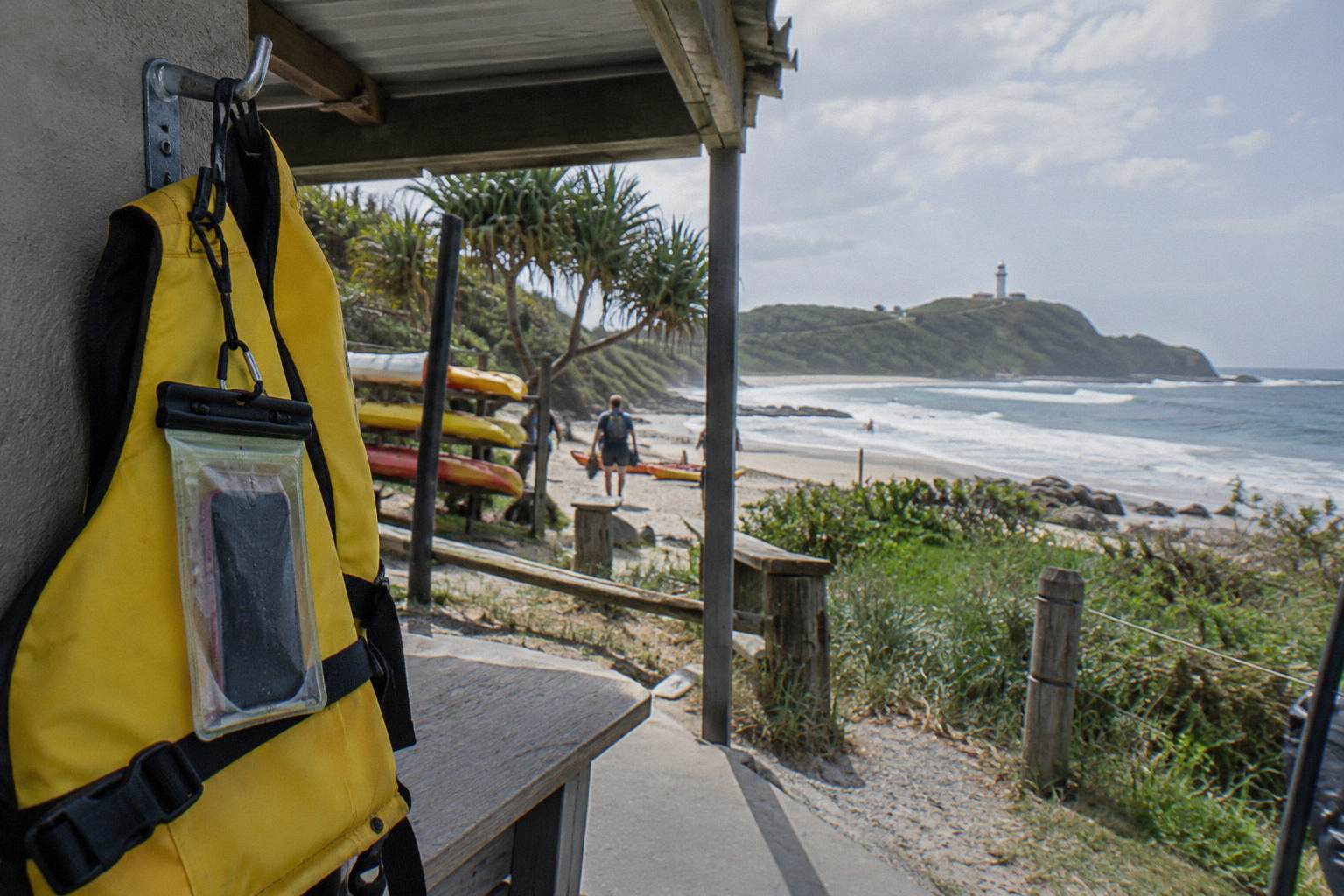
The Cape Byron Kayaks daily photo post deserves one more mention because it changes the calculus. If the operator photographs the tour and posts the pictures online under the AM or PM session, then your own camera is optional rather than essential, and the safest packing decision of all is to bring nothing electronic on the water. Go Sea's booking page does not name an equivalent photo service, so a Go Sea paddler who wants images needs either a waterproof camera or one of the check-in phone pouches.
Sunglasses are not mentioned by either operator, which is itself information of a kind: they are not on any stated list. Anything not on a stated list is your own judgement, and a cheap strap is cheaper than a pair of prescription lenses. But the operators' silence on the item means no claim is made here about what happens to sunglasses on the water.
Rain, Weather Cancellations And What They Mean For Your Bag
Both operators run their ocean tours in the rain: Cape Byron Kayaks says "dolphins are always wet", and Go Sea says rain is often fine. Tours are cancelled for unsafe wind or large swell, not for rain, and Go Sea's terms state that opting out of a rain tour is not refunded. So the packing implication is simple: pack for getting wet regardless of the forecast, because a rainy morning is a normal tour morning, not a cancelled one.
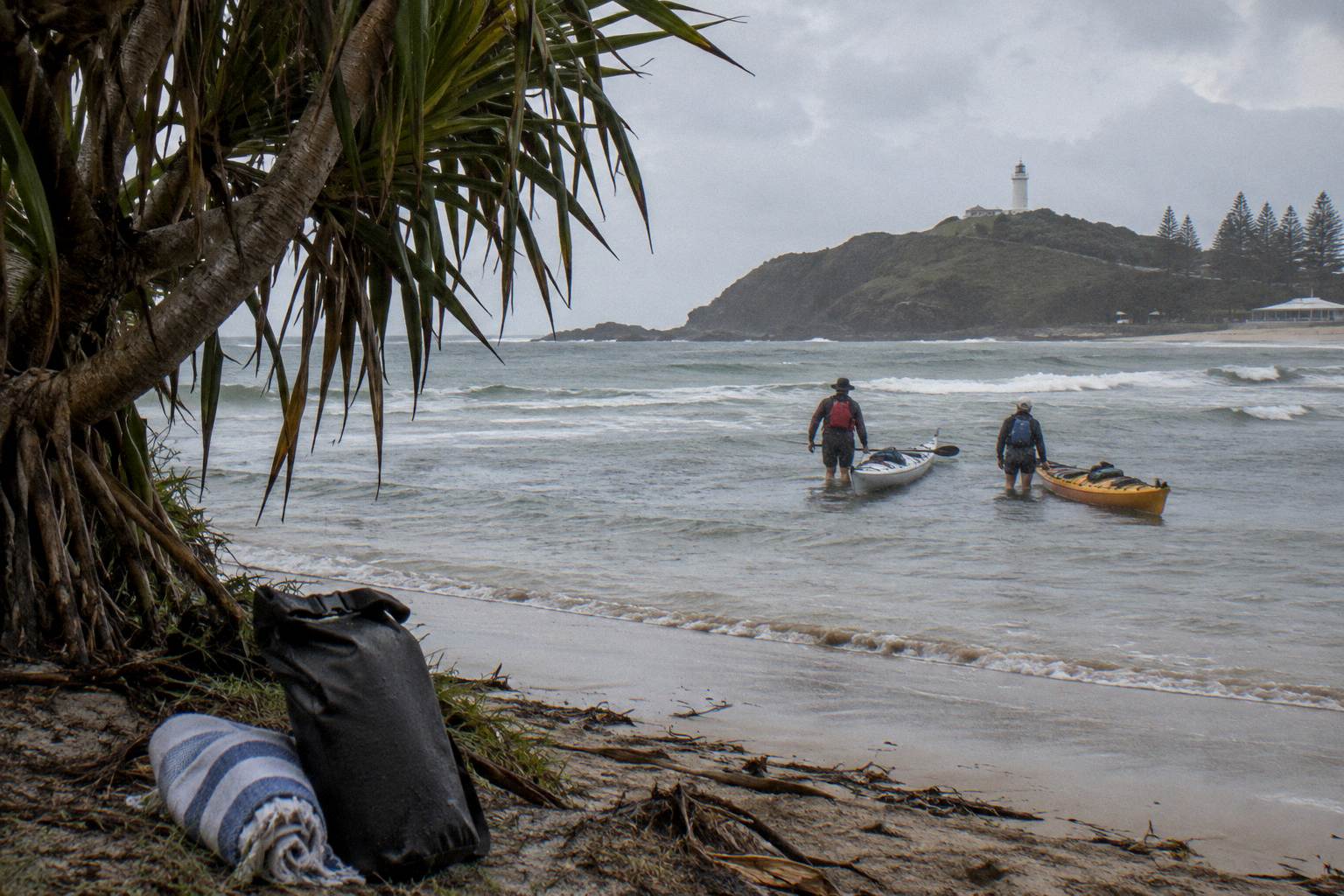
The cancellation detail is worth knowing before you pack, because it removes the temptation to pack "just in case it's cancelled" logic. Go Sea's terms cancel tours for unsafe wind or large swell; direct bookings get a 100% refund if Go Sea itself cancels for unsafe conditions, and booking cancellations more than 24 hours ahead are refunded in full, with nothing inside 24 hours or for a no-show. Seasickness is not refundable under the same terms. Cape Byron Kayaks' booking page offers a full refund if you cancel at least 24 hours before the start, nothing inside 24 hours, and a different date or a full refund if the operator cancels for poor weather. The swell-and-wind detail behind Byron Bay swell and kayak tour cancellations is covered in full in its own guide.
For your bag, the practical reading is this. A rain jacket is on nobody's list, because the rain does not stop the tour and you are going to be wet anyway. A change of clothes is on Go Sea's list and makes sense for any tour, because the end state of every ocean paddle is a wet paddler standing on a beach. A towel does the same job. The full clothing logic, including what not to wear at all, is worked through in what not to wear on a kayak tour and the wider planning background sits in the kayaking in Byron Bay guide.
One weather point belongs to the calendar rather than the bag: if you are booking around the whale migration, the operators state different season windows, and no kayak tour promises whales. That decision landscape, month by month, is in the Byron Bay whale watching season guide, and the choice between paddling and a boat is compared in whale watching by kayak or boat.
What Each Tour Actually Includes, Side By Side
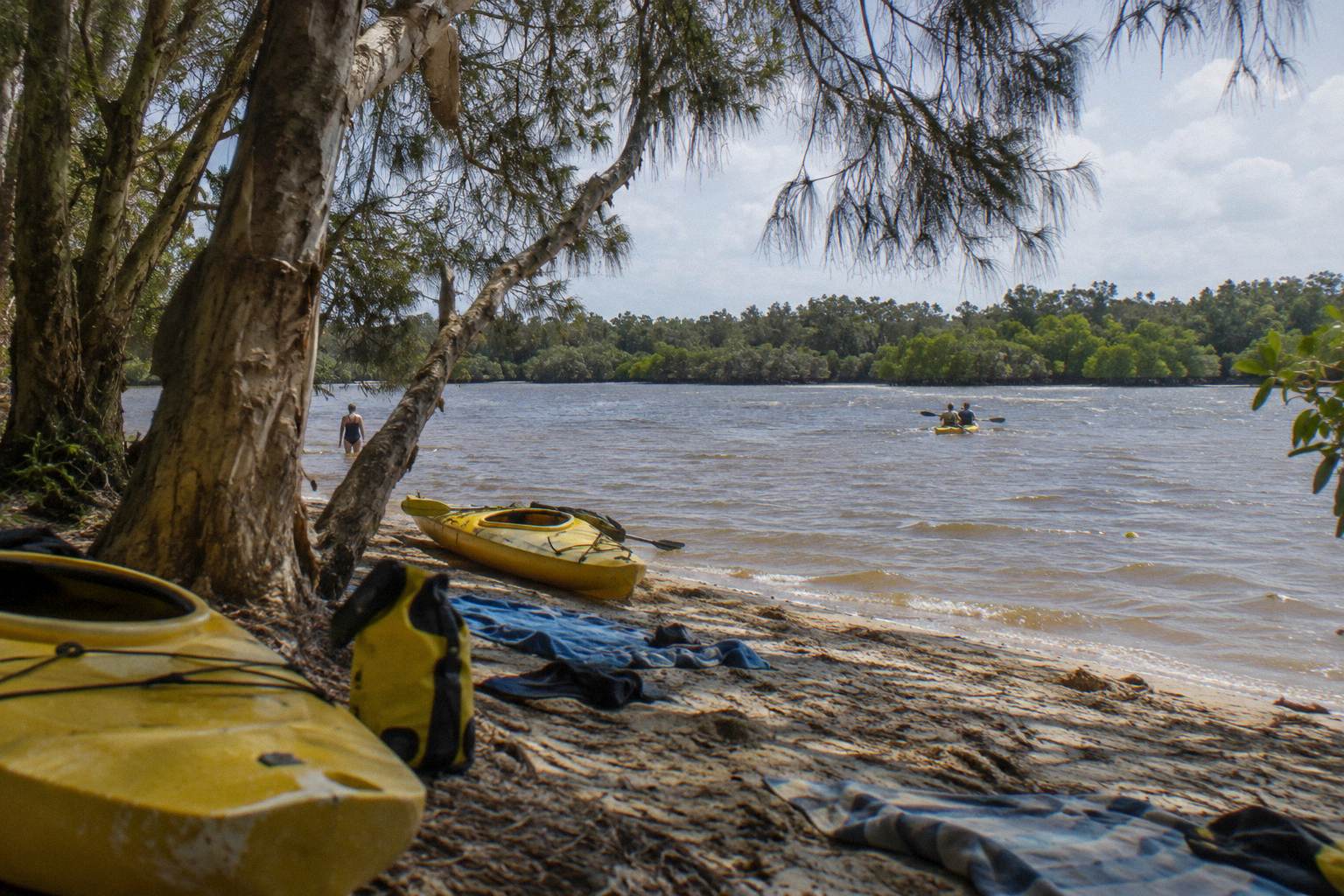
The six tours covered here differ in what is bundled: the ocean tours include gear, guides and Cape Byron Kayaks' Tim Tams; the Brunswick River tours and the stand up paddle nature tour list snacks; the whale watching boat includes a waterproof poncho, free photos and a marine biologist guide. Only the Go Sea ocean tour has a stated price, from AUD 59 per person. Snacks appear only where an operator lists them, and nowhere else.
| Tour | Duration (stated by) | Included Highlights | Meeting Point |
|---|---|---|---|
| Go Sea Kayak, Dolphins And Turtles | About 2.5 hours (booking page); about 2 hours (operator site) | Life jacket, helmet, beach lesson, local guide, wetsuit on cooler days, sunscreen | Opposite 58 Lawson St, Shed 1 |
| Guided Dolphin Kayak, Cape Byron Kayaks | Allow 2.5 hours from check-in (operator) | Life jackets, helmets, wetsuits on request, secure storage, National Park fees, guide, Tim Tams | Shed 2, opposite 60/62 Lawson St |
| River Kayak, Brunswick River | About 2 hours (operator) | Guided river paddle, snacks listed by the operator | Brunswick Heads Scout Hall, South Beach Road |
| River Kayak, Sunset | About 2 hours (operator) | Guided sunset paddle, snacks listed by the operator, mix of single and double kayaks | 40 South Beach Rd, Brunswick Heads |
| Stand Up Paddle, Nature Tour | About 2 hours (operator) | Boards, paddles, leg ropes, lesson and tour combined, digital photos, homemade snacks, cold water | Brunswick Heads, address given after booking |
| Whale Watching, June To November | About 2.5 hours (operator) | Marine biologist guide, live commentary, life jackets, waterproof poncho, free photos, maximum 20 travellers | Lance Ferris Wharf, Ballina |
The pattern is clear: the ocean tours supply your safety gear and thermal layer, the river and stand up paddle tours add food, and the whale boat supplies the things a boat trip needs, including a poncho that no kayaker would find useful. Meeting points differ as much as the kit: the two ocean tours check in at the Lawson Street sheds, the river tours meet at Brunswick Heads, and the whale watching boat departs from Ballina, about 30 minutes south of Byron Bay. Packing for the ocean tours therefore starts at a town-centre shed with secure storage; packing for the river means everything stays in your car at the Scout Hall; and the whale boat trip is a plain boat-trip packing job where the operator hands you the waterproof layer.
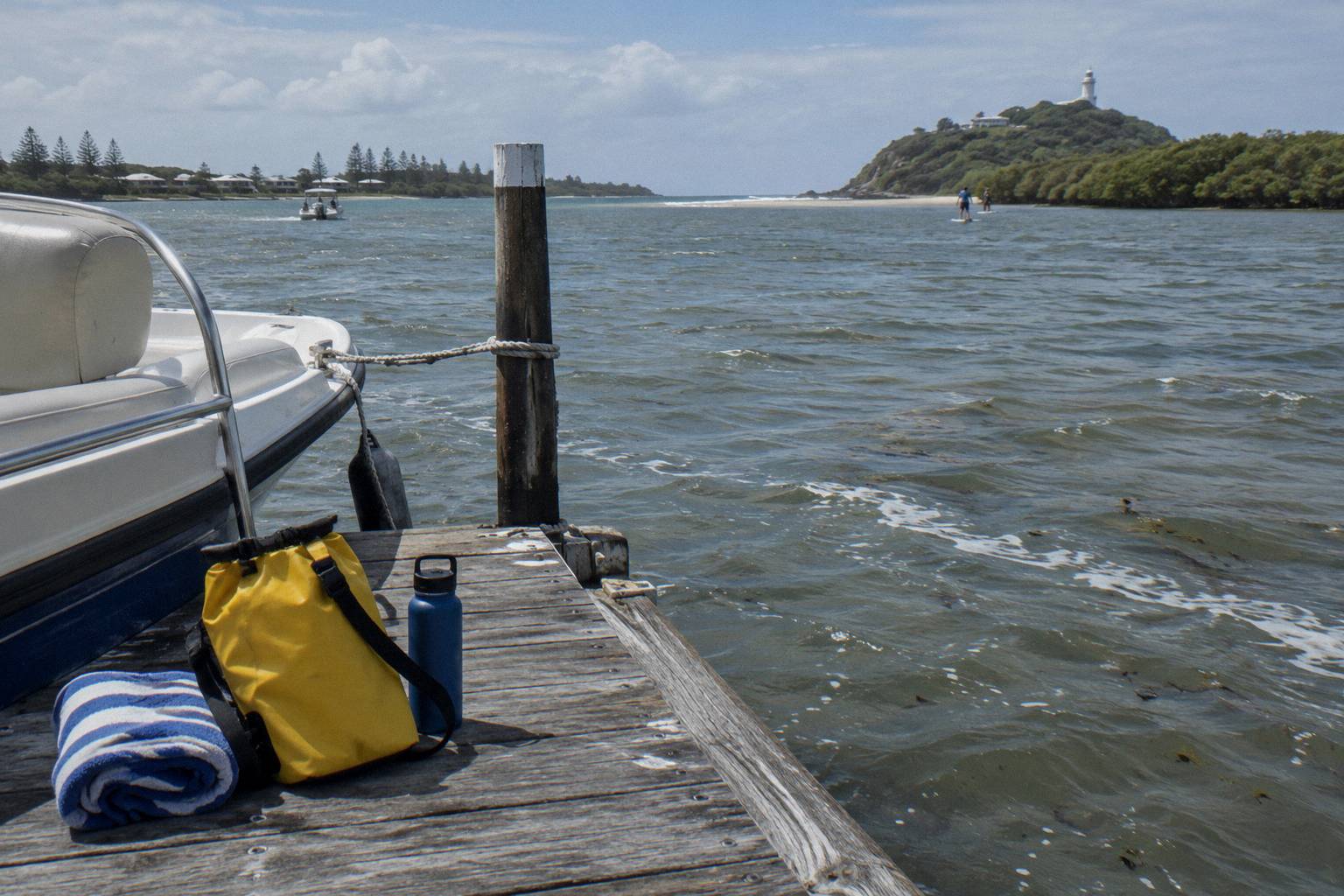
The kids question changes the packing maths too. Minimum ages are 5 on both ocean tours, with Cape Byron Kayaks requiring one adult per child under 16, and 3 on the Go Sea Brunswick River tours, which the operator itself recommends for non-swimmers. The full family angle, including what changes in the boat and on the beach, is in the Byron Bay kayak tour with kids guide, and the swim-ability rules are unpacked in can non-swimmers do a Byron Bay kayak tour. For packing purposes, small children on the river tour mostly need the same short list as adults, plus whatever snacks and spare clothes a three-year-old requires, since a change of clothes is on Go Sea's own list.
Common Mistakes When Packing For A Byron Bay Kayak Tour
The recurring mistakes are bringing a phone with no protection, dressing for a dry boat trip, and assuming the operators' rules are interchangeable. Go Sea says only waterproof cameras suit and sells pouches at check-in, Cape Byron Kayaks requires cameras attached to the life jacket, and the wetsuit policy differs between them. Packing as if both operators share one rulebook is the error everything else flows from.
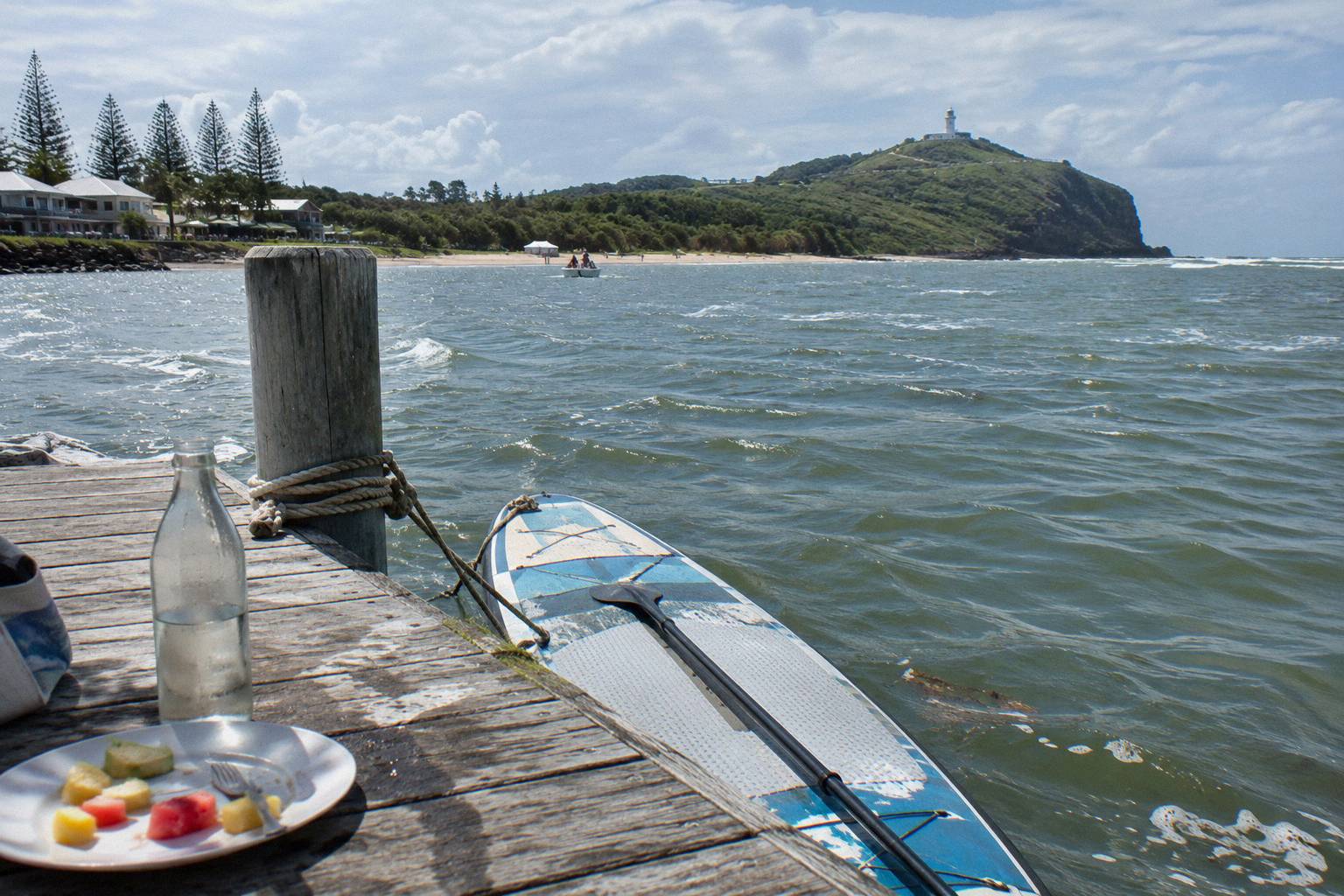
The first mistake is the phone in the pocket. Go Sea's "100% YES" wet warning is explicit, and its check-in pouch sales exist precisely because unprotected phones do not survive the format. The second is packing for rain rather than for water: a rain jacket shields you from drizzle but not from the ocean you are sitting on, and both operators run in the rain anyway, so the change of clothes and towel do more work than any jacket.
The third is assuming the wetsuit question answers itself. It does not: Go Sea ties suits to cooler months, Cape Byron Kayaks supplies them on request, and the sea temperature table above shows why February and August are genuinely different paddles. The fourth is carrying valuables onto the water when both operators offer storage ashore and one of them says outright that valuables are not recommended. The fifth is showing up without the small items on Go Sea's list, sunscreen and a hat chief among them, on the theory that the operator supplies everything: the booking page does list sunscreen available, but the hat and the water bottle are yours to bring.
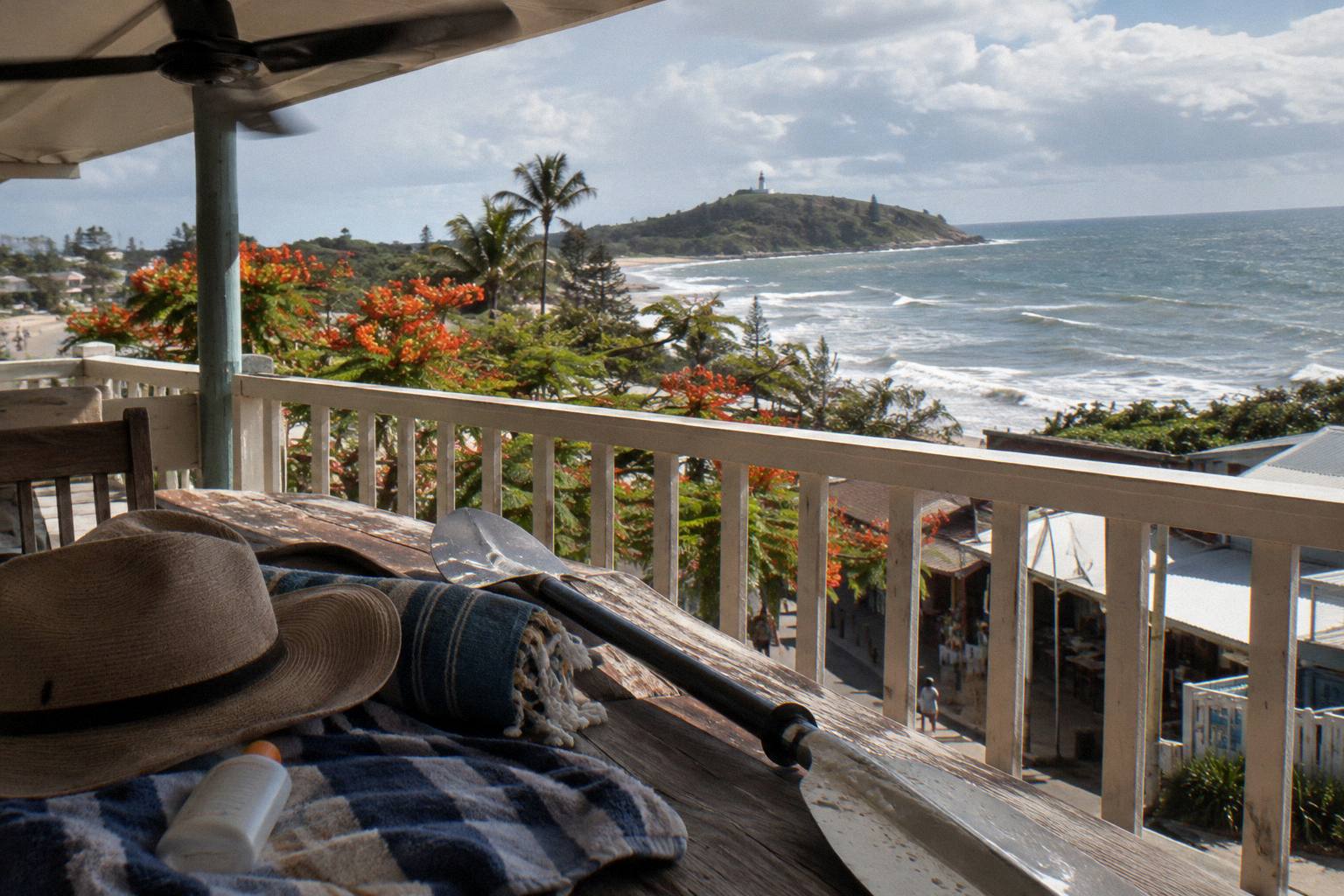
The sixth and quietest mistake is timing. Both ocean tours ask you to check in early, 20 minutes before departure at Go Sea and 15 minutes at Cape Byron Kayaks, and the packing-related tasks at check-in, the pouch purchase, the storage drop-off and the wetsuit request, all happen in that window. Arrive at the departure minute and you compress every decision that this page says deserves a moment. The broader pre-departure picture, including the full safety framing, is in the Byron Bay kayak tour safety guide.
A final note on where all of this comes from. The packing lists, inclusions and rules above are drawn from the operators' own FAQ and about pages, their booking pages, the National Parks tour pages, the NSW approach-rules page and seatemperature.org, all of which are linked where they support a specific claim. The site behind this article, Byron Bay Dolphin Kayak, exists to keep that kind of sourcing straight for Byron Bay paddles.
Common Questions About Packing For A Byron Bay Kayak Tour
What Should I Wear On A Byron Bay Kayak Tour?
Go Sea asks for bathers, a hat, sunscreen and a change of clothes; Cape Byron Kayaks supplies life jackets, helmets, wetsuits on request and storage, and states no clothing list of its own. Neither operator names fabrics, colours or brands, so bathers plus a hat plus dry clothes for afterwards is the complete stated answer.
Do I Need To Bring A Wetsuit?
No. Go Sea provides wetsuits in cooler months and its booking page says a wetsuit is included on cooler days if needed; Cape Byron Kayaks supplies wetsuits if required, on request. No thickness, fit or price is stated by either operator, and nothing suggests a personal suit is expected.
Can I Take My Phone Or Camera On The Kayak?
Go Sea says only waterproof cameras are suitable and sells phone pouches at check-in. Cape Byron Kayaks allows phones and cameras but requires them attached to the life jacket, and advises against bringing valuables. Cape Byron Kayaks also posts its own tour photos online daily, so a camera is optional on that tour.
What Do I Do With My Belongings During The Tour?
Go Sea offers a lock-up for belongings at its check-in opposite 58 Lawson Street; Cape Byron Kayaks offers secure storage at Shed 2, opposite 60/62 Lawson Street. Neither describes the storage in detail, so ask when booking if you are carrying anything valuable.
Is Food Or Drink Included?
Cape Byron Kayaks includes Tim Tams on the ocean tour, in the operator's own words. The Brunswick River tours and the stand up paddle nature tour list snacks, and the stand up paddle tour adds cold water and digital photos. The Go Sea ocean tour asks you to bring a small reusable water bottle and states no food inclusion.
What Happens If It Rains On Tour Day?
Both ocean tours run in the rain: Cape Byron Kayaks says "dolphins are always wet" and Go Sea says rain is often fine. Cancellations are for unsafe wind or large swell, and Go Sea's terms say opting out of a rain tour is not refunded. Pack for getting wet, and the change of clothes and towel do the real work.