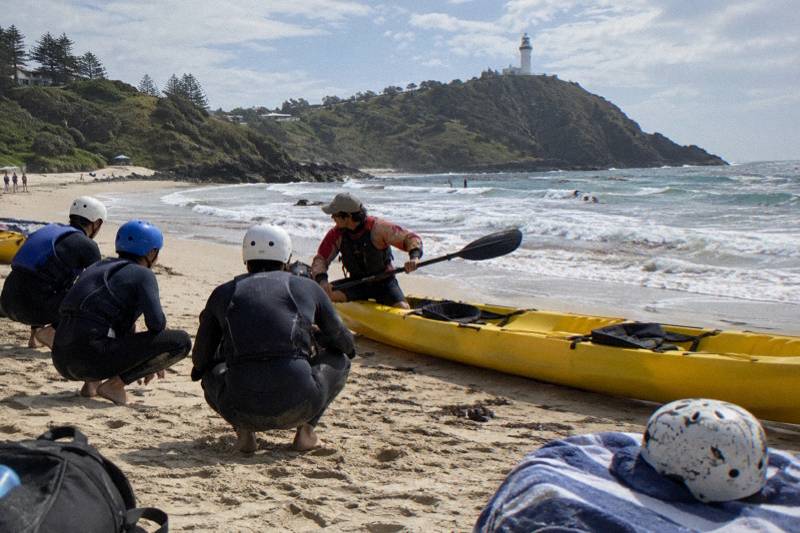
Will I See Dolphins On A Byron Bay Kayak Tour?
The operators' own sighting claims, the free return guarantees, seasons and what happens on a no-dolphin day on a Byron Bay kayak tour.
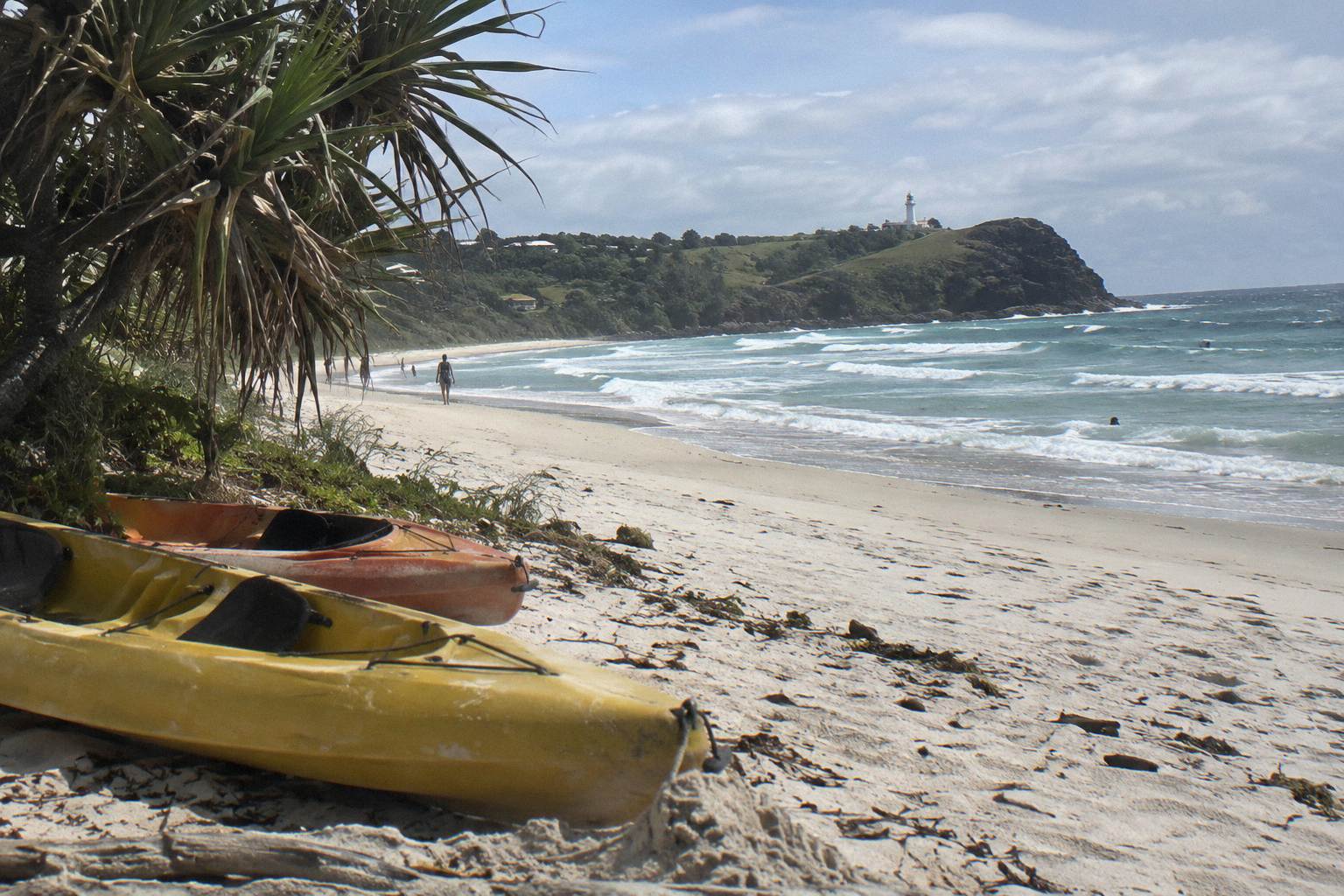
Probably, but nobody can promise it. Cape Byron Kayaks says it sees dolphins on about 90 percent of its tours and its FAQ answers a plain "No" to the question of whether the dolphins always appear. Go Sea Kayak Byron Bay says dolphins are spotted on most of its tours. Both operators back the claim the same way: if the wildlife stays away, you paddle again for free rather than receiving a refund.
That is the honest shape of the answer, and it is better than it first sounds. A free return tour is a real second chance on a different morning with different conditions, and the operators run all year. What follows breaks down the exact wording each operator uses, what the guarantees cover and exclude, what else shares the water, and the small mistakes that quietly lower anyone's odds of a good dolphin day.
What The Operators Actually Say About Dolphin Sightings
The two Byron Bay ocean kayak operators publish sighting claims in their own words, and the numbers sit close together. Cape Byron Kayaks says "over 90% of our kayak tours" on its home page and its FAQ answers a plain "No" to whether dolphins always appear. Go Sea Kayak Byron Bay says dolphins are spotted "on most tours." Neither claim is a promise about your specific morning.
Cape Byron Kayaks' FAQ adds "a pod of around 300 resident dolphins, and we see them on approx. 90% of the tours," while Go Sea's wording runs "On most tours we spot dolphins and from June to November, we often spot whales." Cape Byron Kayaks is unusually candid about the limits of its own number, fielding the question "Do you always see dolphins?" and answering "No." Customer reviews on the operators' own pages include trips where dolphins did not show, which is exactly why both free-return guarantees exist.
The claim and the fallback belong together. Roughly nine paddles in ten, by the operator's own count, end with dolphins in view; the tenth ends with a voucher to try again. The table below sets the two operators' wording side by side.
| Operator | Stated sighting claim (operator wording) | Wildlife guarantee |
|---|---|---|
| Cape Byron Kayaks | "over 90% of our kayak tours" and "a pod of around 300 resident dolphins" seen on "approx. 90% of the tours"; FAQ answers "No" to always seeing dolphins | Free return tour if no dolphins or whales are seen; non-expiring, non-transferable, no refund |
| Go Sea Kayak Byron Bay | "On most tours we spot dolphins and from June to November, we often spot whales" | "if you don't see a Dolphin, Turtle or Whale you can paddle with us again for Free"; no refund |
A detail worth pausing on: Go Sea's guarantee is broader than dolphins alone. A turtle or a whale in season counts as wildlife seen, so a morning that misses the pod but passes a turtle still satisfies the operator's promise. Cape Byron Kayaks frames its guarantee around dolphins and whales in season. Neither operator refunds cash for a quiet sea, and both rebook rather than pay out, so treat the guarantee as a second ticket, not insurance.
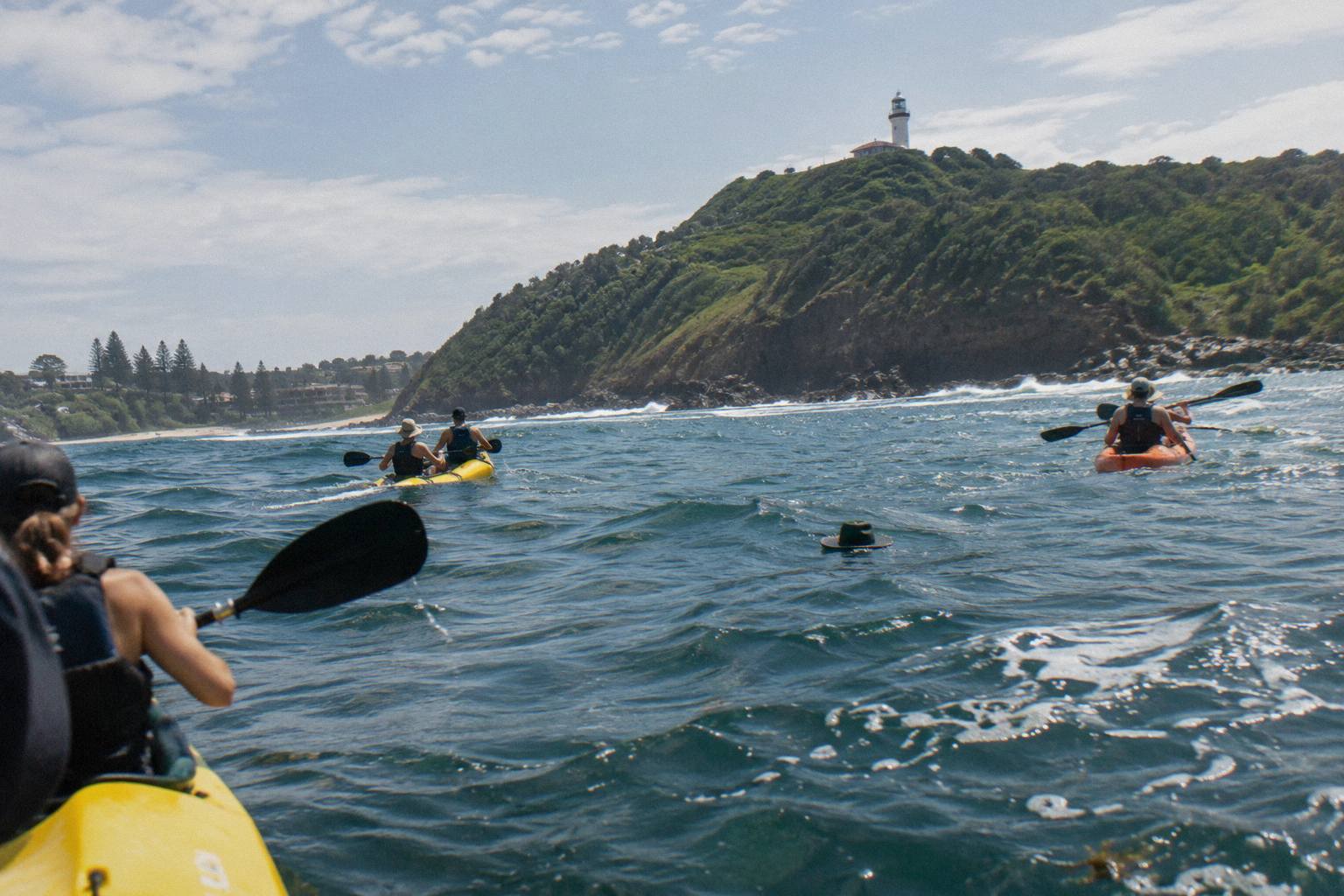
The National Parks and Wildlife Service lists the same wildlife for the Go Sea trip, naming "playful dolphins, sea turtles, and, during migration season, majestic humpback whales" on its tour page for the Cape Byron kayak tours. That is a government agency describing what lives along this coast, not a booking pitch, and it lines up with both operators' descriptions.
What Happens On A Day The Dolphins Stay Away
If the pod does not appear, the tour still runs to plan and you leave with a free return tour rather than money back. You paddle the coast with the guide, surf the waves back in if conditions allow, and rebook another day. Cape Byron Kayaks makes its return tour non-expiring and non-transferable, rebooked by phone with a card hold; Go Sea's wording is simply "paddle with us again for Free."
Neither operator treats a no-dolphin morning as a failed product, and neither should you; the sea decides. There is a difference between a wildlife miss and a cancelled tour, and the two are handled differently. A cancelled tour means the conditions were unsafe, and then money does come back: Go Sea's terms give a direct booking a 100 percent refund if the operator cancels for unsafe conditions, and Cape Byron Kayaks' booking page offers a different date or a full refund when it cancels for poor weather. A tour that runs but sees nothing is the guarantee scenario, the free-return path. The details of both paths, including the 24-hour cancellation windows, are covered in the guide to what happens on a Byron Bay kayak tour.
Booking changes carry their own clock on both sides. Cancel more than 24 hours before a Cape Byron Kayaks tour and the booking page allows a full refund; inside 24 hours there is nothing. Go Sea applies the same 24-hour line to its own bookings, and its terms add that seasickness is not refundable. If a free-return tour is your fallback, the same notice rules apply to rebooking it, so plan the second attempt with the same care as the first.
For readers weighing the two ocean options side by side, the compared guide to the Byron Bay sea kayak tours sets out durations, ages and swim rules operator by operator, and is worth a read before any booking decision.
How Close The Kayaks Actually Get
Close enough for a clear view, but bounded by law, and the rules apply to kayaks specifically. NSW approach distances count a kayak as a vessel: no closer than 50 metres to a dolphin, a caution zone starting 150 metres out, no approaching from behind, no waiting in front, only three vessels in the caution zone at once, and none at all if a calf is present.
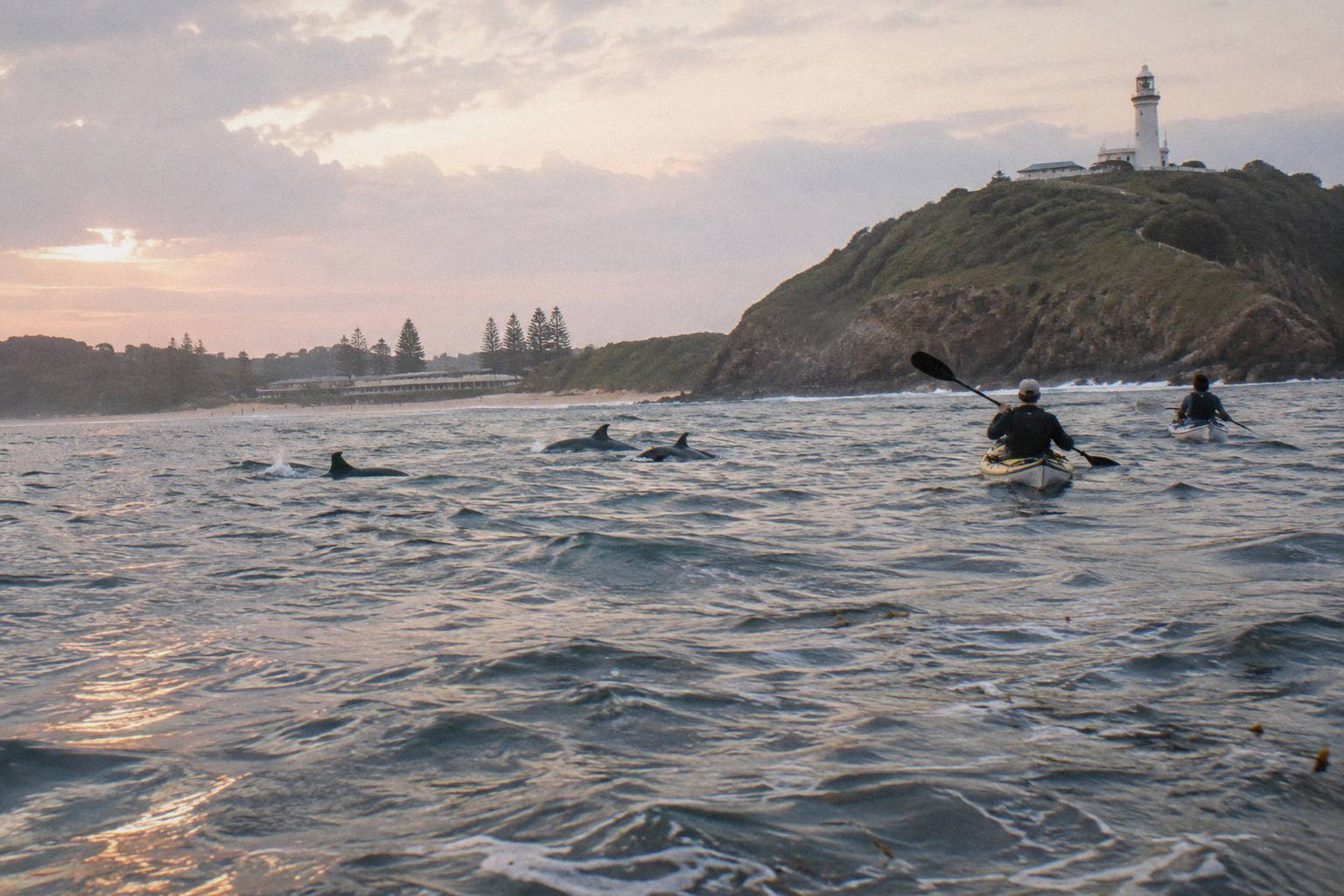
Those distances come from NSW Environment and Heritage's approach-distance rules for whales, dolphins and dugongs, and they bind recreational and commercial paddlers alike. In practice, the dolphins often close the gap themselves. A guided group holding a legal line frequently has animals pass near the kayaks, and the guides, who are surf lifesavers on both ocean tours, manage the group's position so the pod is neither chased nor blocked.
That legal line is also why no Byron Bay kayak tour offers swimming with dolphins: Cape Byron Kayaks says plainly that there are "strict rules about approaching wild animals in NSW - We observe the dolphin from the kayaks." Swimmers in the water must keep at least 30 metres from a dolphin once in, and no tour builds that into a dolphin encounter.
The lawful framing shapes the experience more than most first-time visitors expect. You are not buying a close-quarters animal encounter; you are buying a guided paddle through waters where a resident pod is likely, lawfully observed from the craft. Readers who want the fuller picture on distances for whales as well can read how close kayaks can get to whales and dolphins.
Turtles, Whales And Everything Else In The Water
Dolphins are the headline, but the same paddles pass other wildlife, and the guarantee wording already reflects that. Go Sea's booking page is titled around dolphins and turtles, and its free return covers a dolphin, a turtle or a whale. NPWS names sea turtles and seasonal humpback whales alongside dolphins for the Cape Byron kayak route, while whale season wording differs by operator and never merges into one promise.
Go Sea's guarantee counts a dolphin, a turtle or a whale in season as wildlife seen. The National Parks page does not name species of dolphin or turtle on the tour pages, and neither does the site's own wildlife guide, so the honest answer on what kind of turtle you might pass is simply "not stated; ask your guide on the day."
Whale season is where the sources genuinely differ, and merging them would be sloppy. Cape Byron Kayaks says "Whale season is May - November" on one page and June to November, with humpbacks and southern rights, on another. Go Sea says early June through late October on its whale page and June to November in its FAQ. The whale watching boat tour out of Ballina lists June to November. Paddle inside the overlapping winter-to-spring window and a whale sighting becomes plausible, but no kayak tour promises one, and the free-return guarantees cover a whale miss the same way they cover a dolphin miss.
| Source | Whale season as stated | Notes |
|---|---|---|
| Cape Byron Kayaks | "May - November" on one page; June to November elsewhere | Names humpbacks and southern rights |
| Go Sea Kayak Byron Bay | Early June through late October (whale page); June to November (FAQ) | Says whales are "often" spotted in season, never promised |
| Whale watching boat tour (Ballina) | June to November | Boat trip, not a kayak tour; about 2.5 hours |
Planning a trip specifically around the whale overlap is covered in depth in the Byron Bay whale watching season guide, including the choice between watching whales by kayak or by boat. For the dolphin question alone, the season matters less than you might think, which is the next point.
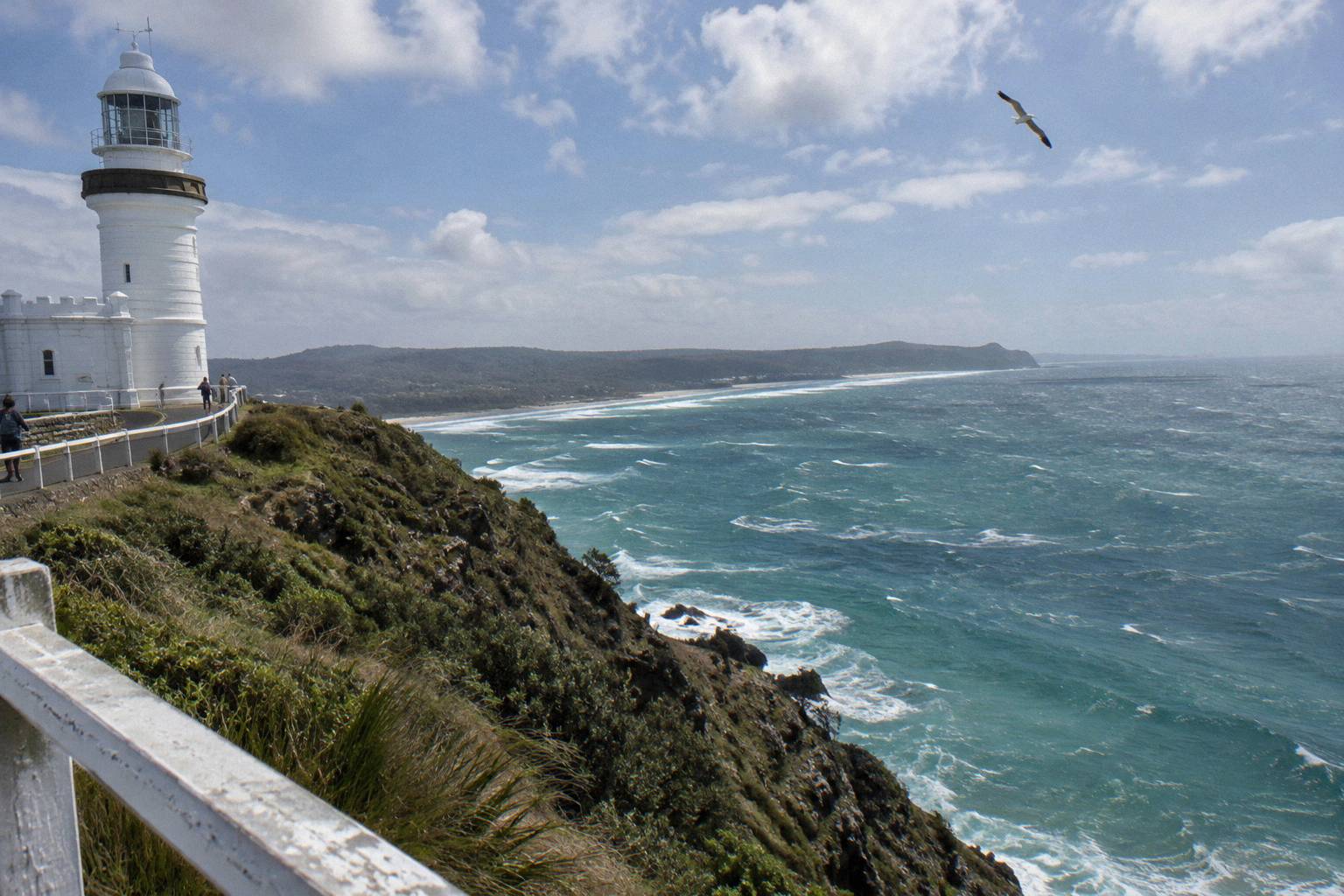
Does The Time Of Year Change Your Dolphin Odds
Not in the way the question usually assumes, because the dolphins in question live here all year. Cape Byron Kayaks describes a resident pod of around 300 dolphins, and Go Sea runs its ocean tours all year, weather permitting. No operator publishes a month-by-month sighting rate, so there is no sourced best month for dolphins; what shifts with the seasons is the water temperature, the start time and the gear.
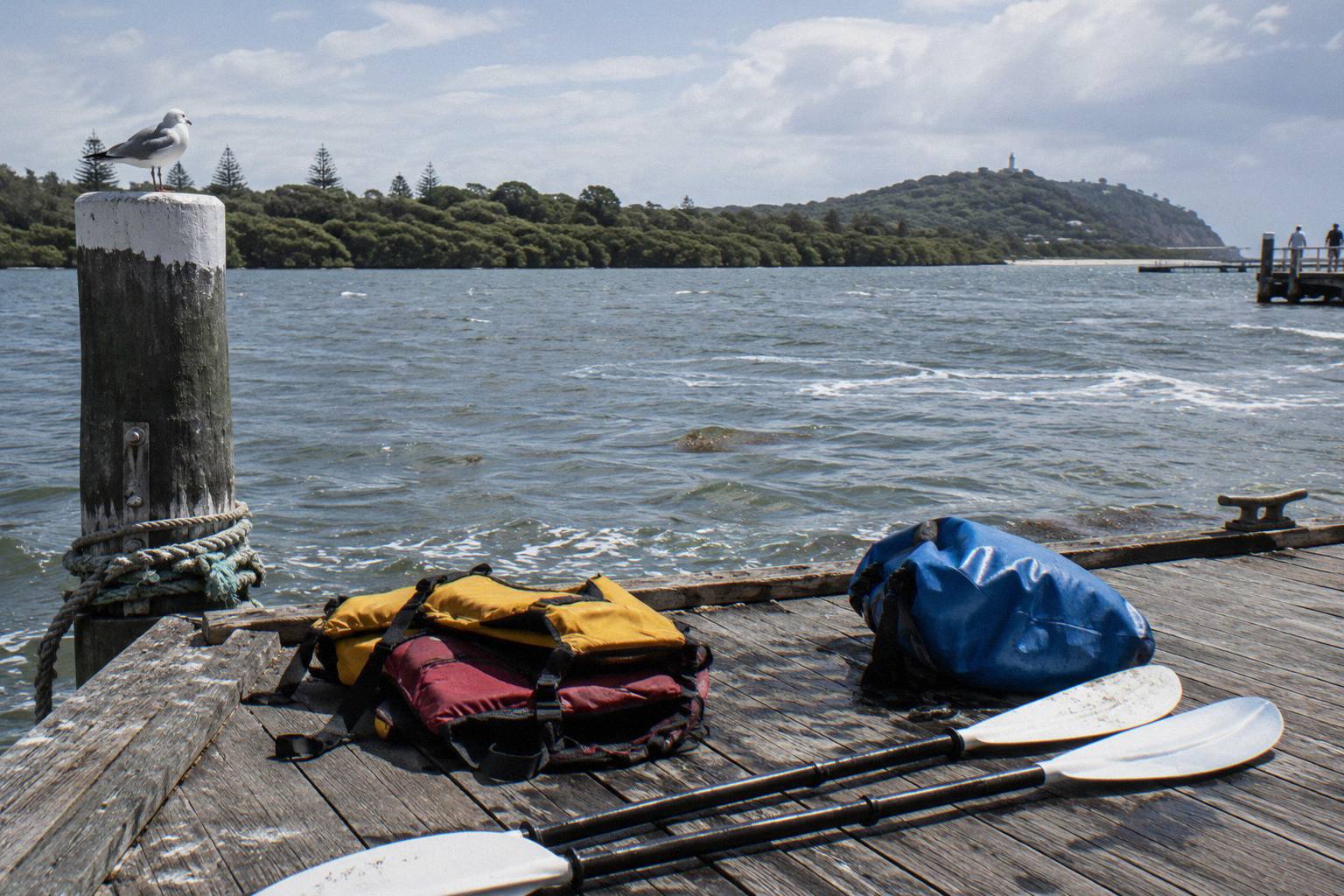
Water temperature moves through a real range across the year. Average sea temperatures from seatemperature.org, drawing on satellite records, run about 21.5 degrees in July and August and about 27.1 degrees in February, with the months between sliding between those marks. Go Sea supplies wetsuits in the cooler months, and Cape Byron Kayaks supplies wetsuits if required. Neither operator stops for cold; both stop for unsafe wind or large swell, which is a conditions question rather than a calendar one, and the mechanics of that are explained in the guide to Byron Bay swell and kayak tour cancellations.
Start times drift with the seasons too. Cape Byron Kayaks starts earlier in summer, its own explanation being to beat the heat or the north winds, and later in winter to miss the south-west winds. Go Sea departs daily at 9:30am and 1:00pm on its main pages. The takeaway for a dolphin-focused visitor is simple: book the season that suits your comfort in the water, pack per the what to wear and bring guide, and let the pod take care of itself, because it is resident either way.
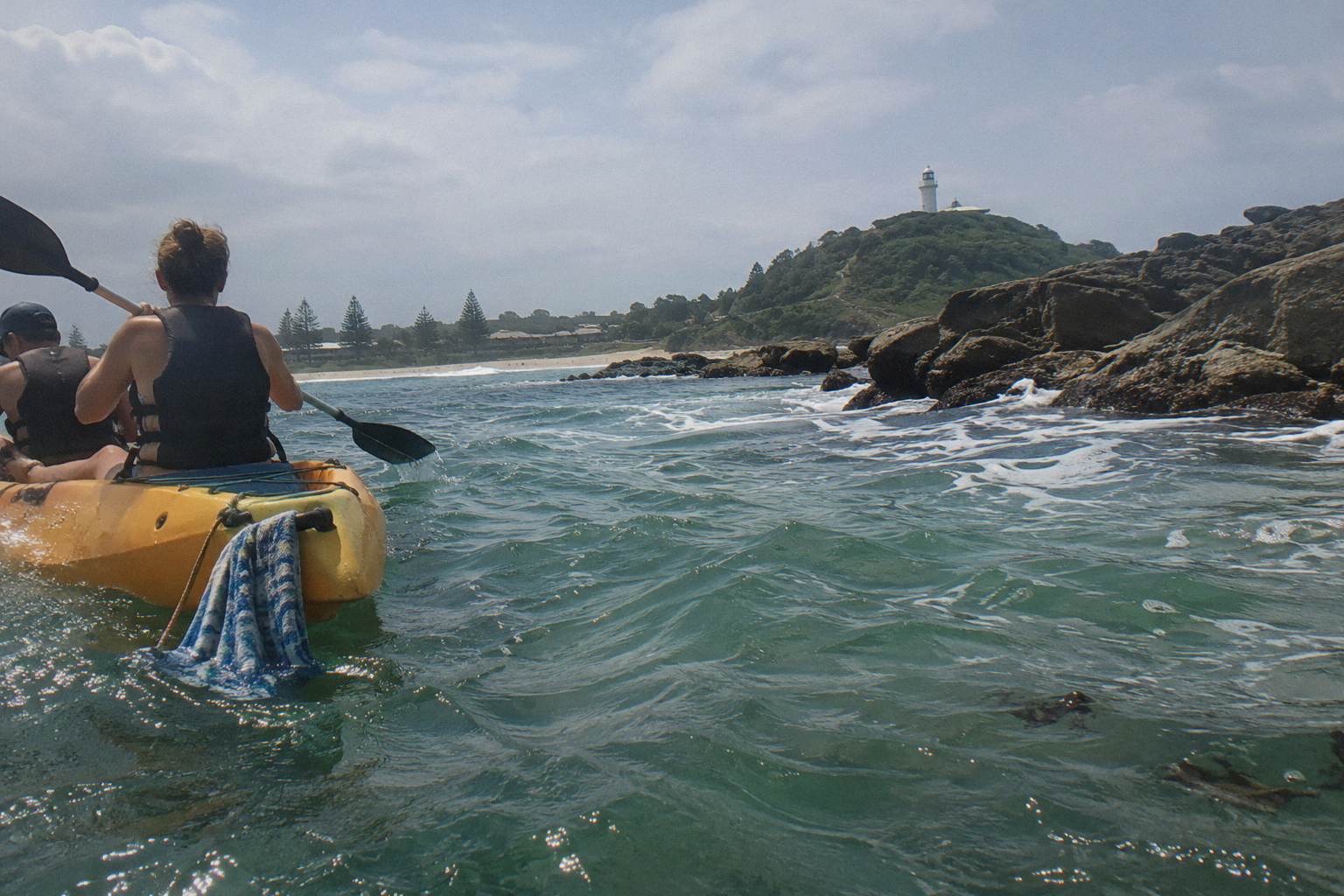
Common Mistakes When Hoping For Dolphins
The mistakes that hurt a dolphin-day plan are booking-side, not luck-side. Expecting a guarantee to mean a refund is the first, since both operators offer free return tours only. Booking a tight itinerary with no spare morning is the second, because the free return needs a free day to use. Mixing up the two operators' rules is the third, and treating rain as a cancellation is the fourth, since both operators paddle in the rain.
The swim-rule mixup deserves its own sentence: Cape Byron Kayaks does not take non-swimmers, while Go Sea accepts them with a life jacket and a word to the guide, and assuming one rule fits both leads to a morning at the wrong shed. Rain, meanwhile, does not stop tours; Cape Byron Kayaks notes that dolphins "are always wet," and only unsafe wind or large swell cancels a trip.
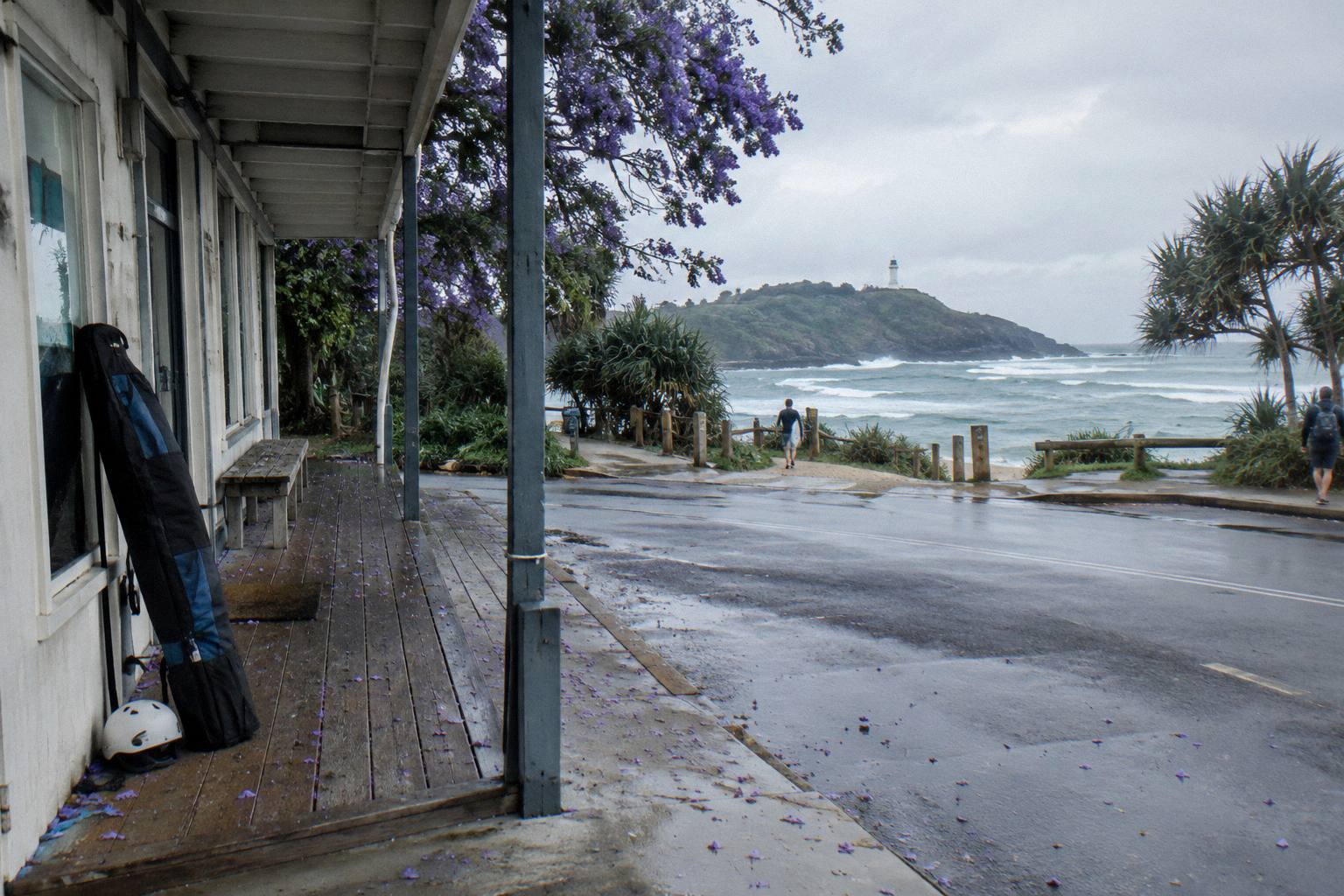
A further mistake is quieter: not asking the operator the right questions when booking. A short checklist covers it. Ask what happens on the day if no dolphins appear, and confirm the return-tour rebooking process by phone. Ask whether the forecast swell or wind has the tour at risk of cancellation, and what your refund path is if the operator cancels. Confirm the check-in details, because the two ocean tours check in at different sheds on Lawson Street, about 20 minutes before departure for Go Sea and 15 minutes for Cape Byron Kayaks. Ask about ages and swim ability for everyone in your group, since the minimum age is 5 on both ocean tours and Cape Byron Kayaks requires paddlers 16 and over to swim 25 metres unassisted.
Finally, and most avoidably, do not arrive expecting to swim with dolphins. No tour here offers that, NSW rules forbid it in practice, and a reader who wants the full legal picture can read whether it is possible to swim with dolphins in Byron Bay. The tour is observation from the kayak, done well, in one of the more reliable dolphin stretches on the coast.
Which Tour To Book If Dolphins Are The Point
If dolphins are the whole point, book either ocean tour: both are built around them, the operators' sighting claims sit within a few points of each other, and the real choice comes down to rules and temperament. Cape Byron Kayaks is the stricter trip, with no non-swimmers and a 25-metre swim requirement for older paddlers; Go Sea is the more permissive one, taking non-swimmers and children from age 5, from AUD 59 per person.
Cape Byron Kayaks has run from Clarkes Beach since 1995 and carries a 4.4 rating across 402 reviews; under 16s paddle with an adult at one adult per child. The Go Sea from price of AUD 59 per person changes by date and is the only printed price among the ocean tours; the tour is rated 4.6 on its booking page. Both trips are guided, both use double sit-on-top kayaks, and both take about 2.5 hours by the booking pages, with Go Sea's own site saying about 2 hours.
The Guided Dolphin Kayak tour with Cape Byron Kayaks is the natural pick for confident swimmers who want the operator whose own FAQ confronts the no-dolphin day head on, Check availability and ask about the current price when you do, since none is published. Visitors deciding between a paddle and a different kind of morning on the water can compare a kayak tour against a boat cruise for dolphins before committing.
For anyone whose group cannot meet the ocean tours' swim or age rules, there is a calm-water alternative that still gets you on the water with wildlife: the stand up paddle nature tour out of Brunswick Heads, rated 5.0 across 391 reviews, about 2 hours, minimum age not stated. It is not a dolphin tour and should not be booked as one, but it suits mixed groups and younger children in a way the ocean paddles may not, and the choice is unpacked in the kayak tour versus SUP and hire guide.
Between those poles sits the Go Sea ocean tour, the option most groups can say yes to. Non-swimmers are accepted, the from price is the only printed one among the ocean tours, and the guarantee covers dolphins, turtles or whales, which widens the chance that a single trip counts as wildlife seen in the operator's own terms.
The pod, in the end, answers to nobody. Roughly nine tours in ten see it by the operator's own count, the guarantee covers the tenth, and the planning that actually matters is choosing the tour whose swim rules, ages and check-in shed fit your group. Visitors comparing the full decision can start with Byron Bay Dolphin Kayak and work outward from there.
Common Questions About Dolphin Sightings On A Byron Bay Kayak Tour
Will I See Dolphins On A Byron Bay Kayak Tour?
Probably, but never certainly. Cape Byron Kayaks says dolphins are seen on about 90 percent of its tours and answers "No" to whether that is always; Go Sea says dolphins are spotted on most tours. If none appear, both operators give you a free return tour rather than a refund.
Do The Tours Guarantee Dolphins?
Not a sighting. Both operators guarantee a free return tour if the wildlife is missed: Cape Byron Kayaks if no dolphins or whales are seen, Go Sea if you see no dolphin, turtle or whale. The return tours are non-expiring at Cape Byron Kayaks, non-transferable, and carry no cash refund.
Can You Swim With The Dolphins From The Kayak?
No. Cape Byron Kayaks says there are strict rules about approaching wild animals in NSW and that dolphins are observed from the kayaks. NSW rules count a kayak as a vessel, keeping it at least 50 metres from a dolphin, and swimmers in the water must keep at least 30 metres.
Is There A Better Season For Dolphins In Byron Bay?
No operator publishes a month-by-month dolphin rate. Cape Byron Kayaks describes a resident pod of around 300 dolphins and Go Sea runs all year, weather permitting. Whale season differs by operator, roughly May or June to November, but a whale sighting is never promised on a kayak tour.
What If The Tour Is Cancelled For Weather?
That is different from a wildlife miss. Go Sea gives a direct booking a full refund if it cancels for unsafe conditions; Cape Byron Kayaks' booking page offers a different date or a full refund for its weather cancellations. Rain alone does not stop either tour.
Which Tour Is Better For Seeing Dolphins?
The sighting claims sit close together, so the choice is practical. Cape Byron Kayaks requires paddlers 16 and over to swim 25 metres unassisted and takes no non-swimmers; Go Sea accepts non-swimmers with a life jacket. Both use guided double kayaks and take about 2.5 hours by the booking pages.