Is It Possible To Swim With Dolphins In Byron Bay?
No Byron Bay tour offers a swim with dolphins: the kayak tours observe from the boats, and NSW rules keep swimmers 30 m away. What you can book instead, and how close the rules let you get.
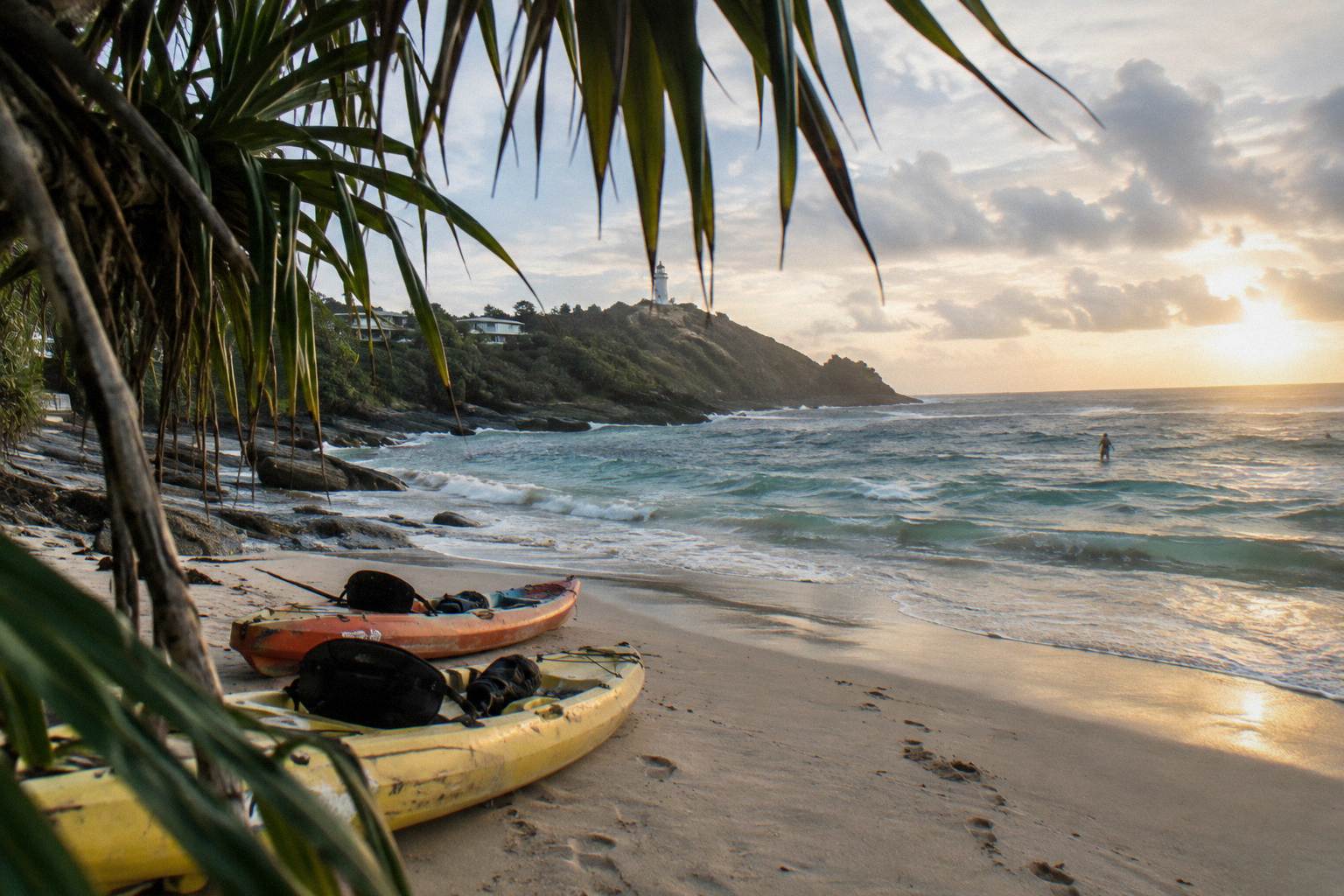
No. There is no swim-with-dolphins tour in Byron Bay, and the two kayak operators that run dolphin trips are explicit about the reason. Cape Byron Kayaks says there are strict rules about approaching wild animals in NSW and that its paddlers observe the dolphins from the kayaks. NSW law backs that up: a swimmer must stay at least 30 m from a dolphin once in the water, and may not even enter the water closer than 50 m to one. What Byron Bay does offer is a guided paddle among a resident pod, which is a different, and legal, experience.
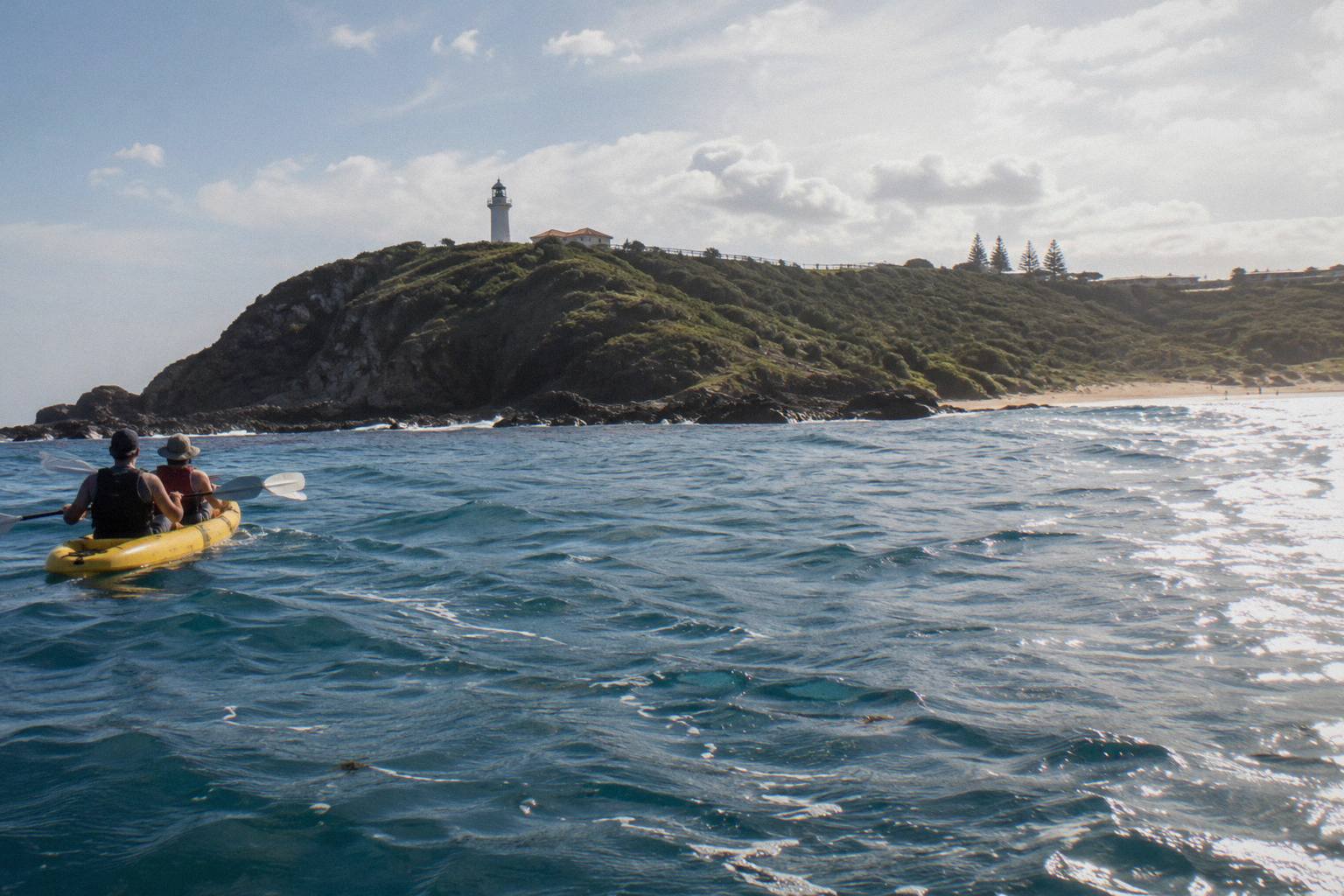
Not on any tour you can book. The six trips covered here are paddles and one boat cruise, and none of them puts you in the water with dolphins. Cape Byron Kayaks states on its FAQ page that dolphins cannot be swum with and that strict NSW rules about approaching wild animals mean the pod is observed from the kayaks. A wild, independent swim is a different matter, and the law still applies.
The distinction matters because the phrase "swim with dolphins" gets attached to Byron Bay in travel forums and search suggestions, and readers arrive expecting something like the structured dolphin swims sold in other countries. That product does not exist here. What exists is a cluster of guided sea kayak tours that launch from the beaches at the foot of Cape Byron and paddle out to where a resident pod lives, plus calmer river alternatives and a whale watching boat trip that departs from Ballina. The trips that come closest are the ones Byron Bay Dolphin Kayak covers in detail.
The legal framing comes from NSW Environment and Heritage, whose approach-distance rules treat dolphins as protected marine mammals whether you are in a boat, on a board or in the water. The rules set minimum distances for vessels, for swimmers and even for drones. Cape Byron Kayaks, which has run dolphin kayak tours since 1995 by its own account, points to those rules directly when it answers the question on its FAQ page: the dolphins are watched from the kayaks, full stop.
So the honest-shape answer to the question is: not through any operator, not legally at close range on your own, and not because the dolphins are rare. They are common enough that Cape Byron Kayaks says it sees them on over 90% of its tours. The barrier is the law and the way the tours are designed, not the animals.
If the goal is to be near dolphins in Byron Bay with a good chance of actually encountering them, the realistic options are the two guided ocean kayak tours, both of which are covered in detail at will you actually see dolphins on a kayak tour, and the calmer Brunswick River paddles, which are wildlife tours of a gentler kind.
The three trips above are the closest things Byron Bay has to a dolphin encounter you can put a booking on: the two ocean kayak tours out of Byron Bay itself, and the scenic river paddle out of Brunswick Heads for anyone who wants flat water. None of them is a swim. The rest of the article explains why, what the law actually says, and how to pick between the alternatives.
Why No Byron Bay Tour Offers A Dolphin Swim
Because NSW law makes a commercial swim impractical and the operators built their trips around watching instead. Cape Byron Kayaks says on its FAQ page that dolphins cannot be swum with under strict NSW rules on approaching wild animals, and that paddlers observe them from the kayaks. Neither booking page mentions entering the water with the pod.
The wording matters. Cape Byron Kayaks does not soften it: the question of swimming with the dolphins gets a direct no, with the explanation that the rules exist to protect wild animals. Go Sea's FAQ describes spotting dolphins from the kayaks, and its guarantee is framed the same way: if no dolphin, turtle or whale is seen, you can paddle again for free. The product on both sides is observation from a vessel, not contact.
That is not a Byron Bay quirk. Marine mammal protection in NSW sets approach distances for vessels, swimmers and drones, and a licensed commercial operator working inside Cape Byron Marine Park has every reason to stay well inside them. The marine park's own user guide, published by the NSW government department responsible for the park, restates the approach rules and adds permit requirements for commercial operators. A swim product would put paying customers inside distances the law forbids.
There is also an animal-behaviour argument the operators make without stating it in these terms: a resident pod that is approached calmly by slow-moving kayaks, again and again, over decades, stays relaxed around them. The tours are built to keep that relationship intact. Whatever the reason, the outcome for a traveller is simple. You can be on the water among dolphins in Byron Bay within about 2.5 hours of booking a kayak tour. You cannot be in the water with them.
For anyone weighing whether the paddle is worth it without the swim, the pricing and sighting details are laid out in is a Byron Bay kayak tour worth the money, and the answer leans on facts rather than brochures.
How Close Can A Kayak Get To Dolphins In Byron Bay?
A kayak counts as a vessel under the NSW rules, so it may come no closer than 50 m to a dolphin, and a swimmer in the water must keep at least 30 m. The caution zone around a dolphin extends to 150 m, with strict behaviour rules inside it, and around a whale to 300 m with a 100 m minimum approach distance. NSW Environment and Heritage states all of these figures on its official approach-distance page.
That page defines a vessel to include non-motorised boats, surfboards, surf skis and kayaks, which removes any idea that paddling under your own power exempts you. Inside the caution zone the rules are detailed: never approach a dolphin from behind or wait in front of it, approach from the side at least 30 degrees to its direction of travel, maintain constant slow speed with negligible wake, and keep to a maximum of three vessels in the caution zone at any one time. If a calf is present, no vessel may enter the caution zone at all. If dolphins start bow-riding, a kayak keeps its course and speed.
| Situation | Minimum distance (dolphin) | Minimum distance (whale) | Source |
|---|---|---|---|
| A vessel, including a kayak | 50 m | 100 m | NSW Environment and Heritage |
| Vessel caution zone | 150 m | 300 m | NSW Environment and Heritage |
| Swimmer entering the water | 50 m | 100 m | NSW Environment and Heritage |
| Swimmer already in the water | 30 m | 30 m | NSW Environment and Heritage |
| A mostly white animal | 500 m | 500 m | NSW Environment and Heritage |
| A drone | 100 m | 100 m | NSW Environment and Heritage |
The swimmer lines are the ones that close the door on a dolphin swim. Even if you entered the water a legal 50 m away from a pod, the law requires you to keep at least 30 m from any dolphin once you are in, calf included. A dolphin that chooses to close that distance is one thing; a person who does it is breaking the rules. The full distances, including the drone limit and the rules of behaviour inside a caution zone, are on the NSW Environment and Heritage approach-distances page.
For a licensed tour the practical effect is smaller than the numbers suggest, because dolphins approach kayaks on their own terms. A pod that is curious will come to a slow, quiet group of kayaks, and the operators' sighting claims, about 90% of tours for Cape Byron Kayaks by its own wording, suggest the animals are comfortable doing exactly that. The gap the law creates is between an animal choosing to be near you and you choosing to be near the animal. A tour can deliver the first. Nothing legal delivers the second.
More detail on the whale side of those numbers, including what happens when a humpback comes closer than the rules allow, is in how close a kayak can get to whales and dolphins.
What The Dolphin Kayak Tours Actually Offer
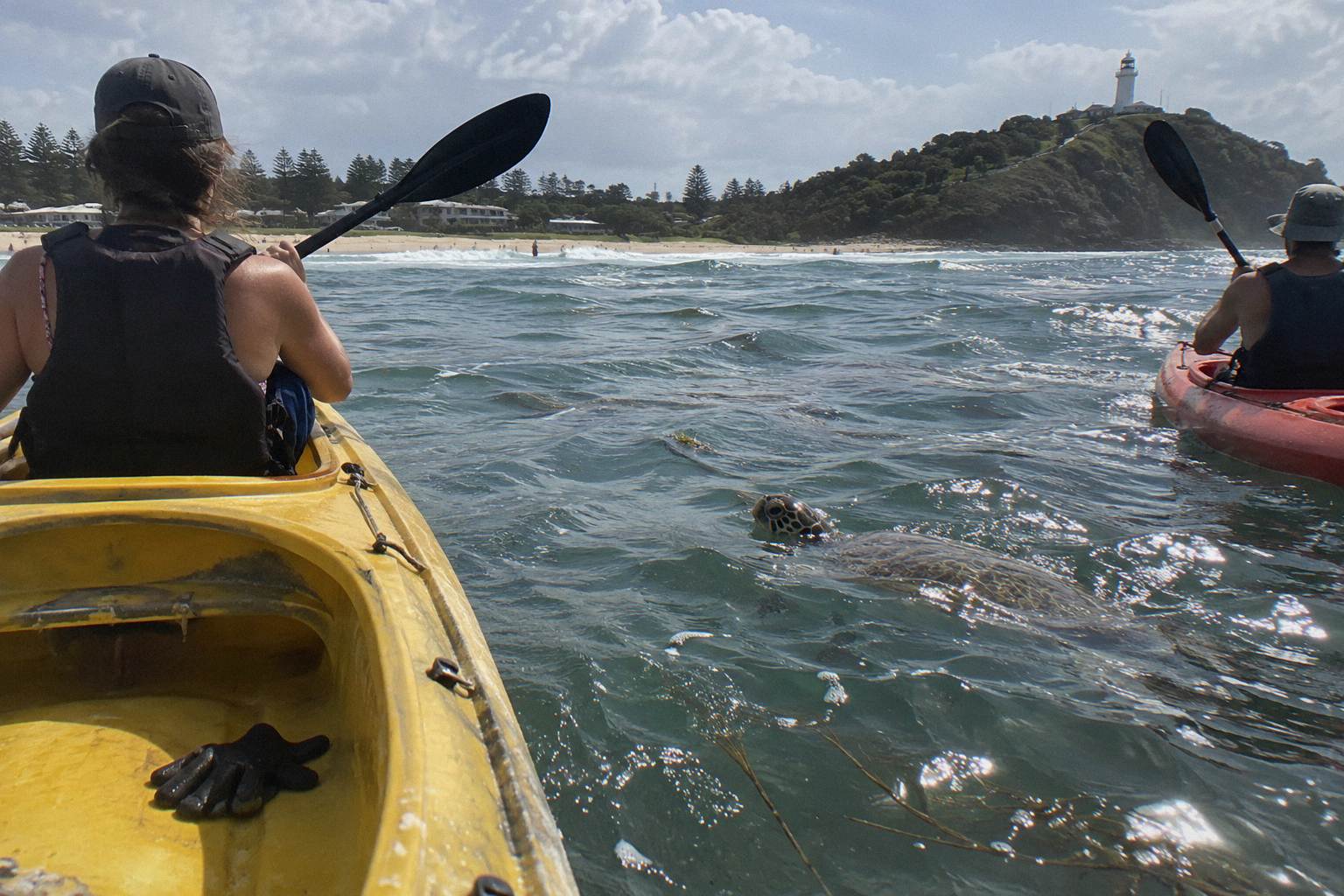
Two operators run guided ocean kayak tours out of Byron Bay, and both sell observation, not immersion. Cape Byron Kayaks says it sees dolphins on over 90% of its tours and describes a pod of around 300 resident dolphins; Go Sea says it spots dolphins on most tours and whales from June to November. Both back the claim with a free return tour if the wildlife is missed, never a refund.
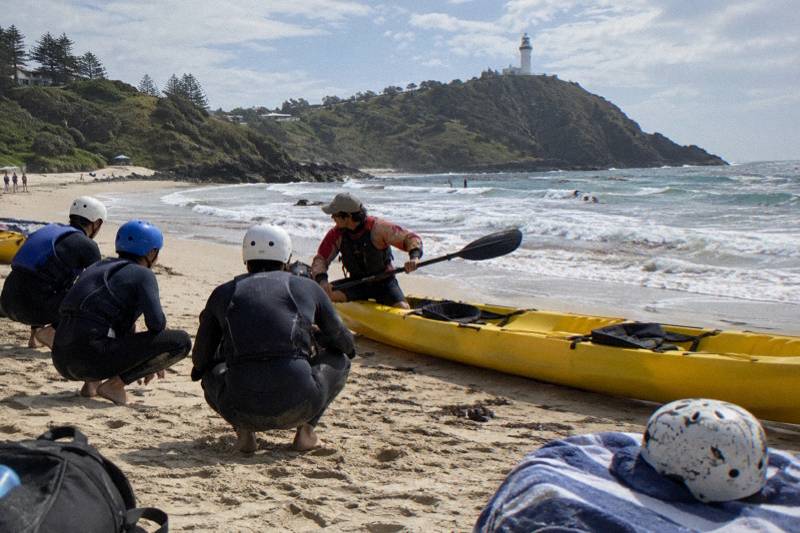
The Cape Byron Kayaks trip checks in at Shed 2 opposite 60/62 Lawson St, 15 minutes before departure, and the operator says it leaves from Clarkes Beach and follows the coastline out to the Cape, catching up with the dolphin friends at Wategos Beach. It allows 2.5 hours from check-in, uses double sit-on-top kayaks for everyone, and includes wave-surfing instruction and, in its own words, all the Tim Tams you can eat. It is rated 4.4 across 402 reviews on its booking page. Under 16s need an adult alongside at one adult per child, and the minimum age is 5.
Go Sea Kayak Byron Bay checks in opposite 58 Lawson St at Shed 1, at least 20 minutes before departure, and its booking page prices the tour from AUD 59 per person, a figure that changes by date. The booking page says about 2.5 hours; Go Sea's own site says approximately 2 hours; NPWS lists 2 hr at medium difficulty. It is rated 4.6 on its booking page. Departures are daily at 9:30am and about 1:00pm, weather permitting, with sunrise tours only in near-perfect conditions and with marine park approval. Minimum age is 5, and unlike its neighbour it accepts non-swimmers, as long as the guide knows and a life jacket is worn.
| Cape Byron Kayaks tour | Go Sea Kayak ocean tour | |
|---|---|---|
| Duration | About 2.5 hours from check-in (operator) | About 2.5 hours (booking page); about 2 hours (operator site) |
| Minimum age | 5, under 16s one adult per child | 5 |
| Non-swimmers | Not accepted; over 16s must swim 25 m unassisted | Accepted, with a life jacket and a word to the guide |
| Kayaks | All double sit-on-tops | Mostly double sit-on-tops, 190 kg combined limit |
| Check-in | Shed 2, opposite 60/62 Lawson St, 15 min early | Shed 1, opposite 58 Lawson St, 20 min early |
| Price | Not stated; ask the operator | From AUD 59 per person |
| Rating | 4.4 across 402 reviews | 4.6, review count not stated |
| If no dolphins | Free return tour, non-expiring | Free return paddle |
Note the differences rather than flattening them. The swim rule alone decides the question for some families: Cape Byron Kayaks does not take non-swimmers and requires everyone 16 and over to swim 25 m unassisted, while Go Sea takes them and even recommends its own Brunswick River tour for nervous paddlers. If that trade-off matters to your group, the fuller comparison of ability requirements is in whether non-swimmers can do a Byron Bay kayak tour.
The free-return guarantees deserve a plain reading. Cape Byron Kayaks says its guarantee tour is a non-expiring, non-transferable return trip with no refund, rebooked by phone with a card hold. Go Sea's version is a free paddle again if no dolphin, turtle or whale appears. Both are generous second chances, and neither is money back, so plan the first attempt for a day with a decent forecast.
The Cape Byron Kayaks dolphin kayak tour is the trip to look at first if the dolphin encounter is the whole point of the day: the operator's own numbers about the resident pod, the Wategos Beach route wording and the free return are all stated on its FAQ and about pages, and you can check availability on the booking page.
Can You Swim In The Sea In Byron Bay At All?
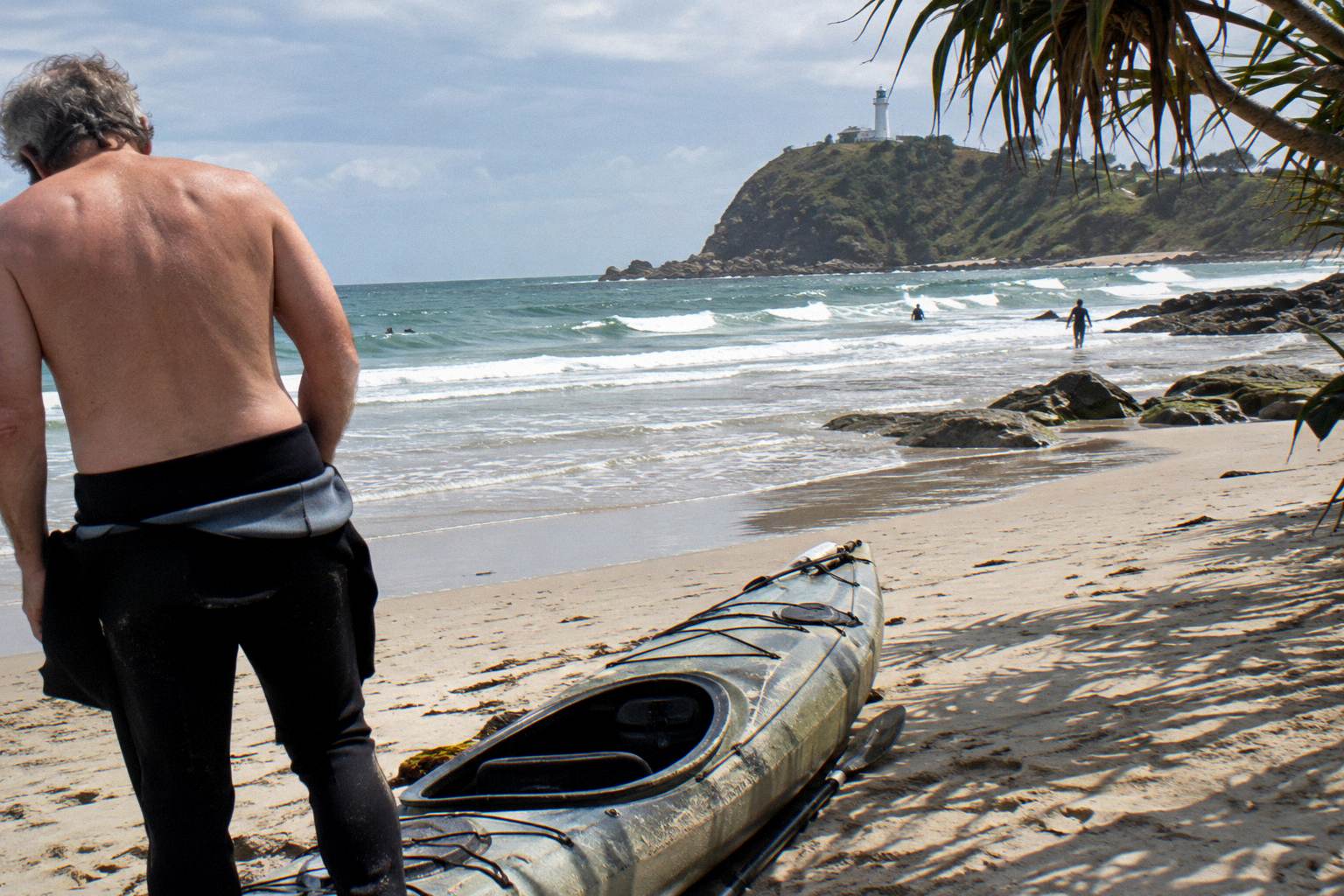
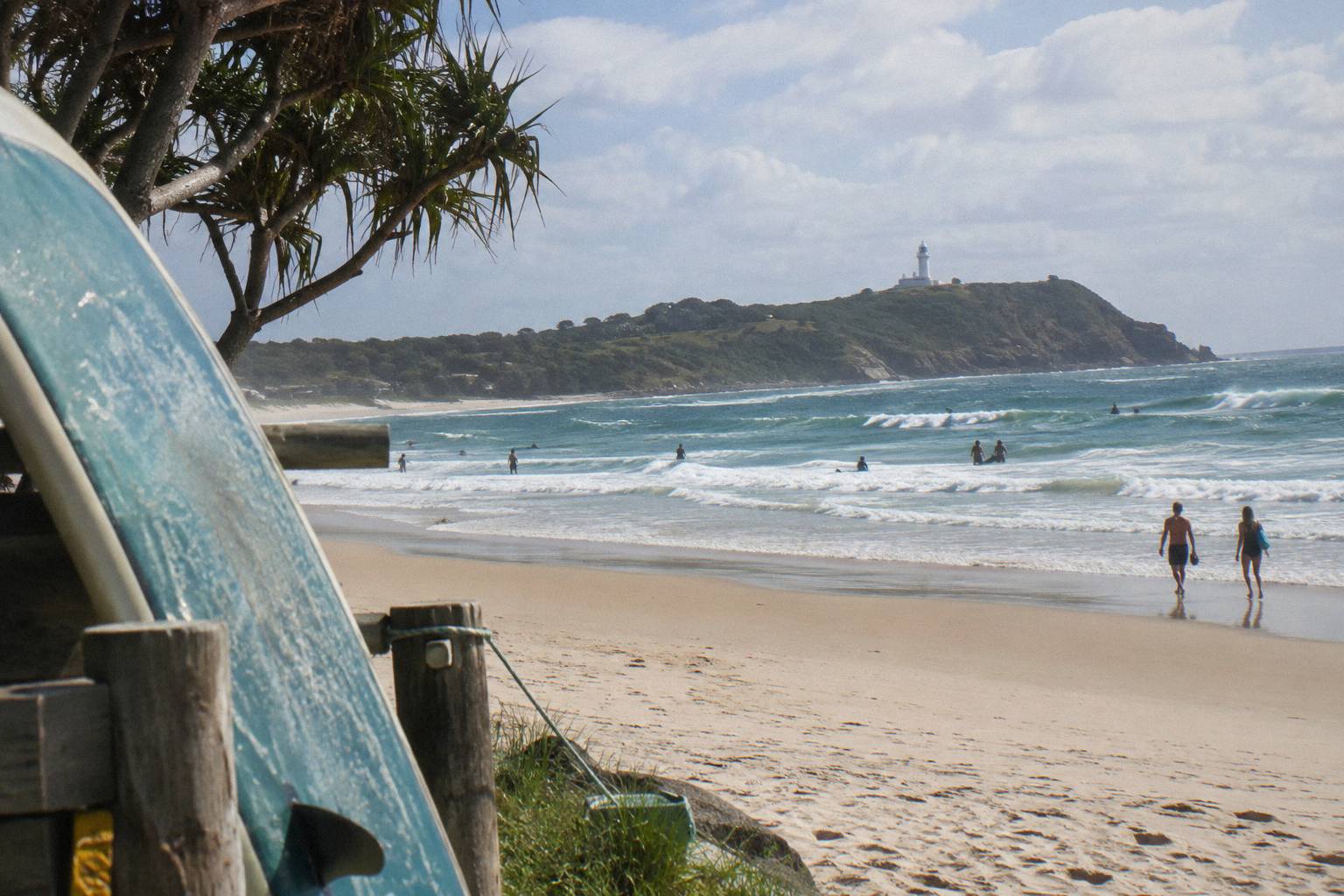
Yes, swimming in Byron Bay's ocean is normal and popular, and the law only bites when a marine mammal is nearby: enter no closer than 50 m to a dolphin and keep 30 m once in the water. The water is warm by most standards year round, with monthly average sea temperatures running from about 21.5 °C in July and August to about 27.1 °C in February, per seatemperature.org.
Those temperatures, an average of recorded years and approximate, mean a swim is comfortable in summer without a wetsuit and brisk but very doable in winter. Go Sea provides wetsuits on its cooler-month tours, which tells you what the operators think of a July morning on the water. A swim at the beach is entirely separate from the dolphin question, and the two only meet when a pod happens past, at which point the distances apply.
The context for the animals is Cape Byron Marine Park, which wraps the headland and the waters the kayak tours work. Its zoning plan, per the NSW government user guide, includes sanctuary zones covering 6,118 ha where fishing and collecting are banned, and habitat protection zones covering a further 4,271 ha. Fishing bait in the water, fish feeding and any collecting inside sanctuary zones are out, which is one more reason the tours are strictly paddling and watching. The park framework is unpacked in the Cape Byron Marine Park kayak guide.
Common Mistakes When Hoping To Swim With Dolphins In Byron Bay
The biggest mistake is booking a kayak tour while expecting a swim, then feeling short-changed when nobody enters the water. The second is assuming the word "guarantee" means dolphins on demand: both operators guarantee a free return trip, not a sighting, and Cape Byron Kayaks openly answers no to whether every tour sees dolphins. A third is turning up at the wrong shed, since the two ocean tours check in at different addresses on Lawson Street.
A few habits trip people up before the paddle even starts. Non-swimmers occasionally book the Cape Byron Kayaks tour without reading its swim rule, and the operator's FAQ is blunt: non-swimmers are not accepted, anyone 16 or over must manage 25 m unassisted, and an escorted return with no refund is the outcome. That is avoidable with two minutes on the operator's FAQ page, which states the rule plainly.
Timing errors are next. Cape Byron Kayaks shifts its departure times seasonally, earlier in summer to beat heat and north winds, later in winter to miss south-west winds, so a time read months ago may no longer hold. Go Sea departs daily at 9:30am and about 1:00pm all year, weather permitting. Arriving late is its own problem: one operator wants you 15 minutes early, the other 20. The check-in details for both are collected in where to park for a Byron Bay kayak tour.
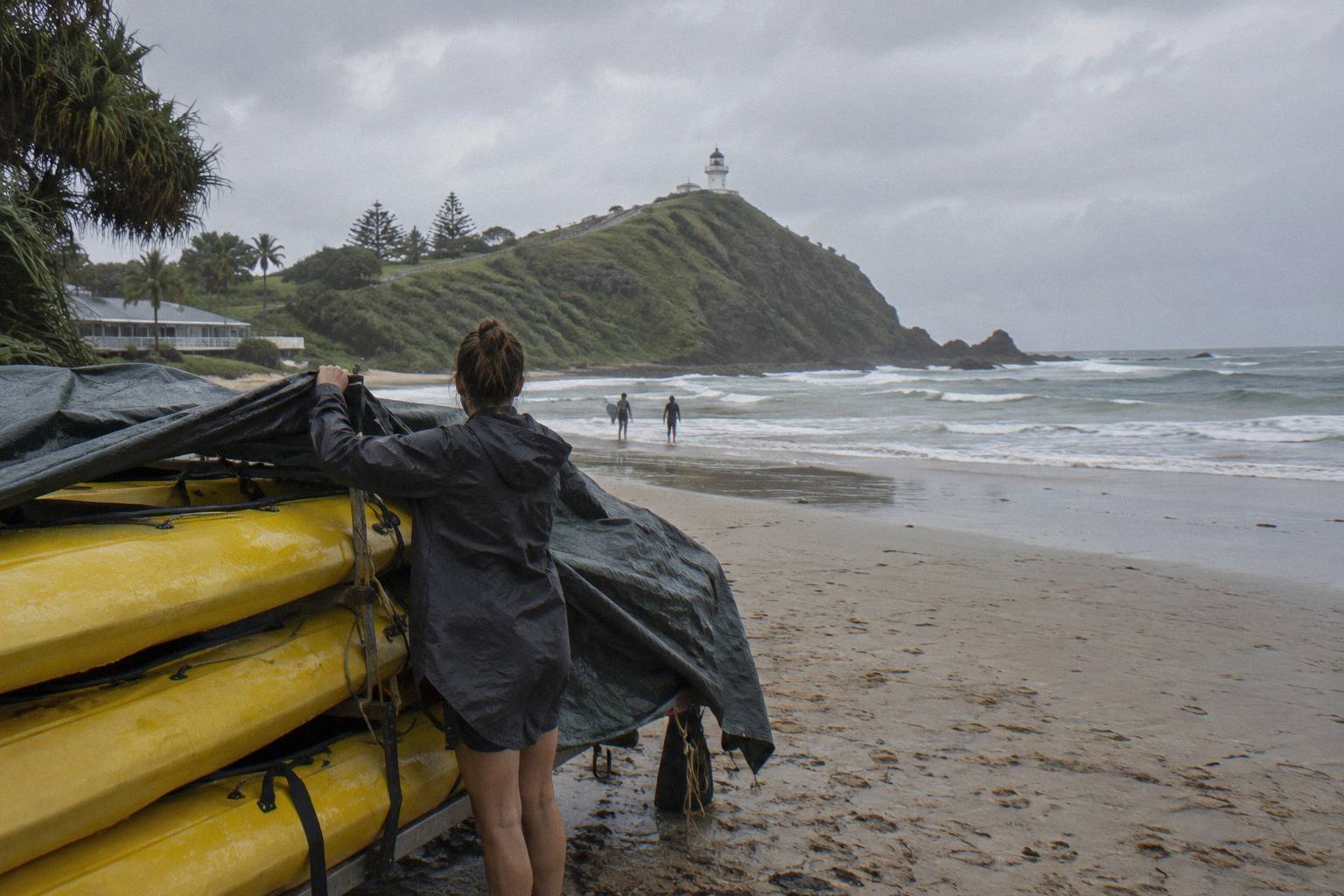
Then there is weather logic. Rain does not cancel these tours; Cape Byron Kayaks notes the dolphins are always wet. Unsafe wind and large swell do cancel them, and the go/no-go call belongs to the operator on the day. The full picture on cancellations and rebooking is in how Byron Bay swell affects kayak tours.
The Go Sea Kayak dolphins and turtles tour is the one to pick when the group includes a non-swimmer, since Go Sea accepts them with a life jacket, and it is the only trip here with a price you can see up front: from AUD 59 per person.
What If Dolphins Are The Goal But The Ocean Is Not
Brunswick Heads, 15 minutes north, hosts two Go Sea river kayak tours of about 2 hours each, plus a stand up paddle nature tour rated 5.0 across 391 reviews on its booking page. The scenic river tour takes children from age 3 and is the trip Go Sea itself recommends for non-swimmers. None of these promises dolphins; they are calm-water wildlife paddles, and the wildlife is birds, fish and the occasional turtle rather than a resident pod.
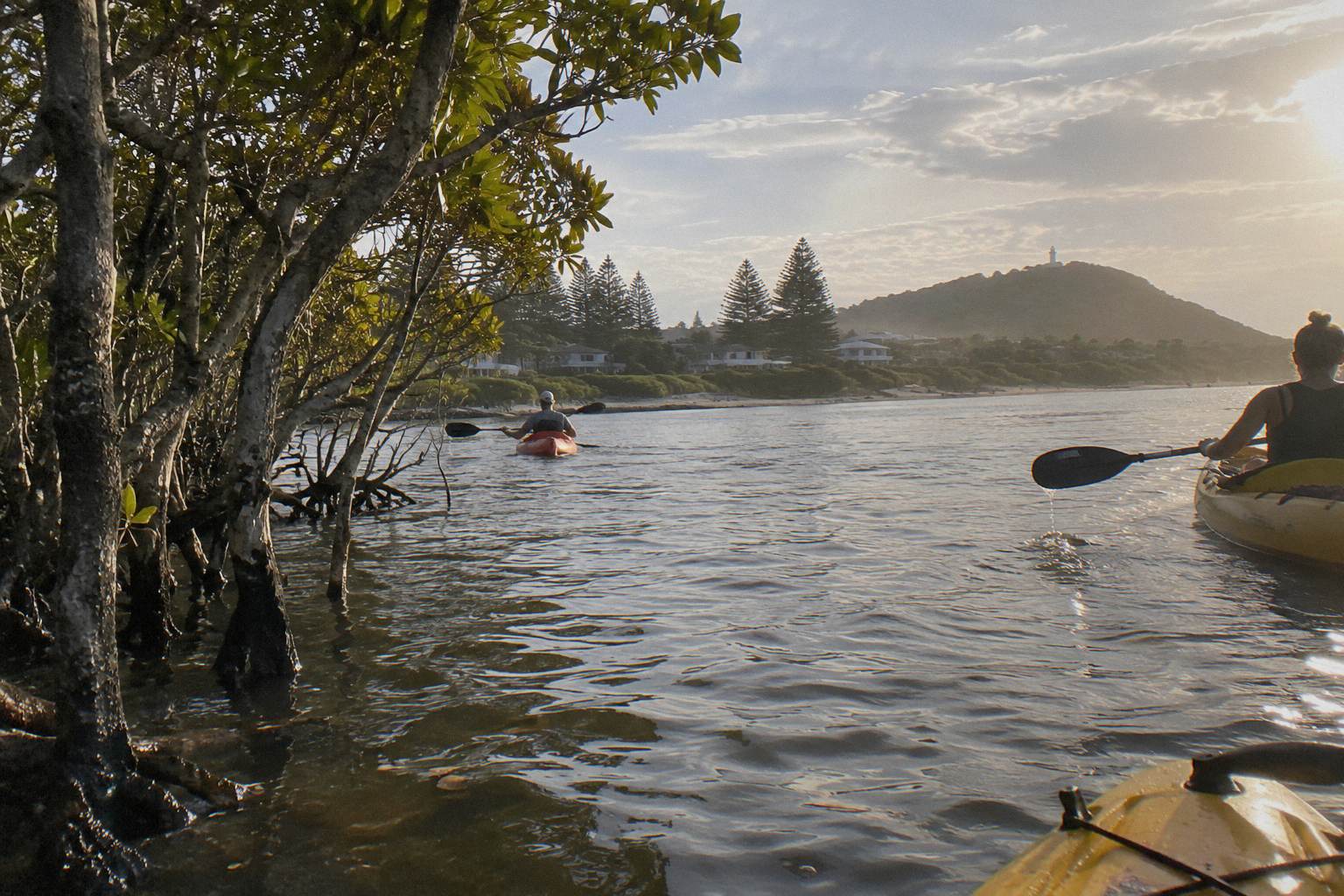
The distinction is worth understanding before you book. The Brunswick River tours meet at the Scout Hall on South Beach Road in Brunswick Heads, run about 2 hours, and use flat water with no surf launch or wave-surfing return. That removes the hardest physical parts of the ocean trips, which is exactly why Go Sea points non-swimmers and hesitant first-timers there. The sunset version runs the same water in the evening with a mix of single and double kayaks chosen on the day.
The stand up paddle nature tour, also out of Brunswick Heads with your own transport, is a combined lesson and tour of about 2 hours with boards, paddles and leg ropes included, plus digital photos and homemade snacks. None of the Brunswick options is a dolphin product, and none should be bought as one. They answer a different need: water, wildlife and a guide, without the ocean's demands.
For the whale months there is also the boat option, a June to November whale watching cruise run by Out Of The Blue Adventures, departing Lance Ferris Wharf in Ballina about 30 minutes south of Byron Bay, about 2.5 hours on the water with a marine biologist guide and a maximum of 20 travellers. It is a whale trip, not a dolphin trip, but it covers the same question from another angle, which comparing kayak and boat whale watching in Byron Bay works through properly.
The Bottom Line For Dolphin Seekers
Buy the paddle, skip the swim fantasy, and choose the operator whose rules fit your group. Cape Byron Kayaks offers its stated 90% sighting record and a free return; Go Sea offers a from-price of AUD 59, a 4.6 rating and a door open to non-swimmers. Either way you are on the water beside a resident pod in double sit-on-top kayaks, guided by surf lifesavers.
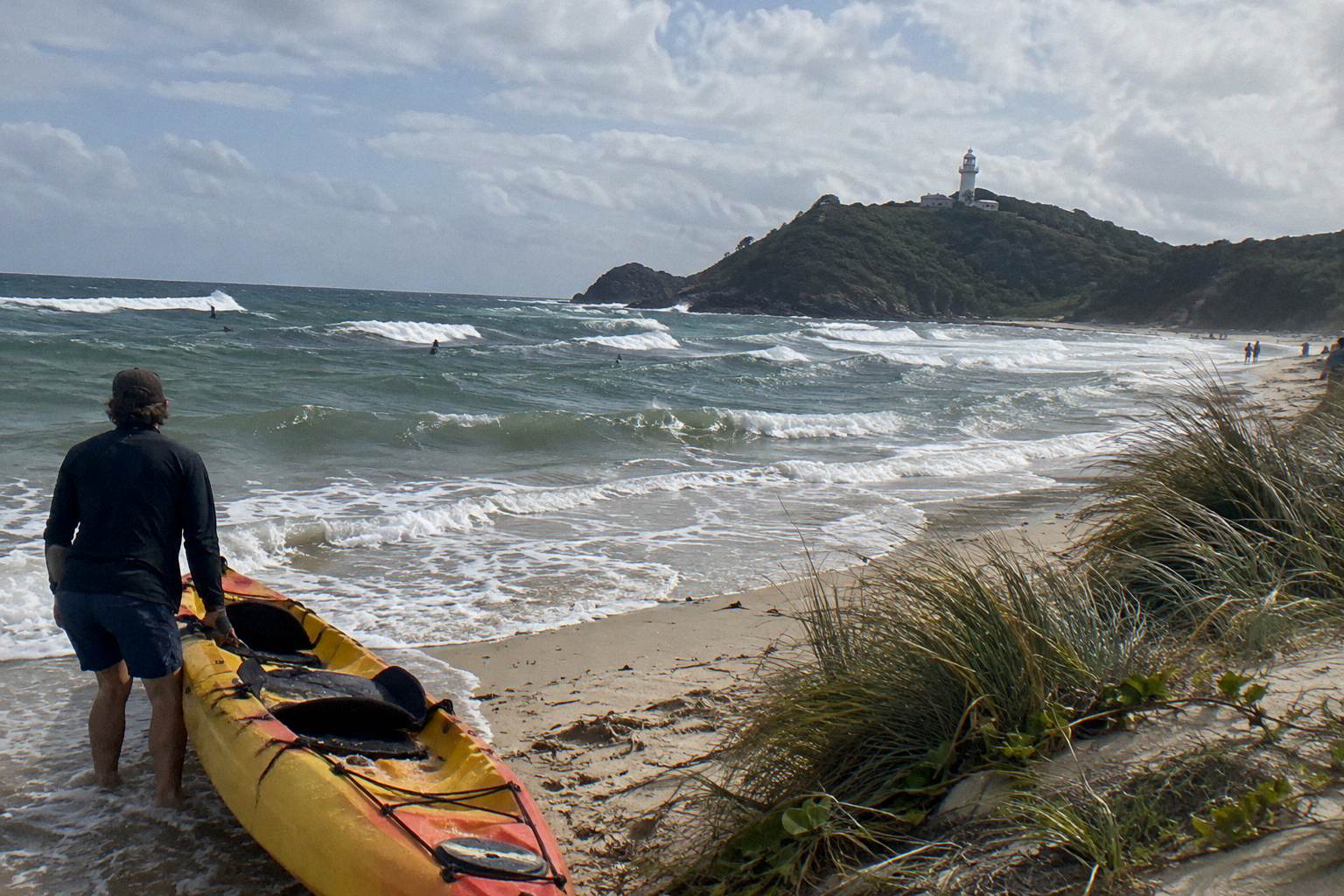
Byron Bay is one of the few places in Australia where a dolphin encounter is this accessible: a short drive to Lawson Street, a check-in at a surf shed, and a paddle out along the Cape to where the pod lives. The encounter is real, the operators' wording is confident, and the free-return promises mean a missed day is a rebooked day rather than a lost one. You are watching animals the law says must stay wild. What the trip is not, and cannot be, is a swim. The animals stay in their water on their terms, the kayaks stay at their legal distance, and the pod keeps coming back, which is arguably why the tours keep seeing it.
Common Questions About Swimming With Dolphins In Byron Bay
Is It Possible To Swim With Dolphins In Byron Bay?
No tour offers it. Cape Byron Kayaks states that strict NSW rules mean dolphins are observed from the kayaks, and NSW law requires swimmers to keep at least 30 m from a dolphin once in the water.
Why Can You Not Swim With Dolphins In Byron Bay?
NSW marine mammal protection law sets minimum distances for swimmers and vessels, and a licensed operator cannot put guests inside them. Cape Byron Kayaks cites those rules on its FAQ page as the reason its tours watch from the kayaks.
How Close Do Kayaks Get To Dolphins In Byron Bay?
A kayak is a vessel under NSW rules: no closer than 50 m to a dolphin, inside a 150 m caution zone with slow speed and no approaching from behind or waiting in front. Dolphins sometimes approach kayaks on their own.
Do The Kayak Tours Guarantee Dolphins?
Both operators guarantee a free return tour if no dolphin, turtle or whale is seen, never a refund. Cape Byron Kayaks says it sees dolphins on about 90% of tours and states plainly that not every tour sees them.
Can Non-Swimmers Join A Dolphin Kayak Tour?
Go Sea accepts non-swimmers who tell the guide and wear a life jacket. Cape Byron Kayaks does not take non-swimmers and requires anyone 16 or over to swim 25 m unassisted.
What Is The Closest Legal Experience To A Dolphin Swim?
The guided ocean kayak tours. You are on the water among a resident pod for about 2.5 hours in a double sit-on-top kayak, watching the animals from arm's length of the surface but never in it with them.