Do Byron Bay Kayak Tours Run In Winter, And Is It Too Cold?
Yes, Byron Bay's ocean kayak tours run all year, weather permitting, with wetsuits in the cooler months. Sea temperatures, whale season overlap, cancellation rules and what to pack.
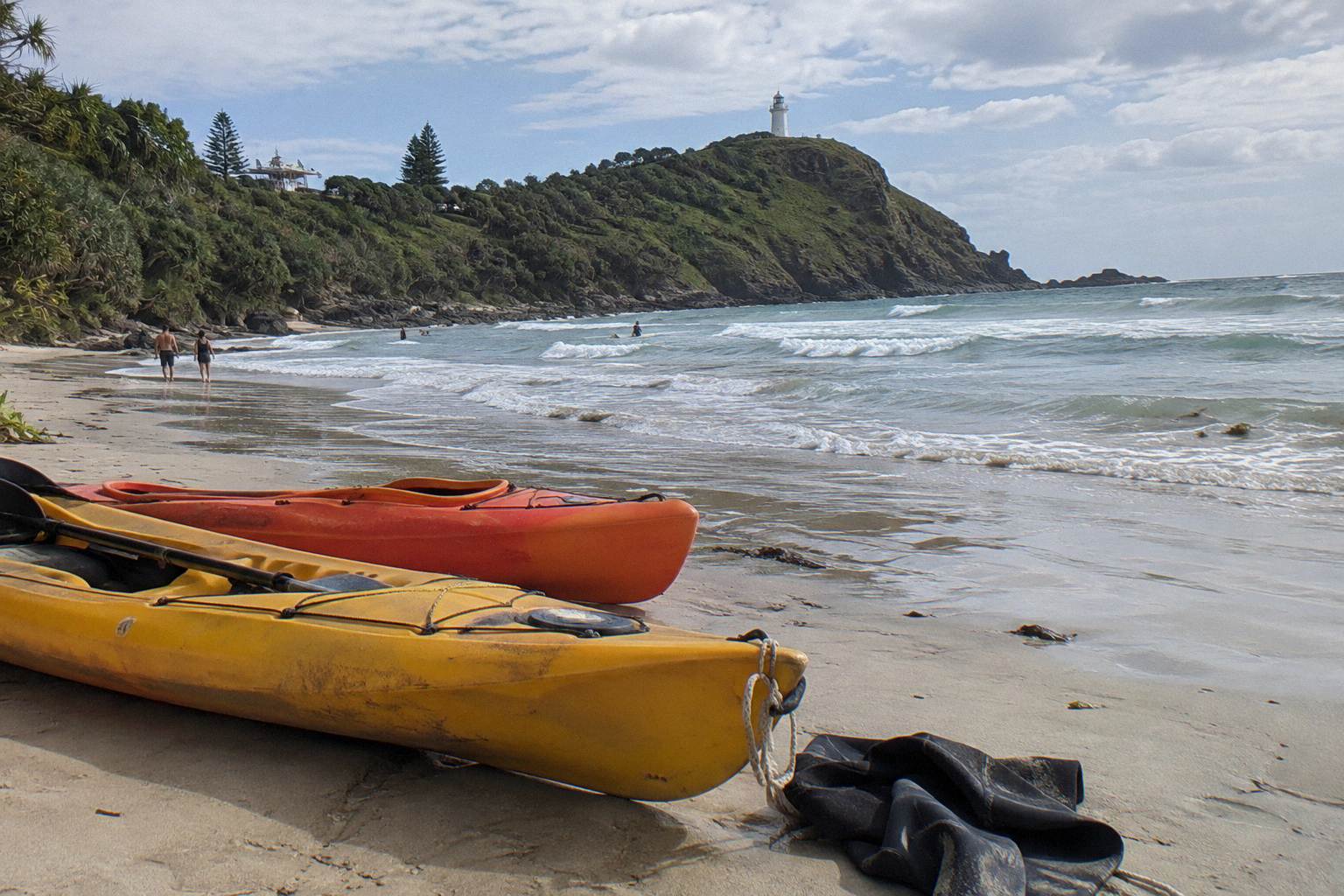
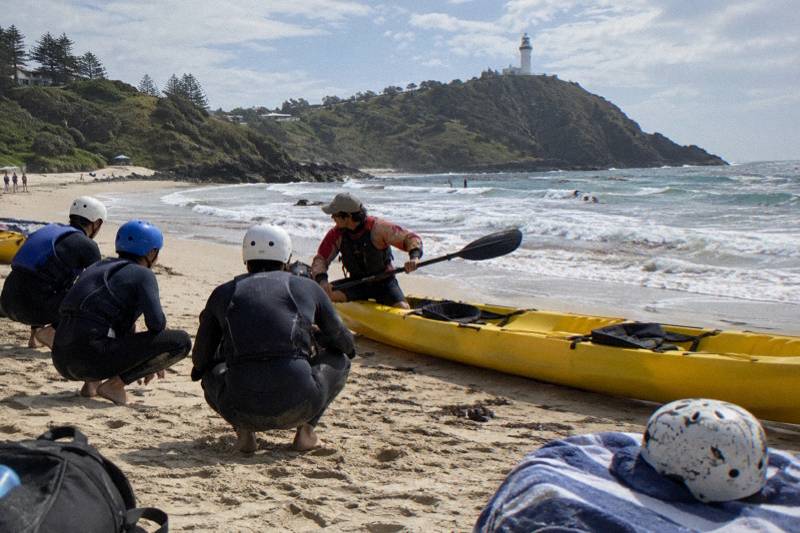
Yes, Byron Bay kayak tours run all year, weather permitting, and winter is simply part of the season rather than a shutdown. Go Sea Kayak Byron Bay keeps its tours going year-round, Cape Byron Kayaks adjusts start times instead of pausing, both operators handle the cold with wetsuits, and winter even overlaps the humpback whale season.
The short answer to the second half of the question depends on what "too cold" means to you. Byron Bay sits on the far north coast of New South Wales, the warmest corner of the state's coastline, and the sea stays far milder through winter than the word "winter" suggests to visitors from Europe, North America or even Melbourne. The averages from the sea temperature data site are about 21.6 degrees Celsius in July and 21.5 in August, the two coolest months of the year. That is cooler than the February average of 27.1, but it is warmer than the summer peak in plenty of other famous kayaking destinations.
What actually decides whether a winter tour goes ahead is not the temperature at all. It is wind and swell. Go Sea's terms state that tours are cancelled for unsafe wind or large swell, and rain on its own is often fine. Cape Byron Kayaks makes the same point in its own words, noting that rain does not stop tours because "dolphins are always wet". So a clear, calm July morning is very likely to see kayaks on the water, while a rough day in the middle of summer can cancel a tour outright. If the timing matters to your trip, the page on Byron Bay swell and kayak tour cancellations unpacks the weather side in detail.
Winter also carries a bonus that the summer months cannot match. The humpback whale migration overlaps the cooler part of the year, with the operators each giving their own season wording: Go Sea says early June through late October on its whale page, and Cape Byron Kayaks says May to November. No operator promises a whale on a kayak tour, and the sighting guarantees both operators offer are free return tours rather than refunds. But the overlap is real, and it is a large part of why winter paddling stays popular here.
How Cold Is The Sea Off Byron Bay In Winter?
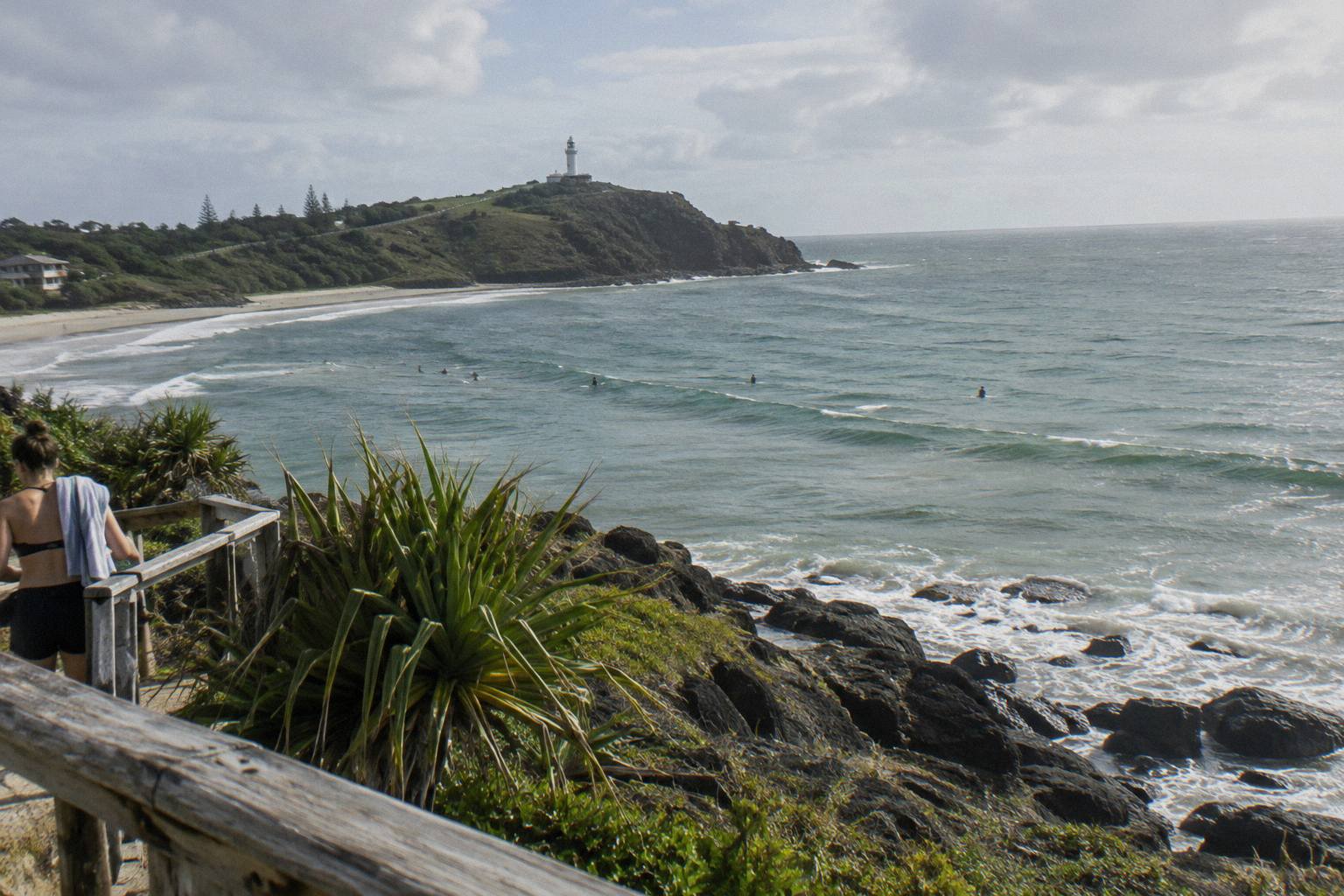
The sea off Byron Bay averages about 21.6 degrees Celsius in July and about 21.5 in August, the two coolest months, according to seatemperature.org's averages of recorded years. Winter sea temperatures sit roughly four to five degrees below the February peak of about 27.1 degrees. These are satellite-derived averages, approximate and not a measurement of any single tour day, but they give a fair picture of what the water feels like through the season.
The only temperature source worth quoting here is seatemperature.org's Byron Bay averages, a secondary data site that compiles satellite sea-surface readings across recorded years. Its monthly averages show a remarkably gentle curve across the year: the water drops from a February average of 27.1 degrees to about 22.6 in June, bottoms out near 21.5 through July and August, and climbs back to 24.4 by November. There is no month on the chart that a wetsuit cannot handle, and no month where the operators stop running.
Here is the full monthly picture, using seatemperature.org's averages for each month, approximate as they are:
| Month | Average Sea Temperature (C) | Month | Average Sea Temperature (C) |
|---|---|---|---|
| January | 26.0 | July | 21.6 |
| February | 27.1 | August | 21.5 |
| March | 26.3 | September | 21.9 |
| April | 25.4 | October | 22.6 |
| May | 24.1 | November | 24.4 |
| June | 22.6 | December | 25.3 |
Two honest caveats belong beside that table. First, these are averages of recorded years, not forecasts: any given July morning can run a little above or below the line, and the operator decides what is worn and what is provided on the day. Second, sea temperature is not air temperature, and the figures say nothing about wind or rain, which are the variables that actually cancel tours. Neither operator publishes air temperature figures, and no reliable wind or rain numbers appear in their pages, so treat temperature as one input among several rather than the deciding factor.
For context on how the water temperature feels in practice, the guides themselves are the reference point. Byron Bay surfers paddle in these temperatures through winter in standard wetsuits, and the kayak operators hand similar gear to their guests as a matter of routine. If you are the kind of traveller who swims in the Mediterranean in June, Byron Bay's winter water will feel cool but entirely manageable with a wetsuit, and the tours are built around that assumption.
What Do The Operators Provide For Cold-Weather Paddling?
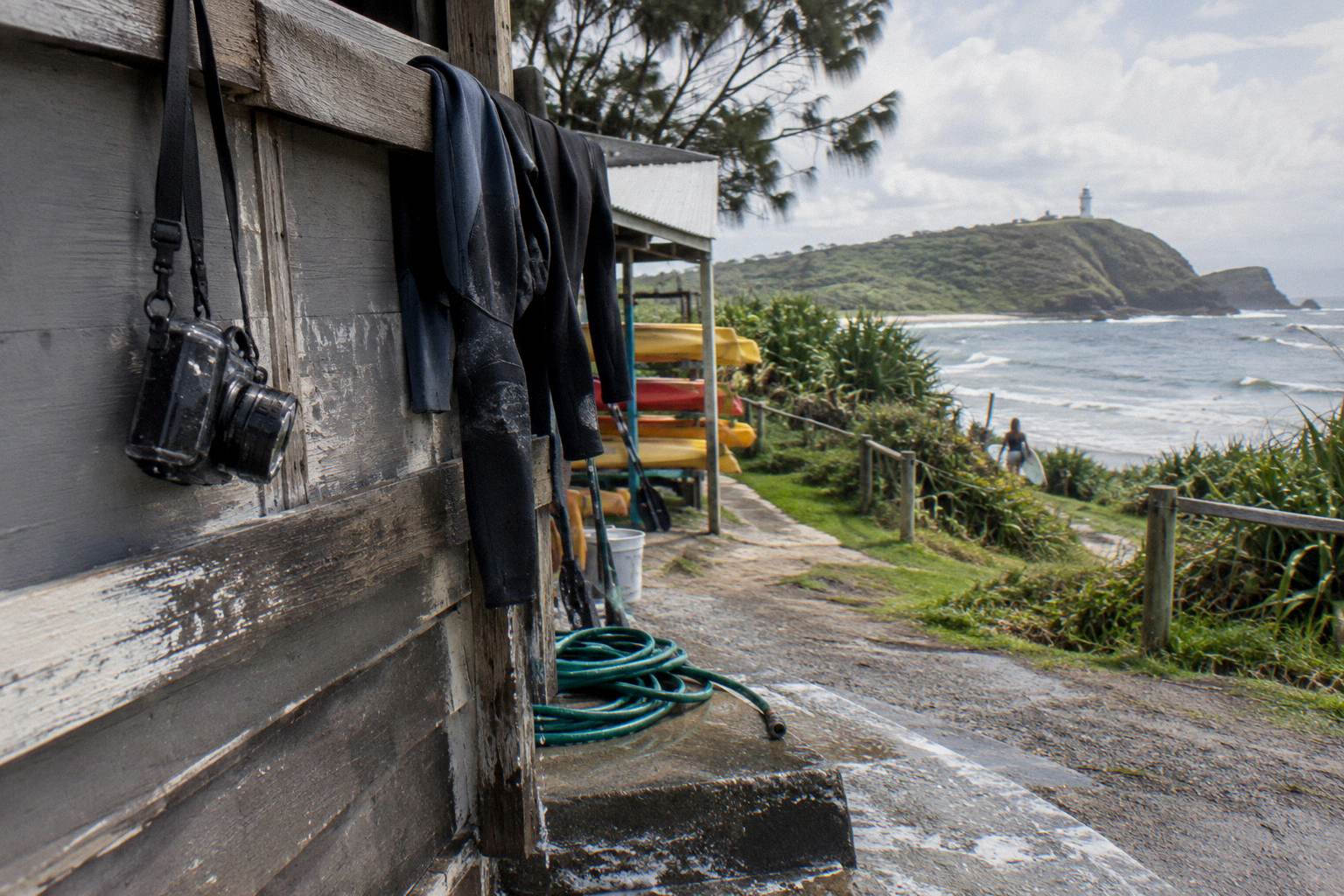
Both ocean tour operators provide wetsuits for the cooler months. Go Sea Kayak Byron Bay states that it provides wetsuits in cooler months, with the booking page adding a wetsuit on cooler days if needed; Cape Byron Kayaks supplies wetsuits if required, on request. Neither operator states a wetsuit thickness, a fit range or a hire charge, so treat the wetsuit as included gear rather than something to organise yourself.
The full inclusions lists differ slightly between the two, and the differences are worth knowing before you pack. Go Sea's booking page includes a life jacket and helmet, a kayaking lesson on the beach, a local guide, a wetsuit on cooler days if needed and sunscreen available; phone pouches are excluded but available to buy at check-in. Its FAQ adds a lock-up for belongings and is blunt about getting wet: "Will I get wet? 100% YES". Cape Byron Kayaks supplies life jackets, helmets, wetsuits if required, secure storage, National Park fees, a professional guide and, in its own words, "all the Tim Tams you can eat".
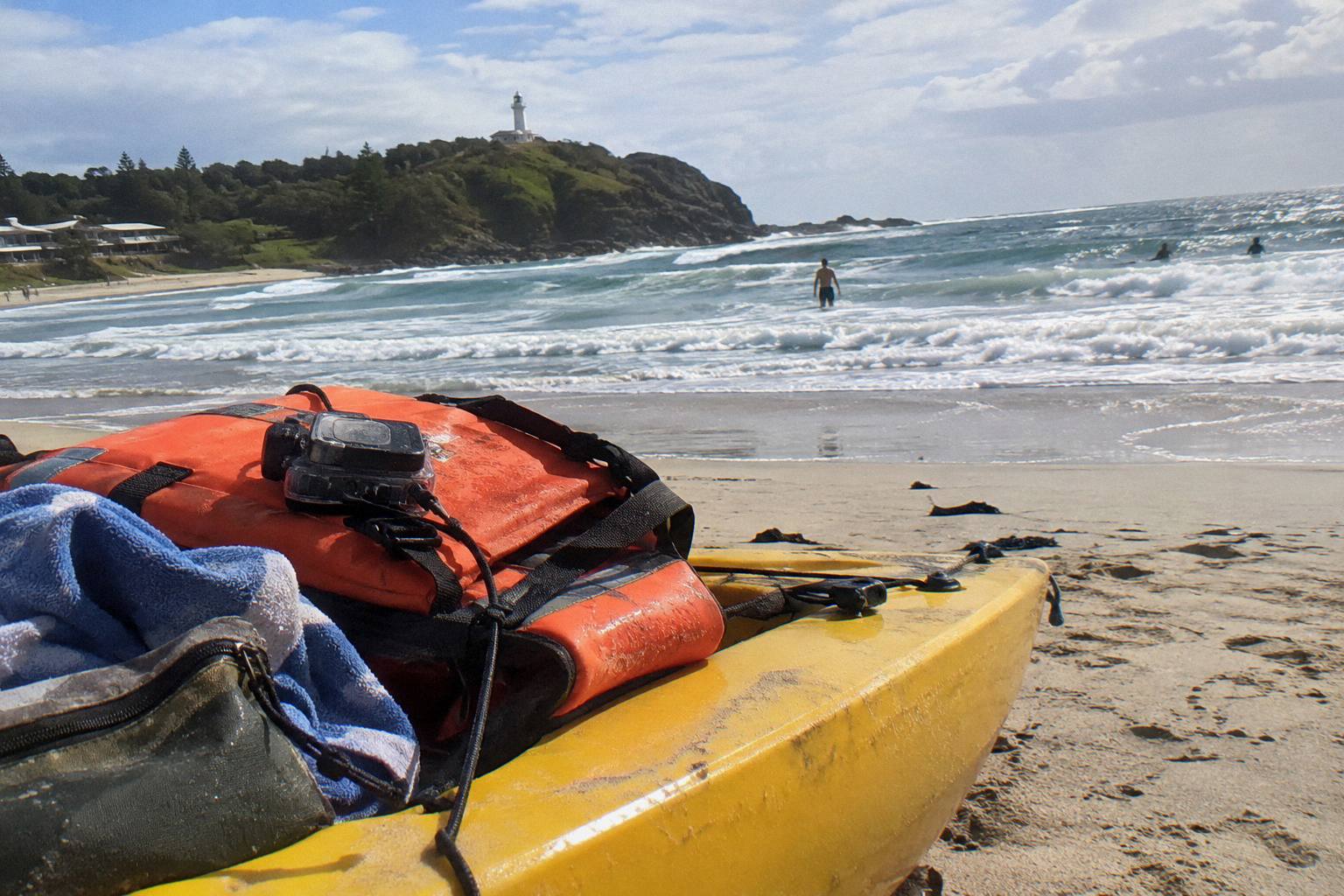
Neither operator is prescriptive about clothing beyond the basics, and there is no reason to overthink it. Go Sea's FAQ lists bathers, towel, sunscreen, a small reusable water bottle, a hat and a change of clothes as what to bring, and that list does not change fundamentally in winter, the wetsuit simply goes over the bathers. Cape Byron Kayaks allows phones and cameras but requires them attached to the life jacket, and recommends against bringing valuables. A fuller packing discussion lives in the guide to what to wear and bring on a Byron Bay kayak tour.
The equipment answers also settle the single-versus-double question before it comes up. Both ocean tours use sit-on-top double kayaks, and Go Sea notes a combined weight limit of 190 kilograms per double, pairing solo guests with another guest or with a guide. Sit-on-top kayaks are the standard choice for exactly this kind of conditions- variable paddling: you will get wet, the operator says so plainly, and the wetsuit is the answer to that rather than a reason to stay ashore. If you have never paddled before and want the beginner view first, whether you need experience for a Byron Bay kayak tour covers the same ground from the nervous-first-timer angle.
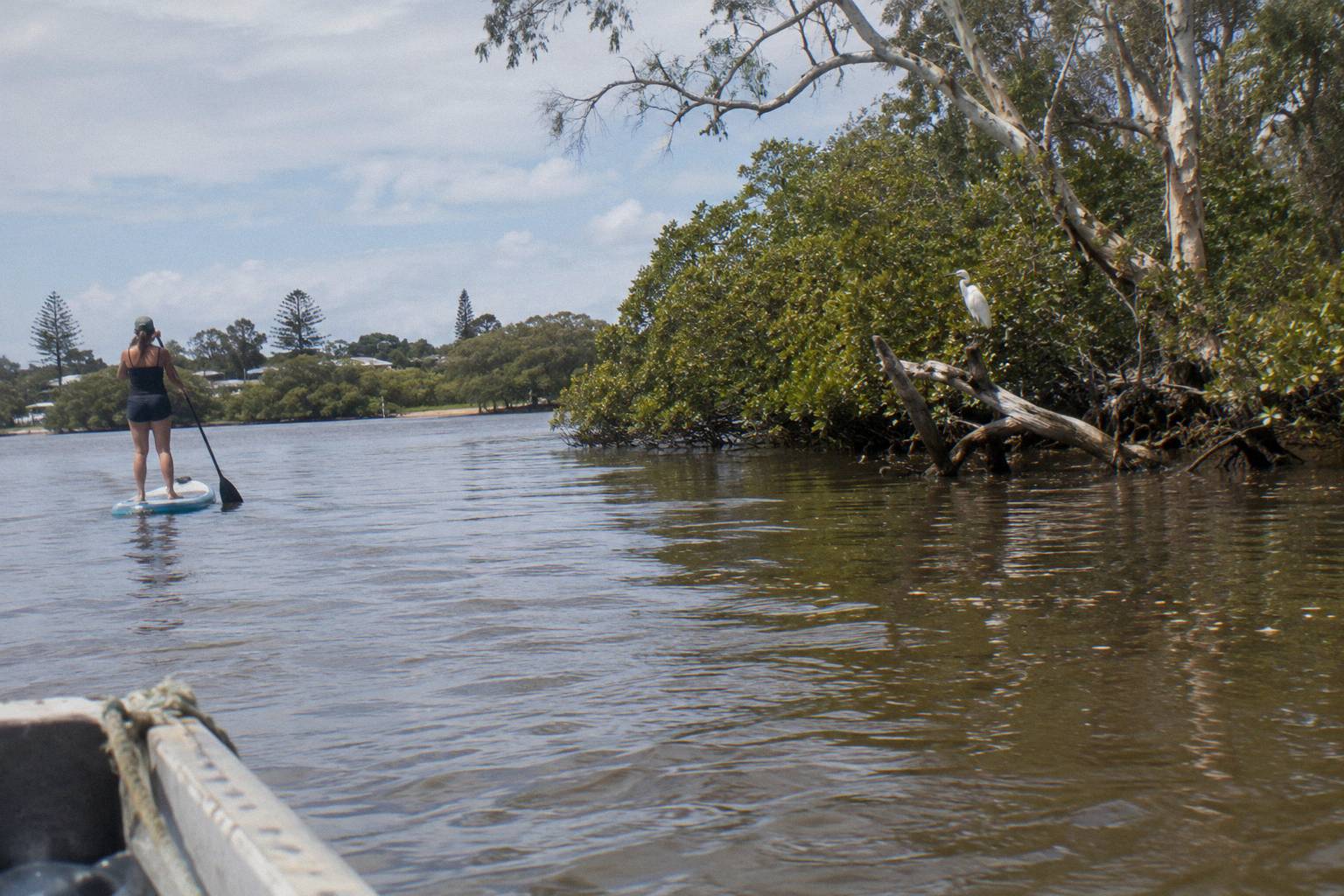
If the open ocean in July still sounds like more than you want, the calm-water alternative runs from Brunswick Heads. The stand up paddle nature tour rates 5.0 across 391 reviews on its booking page and lasts about two hours, with the meeting address given after booking, and the sheltered river removes the swell variable entirely.
Do Dolphin And Whale Sightings Continue Through Winter?
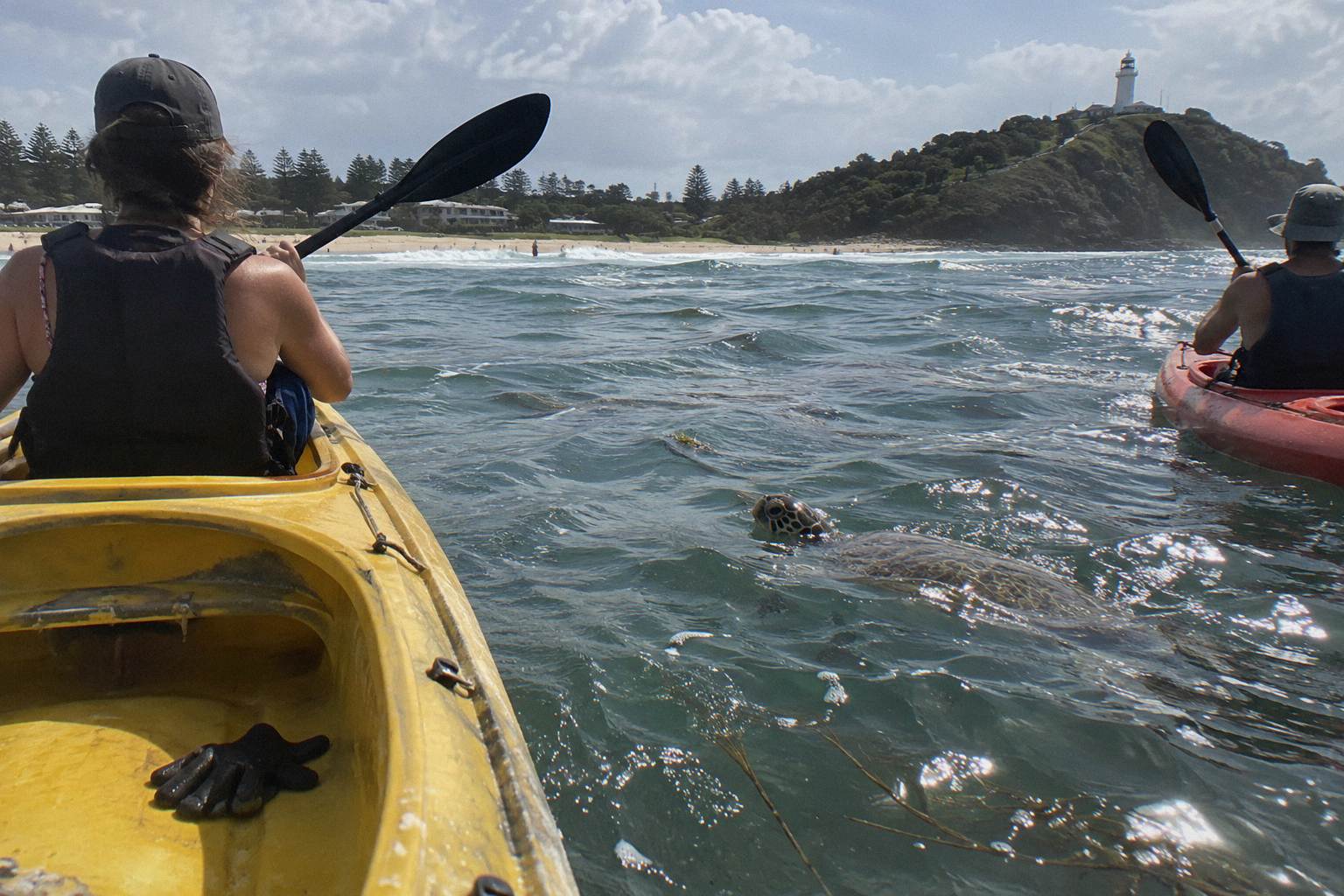
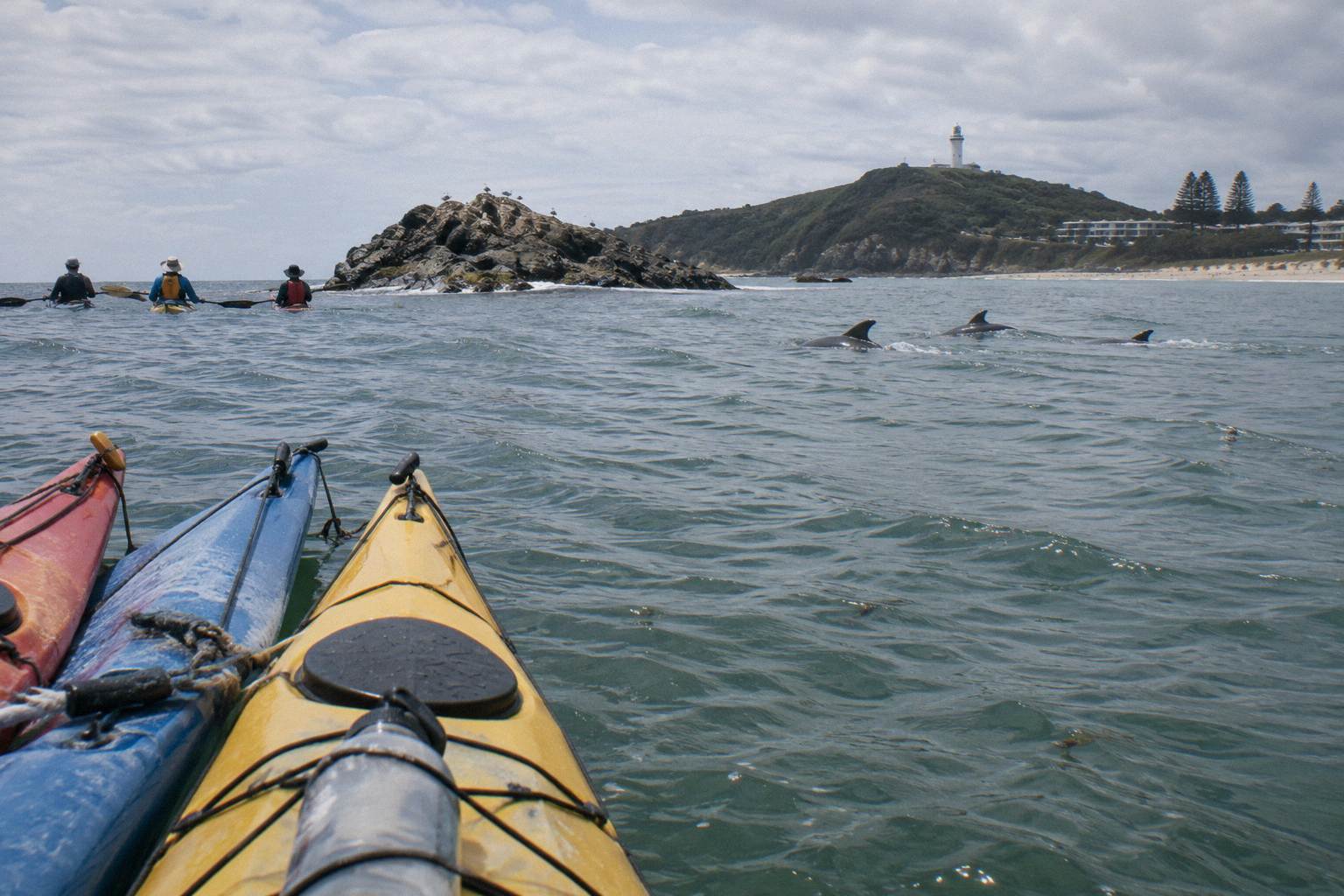
Dolphins are described by both operators as a year-round presence, so winter does not empty the bay of them. Cape Byron Kayaks describes a resident pod of around 300 dolphins seen on about 90% of its tours; Go Sea says it spots dolphins on most tours. The humpback whale season overlaps winter, but each operator words the season differently, whales are never promised on a kayak tour, and the guarantees are free return tours rather than refunds.
The dolphin side of winter is the simpler story. Cape Byron Kayaks says in its own words that it sees dolphins on over 90% of its tours and refers to a pod of around 300 resident dolphins, while answering "No" to the question of whether it always sees dolphins. Go Sea's wording is that on most tours it spots dolphins. Resident means resident: the pod does not migrate away in June, and winter tours paddle the same coastline, from Clarkes Beach toward Wategos Beach in Cape Byron Kayaks' description, that summer tours do. What matters more than the month is the weather window on the day, since a cancelled tour sees nothing at all.
Whales are where the wording matters and the sources genuinely differ. Cape Byron Kayaks says whale season runs May to November on one page, and June to November for humpbacks and southern rights elsewhere. Go Sea says early June through late October on its whale page, and June to November in its FAQ. The separate whale watching boat tour, which departs from Ballina rather than Byron Bay, lists June to November. Whichever window you trust, all of them overlap the coolest months, so a winter paddle falls squarely inside the migration period without a whale ever being guaranteed. The whale-specific planning detail, including the Byron Bay whale watching season month by month, sits in its own guide.
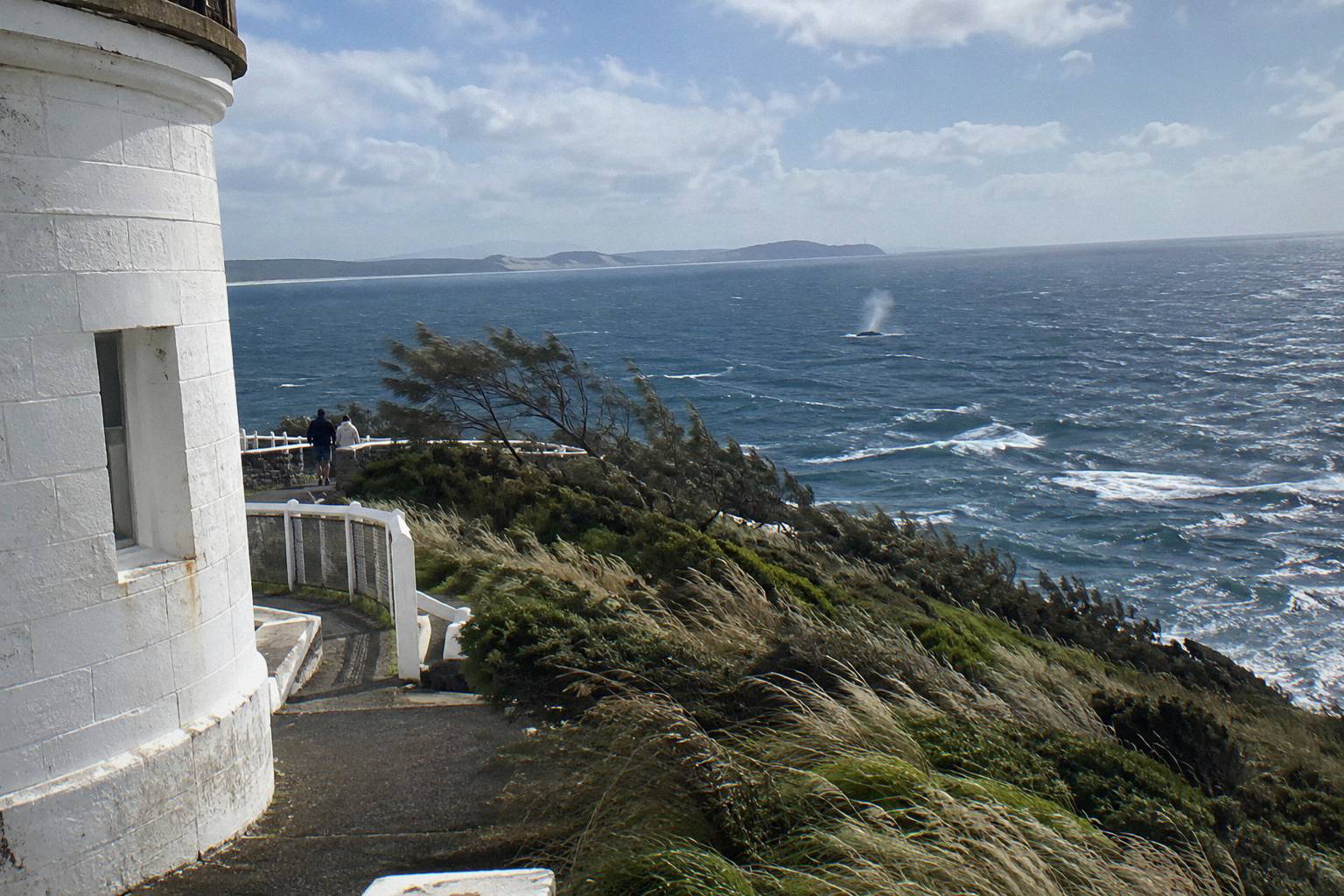
The wildlife guarantees deserve their own careful reading, because they are often misremembered as refunds. Cape Byron Kayaks gives a free return tour, non-expiring and non-transferable, if no dolphins or whales are seen, with no refund, rebooked by phone with a card hold. Go Sea's wording is that if you do not see a dolphin, turtle or whale, you can paddle again for free. Both are second chances, not money back. Turtles are named as local wildlife by the National Parks and Wildlife Service alongside dolphins and migrating humpbacks, and they feature in Go Sea's guarantee wording too.
One thing no kayak tour offers, in winter or any other season, is swimming with the dolphins. Cape Byron Kayaks says it plainly: there are strict rules about approaching wild animals in NSW, and the dolphins are observed from the kayaks. That is a regulation point rather than a seasonal one, and it applies all year.
What Happens If Winter Weather Cancels Your Tour?
The distinction that matters in winter is wind and swell versus rain. Go Sea's terms cancel tours for unsafe wind or large swell, while rain is often fine and the tour proceeds in it, and opting out of a rain tour is not refunded. Seasickness is not refundable under the same terms. Minimum numbers apply. Cape Byron Kayaks' position on rain is the memorable one, "dolphins are always wet", and its booking page offers a different date or a full refund when the operator cancels for poor weather; its FAQ does not carry exact swell or wind thresholds. Neither operator publishes swell heights, wind speeds or a cancellation rate, and any figure of that kind you see elsewhere should be treated with caution.
| Situation | Go Sea Ocean Tour | Cape Byron Kayaks Ocean Tour |
|---|---|---|
| Operator cancels for unsafe conditions | 100% refund on direct bookings | Different date or full refund |
| You cancel more than 24 hours ahead | 100% refund | Full refund |
| You cancel inside 24 hours or no-show | Not refunded | Not refunded |
| Rain on the day | Tour usually runs; opting out is not refunded | Tour runs |
| No dolphins or whales seen | Free return tour, no refund | Free return tour, non-expiring, no refund |
| Booking changes | More than 24 hours ahead is free; inside 24 hours not swapped | Return tours rebooked by phone with a card hold |
The adjacent tours follow the same broad pattern with their own wording. The Brunswick River tours cancel up to 24 hours ahead for a full refund, and the stand up paddle and whale watching boat tours offer a full refund at least 24 hours ahead, a different date or full refund for a poor-weather cancellation, with the whale watching boat carrying a minimum number of travellers. If a winter front is forecast for your dates, the practical move is the same for every tour: keep the phone number handy, watch your messages the evening before, and know which side of the 24-hour line you are standing on before you decide anything.
It is also worth booking the winter tour for early in your stay rather than the last morning. A weather cancellation with a same-week rebooking is a minor reshuffle; a cancellation on your departure day is a lost tour, because the free return offers only help people who can come back.
Is Winter Actually A Good Time To Paddle Byron Bay?
For many travellers, yes, and for reasons that have little to do with temperature. The whales overlap the season, the operators shift start times to suit winter conditions, and the water is roughly four to five degrees cooler than its summer peak, a gap a wetsuit covers comfortably. The trade-off is a higher chance that wind or swell cancels a given day, which makes flexible timing more valuable in winter than in the calmer months.
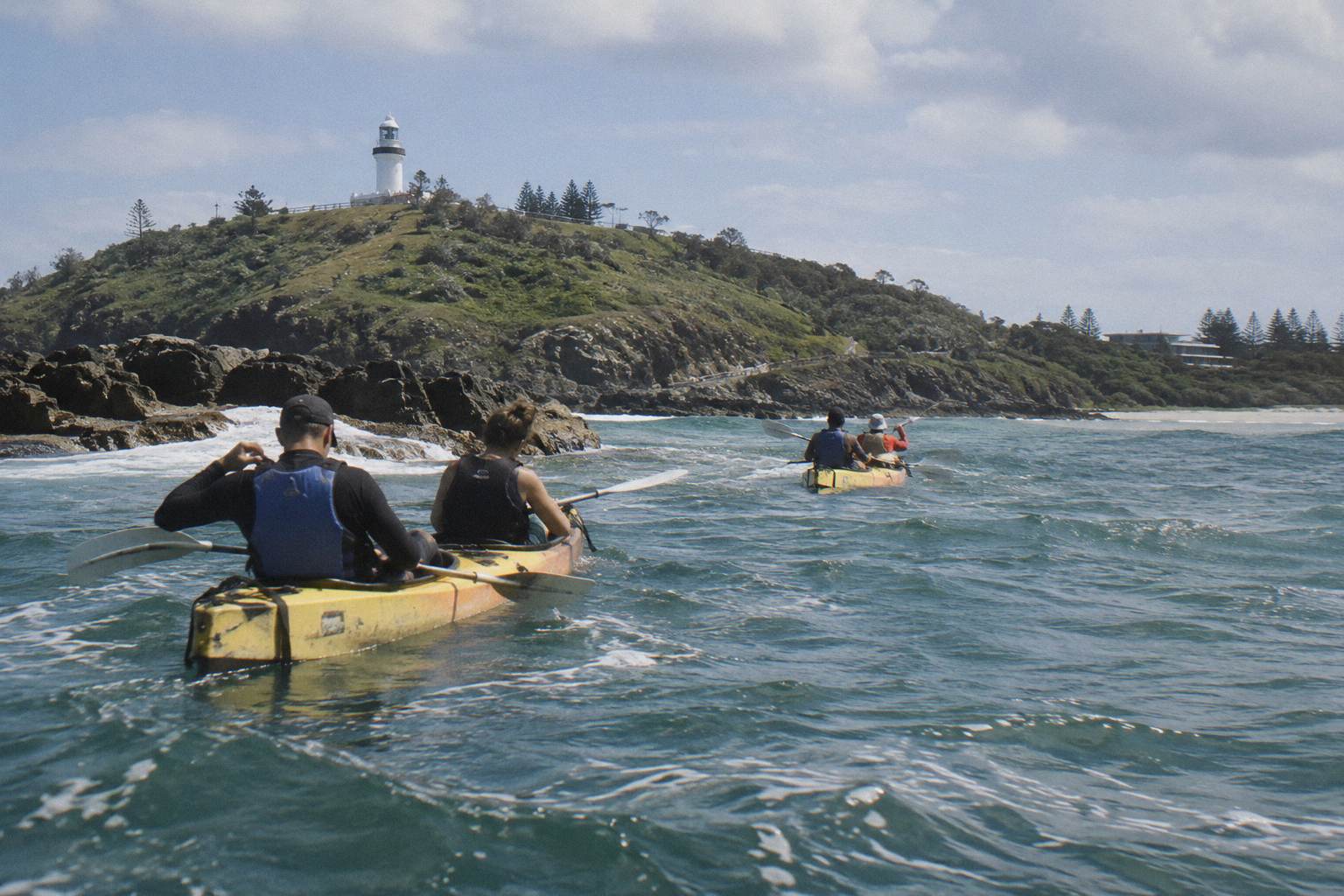
Cape Byron Kayaks explains its seasonal timing in its own words: it starts earlier in summer to beat the heat or the north winds, and later in winter to miss the south-west winds. That is a genuine operational response to winter weather rather than a seasonal shutdown, and it means your winter check-in time may differ from the one a friend reported in January. Go Sea's schedule wording also varies slightly between its pages, with daily departures listed and a sunrise option reserved for near-perfect conditions with marine park approval, so confirm the day's time against your booking rather than a remembered figure.
Budget is largely season-neutral, so far as the available figures go. The only price either operator's booking page shows is Go Sea's ocean tour, from AUD 59 per person, and it is a from-price that changes by date rather than a flat winter or summer rate. Cape Byron Kayaks states no price on its pages, so ask the operator directly when you enquire. Ratings sit where they sit year-round: Go Sea's ocean tour is rated 4.6 on its booking page, Cape Byron Kayaks 4.4 across 402 reviews. Reviews of this kind pool the whole year, so they tell you about the tour, not about February versus July.
The decision by traveller type shakes out roughly like this. A whale-focused visitor gets the most from the June to October window and should accept a lower sighting certainty on any single paddle. A nervous first-timer who wants the easiest water might lean toward the Brunswick River kayak tours, about two hours on sheltered water with a minimum age of 3, or the stand up paddle nature tour, both of which remove the surf variable. A confident swimmer who wants the full ocean experience can book either ocean tour in winter exactly as in summer, with the wetsuit provided and the same free return guarantee in place. The guide to kayaking in Byron Bay for beginners walks through that first-timer choice in more depth.
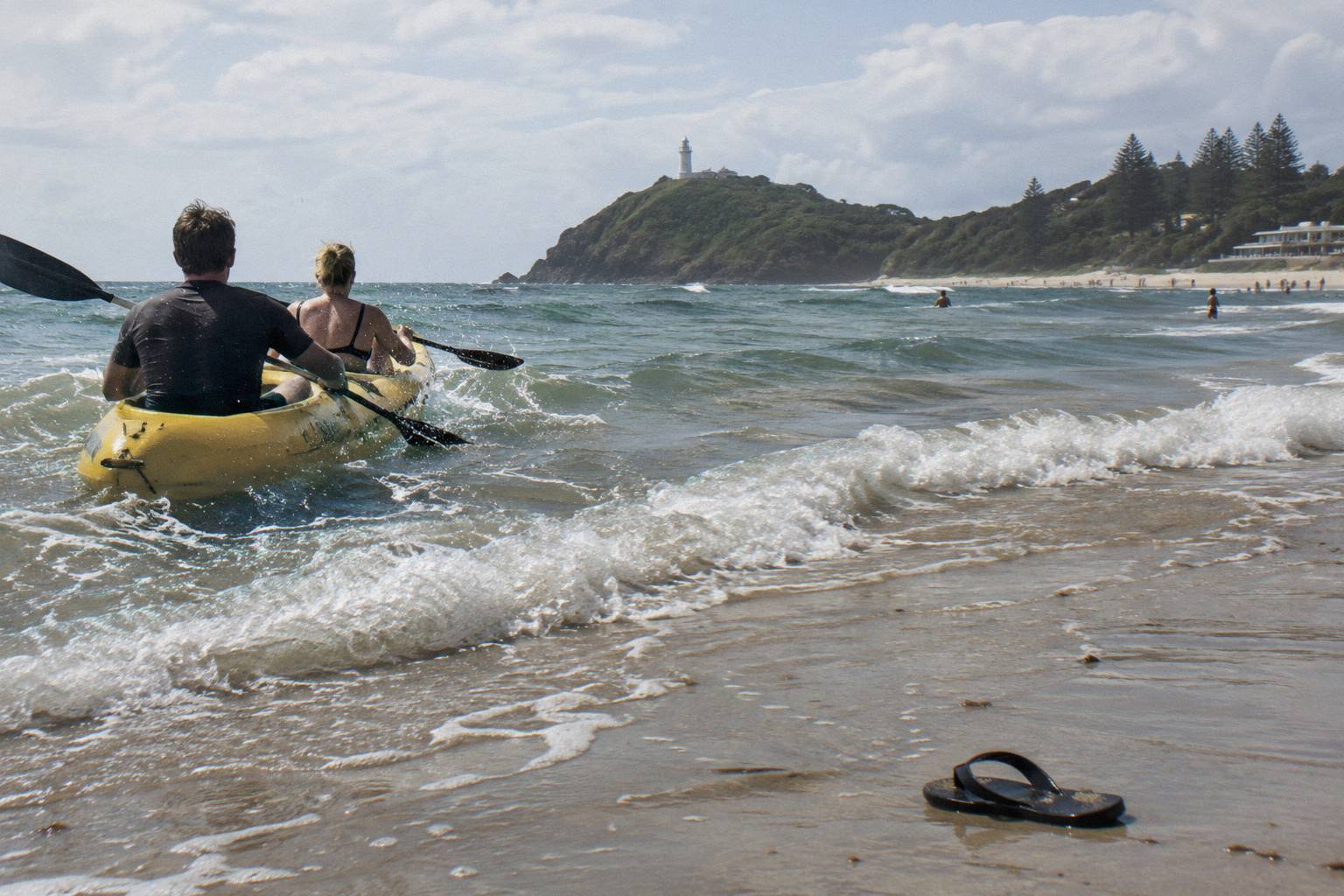
The featured dolphin and turtle tour is the natural anchor for a winter booking: it runs all year, weather permitting, from AUD 59 per person, departs from the Lawson Street sheds opposite number 58, and carries Go Sea's free return wording if no dolphin, turtle or whale appears. Full details and dates are on the Go Sea dolphin and turtle tour page, and check availability for your winter dates before you lock the rest of the itinerary.
Planning the whole trip around the paddle is easier with the Byron Bay Dolphin Kayak hub to hand: it holds the meeting-point guide, the swell and cancellation explainer and the seasonal wildlife pages in one place.
Common Mistakes When Booking A Winter Kayak Tour
The recurring mistakes are booking the tour for your final morning, assuming rain cancels the paddle, reading the wildlife guarantee as a refund, arriving without a towel and change of clothes, and mixing up the operators' rules by expecting Go Sea's non-swimmer policy at Cape Byron Kayaks or vice versa. Each one is avoidable by booking early in your stay, reading the specific operator's terms, and packing from the operator's own list rather than memory.
The non-swimmer point is the one with real consequences. Cape Byron Kayaks does not take non-swimmers and requires participants aged 16 and over to swim 25 metres unassisted, with the booking page using an 18-and-over threshold for that requirement; non-swimmers who arrive anyway are escorted back with no refund. Go Sea accepts non-swimmers, asks that you tell the guide, and puts life jackets on everyone, and its own home page recommends the Brunswick River tour for non-swimmers. Those are opposite policies, and the month of the year changes neither of them. The fuller comparison is in the post on whether non-swimmers can do a Byron Bay kayak tour.
The other avoidable errors are smaller but compound quickly. Assuming a single quoted departure time applies all year ignores Cape Byron Kayaks' seasonal start shifts and Go Sea's varied schedule wording. Bringing a non-waterproof camera ignores the operator's flat statement that you will get wet. Expecting a wetsuit to appear without asking, on the Cape Byron Kayaks side where wetsuits are supplied if required, on request, leaves you colder than you need to be. And planning the paddle for the last day of the holiday turns any weather cancellation into a total loss instead of a rebooking.
Before you commit, a short round of questions to the operator settles everything the seasons raise: whether your date currently has a tour running, what time check-in falls on that day, whether a wetsuit will be provided or should be requested, what the swell forecast means for your booking, and how the 24-hour cancellation line applies to your payment. Operators answer these questions daily, and asking them costs nothing.
Common Questions About Winter Kayak Tours In Byron Bay
Do Byron Bay Kayak Tours Run In Winter, And Is It Too Cold?
Yes. Both ocean tours run all year, weather permitting, and Go Sea states its tours run all year outright. Wetsuits are provided in the cooler months by Go Sea, and by Cape Byron Kayaks if required. The sea averages about 21.5 to 21.6 degrees Celsius in July and August, so the cold is managed with standard gear rather than a barrier.
Does Rain Cancel A Byron Bay Kayak Tour?
Usually not. Go Sea says rain is often fine and the tour proceeds in it, and opting out of a rain tour is not refunded. Cape Byron Kayaks says rain does not stop tours because dolphins are always wet. Unsafe wind or large swell is what cancels tours, not rain.
Are Wetsuits Included On Winter Tours?
Go Sea provides wetsuits in the cooler months, and its booking page adds a wetsuit on cooler days if needed. Cape Byron Kayaks supplies wetsuits if required, on request. Neither operator states a thickness or a hire charge; confirm when booking if you want one set aside.
Can You See Whales From A Kayak In Byron Bay In Winter?
The whale season overlaps winter, with Cape Byron Kayaks saying May to November on one page and June to November elsewhere, and Go Sea saying early June to late October on its whale page and June to November in its FAQ. No whale is ever promised on a kayak tour, and the guarantee is a free return tour, not a refund.
What Happens If The Operator Cancels For Weather?
A direct booking with Go Sea gets a 100% refund if Go Sea cancels for unsafe conditions. Cape Byron Kayaks offers a different date or a full refund if it cancels for poor weather. The Brunswick River tours, the stand up paddle tour and the whale watching boat tour follow similar different-date-or-refund wording.
What Should You Bring On A Winter Kayak Tour?
Go Sea's list is bathers, towel, sunscreen, a small reusable water bottle, a hat and a change of clothes, worn under the provided wetsuit in cooler months. Only waterproof cameras suit the trip, since the operator's answer to whether you get wet is an emphatic yes. Cape Byron Kayaks asks that phones and cameras be attached to the life jacket.