Are There Sharks On A Byron Bay Kayak Tour?
What the operators and official sources say about sharks and safety on Byron Bay dolphin kayak tours, plus the marine park rules that shape the paddle.
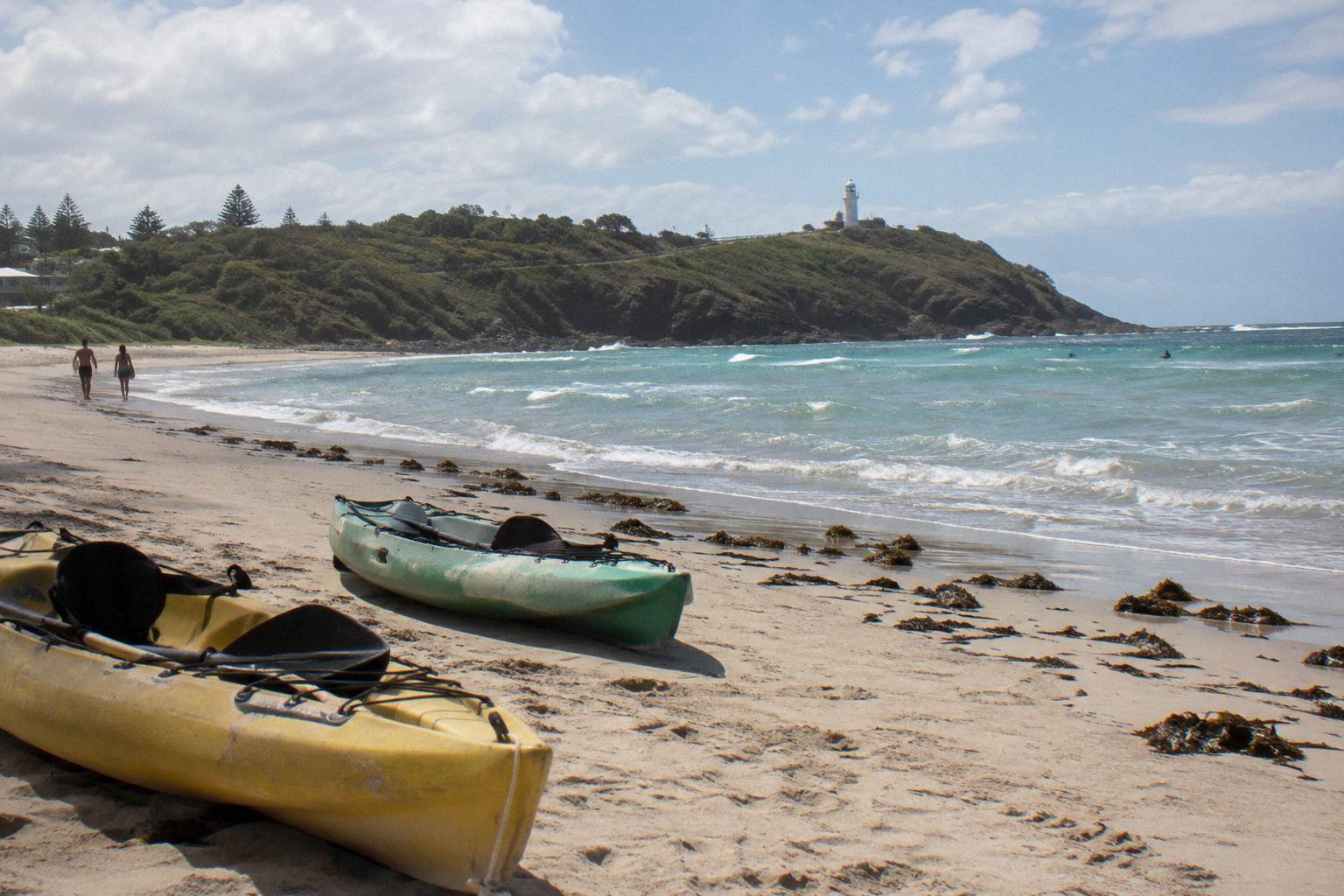
Neither kayak operator says anything about sharks on its pages: no species, no sighting claims and no safety figures. The sources that describe these tours state their safety case differently, through surf lifesaver guides, life jackets on every paddler, sit-on-top double kayaks and fully guided group trips, never hire. The marine park's own agency, DPIRD, describes Cape Byron Marine Park as "home to many fascinating animals, including sharks, rays, turtles, eels, starfish and corals", which is the only official mention of sharks anywhere in the material. The rest of the shark question is not stated anywhere, and the booking desk is the place to ask it.
The short version for a nervous booker: the two ocean tours, Go Sea Kayak, Dolphins And Turtles and Guided Dolphin Kayak with Cape Byron Kayaks, are guided group paddles inside a regulated marine park, led by people both operators describe as surf lifesavers. Nobody on either page promises a shark-free sea, and no page should, because conditions and wildlife belong to the day. Check availability if the guided format answers the worry, and read on for what each operator states, rule by rule.
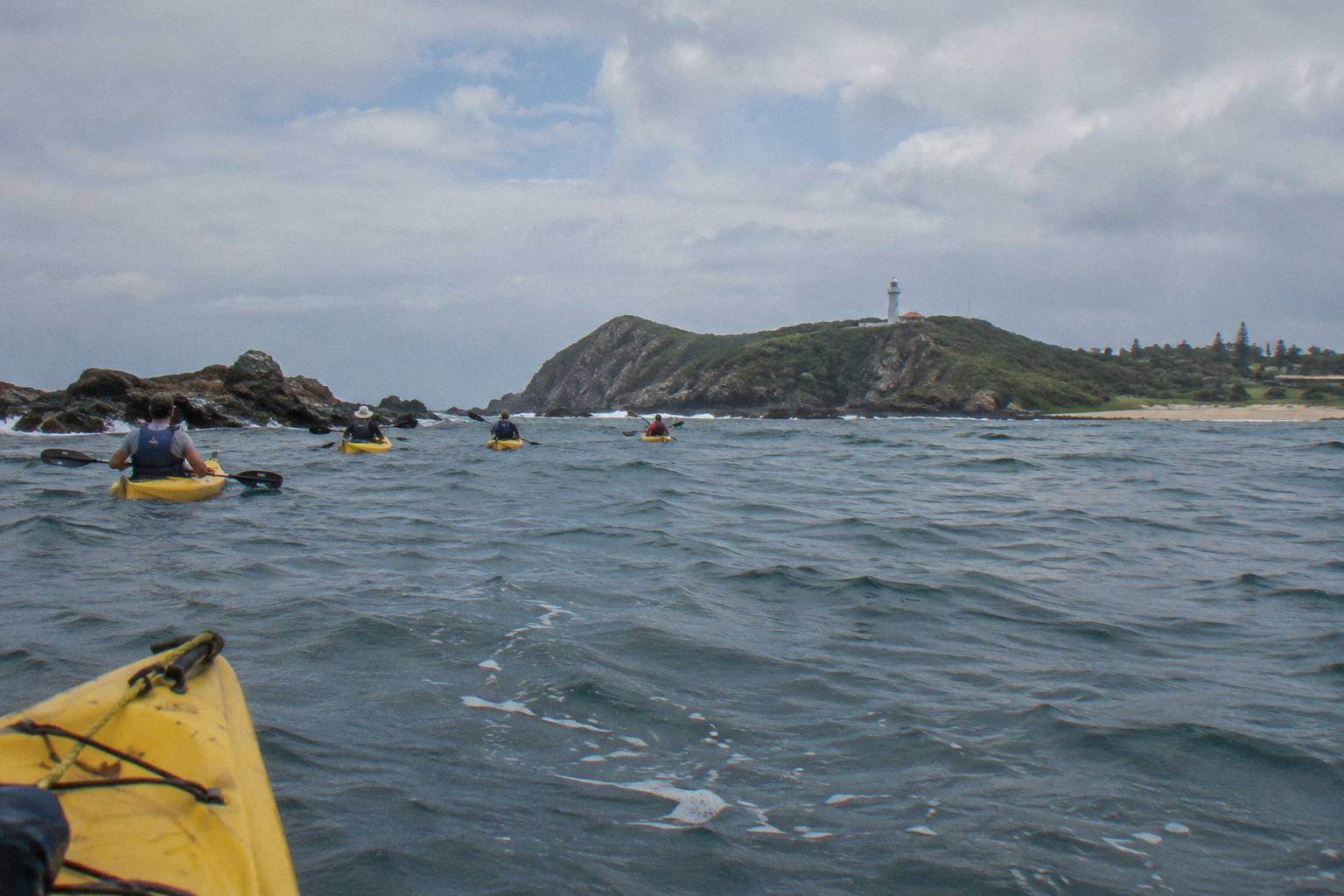
Yes, sharks do live in the waters of Cape Byron Marine Park, and the DPIRD officially lists them among the park's marine animals. However, neither of the two kayak tour operators publishes any information about shark sightings, the species you might encounter, or the level of risk on their tours. That absence is the whole documented answer. What the sources do state is a safety structure: both ocean tours are guided only, with no kayak hire of any kind, both operators describe their guides as surf lifesavers, and both put life jackets on paddlers. Go Sea is owned by Kurt Tutt of Byron Bay Surf Life Saving Club, in the operator's own words, and the National Parks service lists both companies as licensed commercial tour operators. Nothing in the available material rates, counts or compares shark risk, and no such figure appears here.
Start with what an official source actually says, because it is the only shark mention in the entire set. The NSW Department of Primary Industries and Regional Development describes the marine park in one line: "home to many fascinating animals, including sharks, rays, turtles, eels, starfish and corals" (DPIRD, Cape Byron Marine Park). That is a statement about a wild ocean park of thousands of hectares, not about a kayak tour's track record, and it is the honest limit of what any source here claims. Sharks share the sea the tours paddle in; the tours' pages simply do not discuss them.
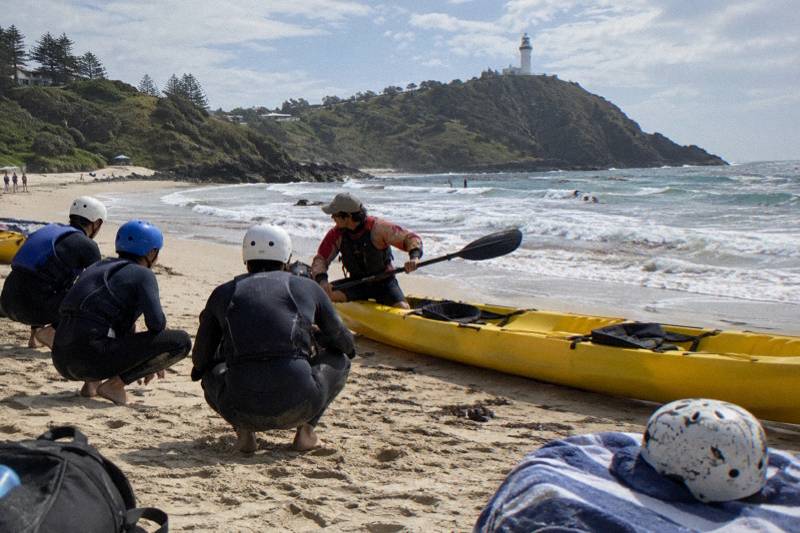
If the question behind the question is "how do the operators handle safety at all", the answer sits in the tour format rather than in wildlife statistics. Cape Byron Kayaks states that its trips are fully guided group tours and that it does not rent kayaks, and Go Sea says the Byron coastline is not suitable for rental kayaks, so every paddler on either tour is with a guide the whole time. Both operators describe their guides as surf lifesavers. For readers weighing the wider risk picture, the Byron Bay kayak tour safety guide gathers the stated requirements in one place.
Ask the operator the shark question directly when booking; neither page pre-empts it. What follows is everything else the sources do state about how these tours are run, who they suit, and the rules of the park they paddle in.
What The Operators State About Safety On The Water
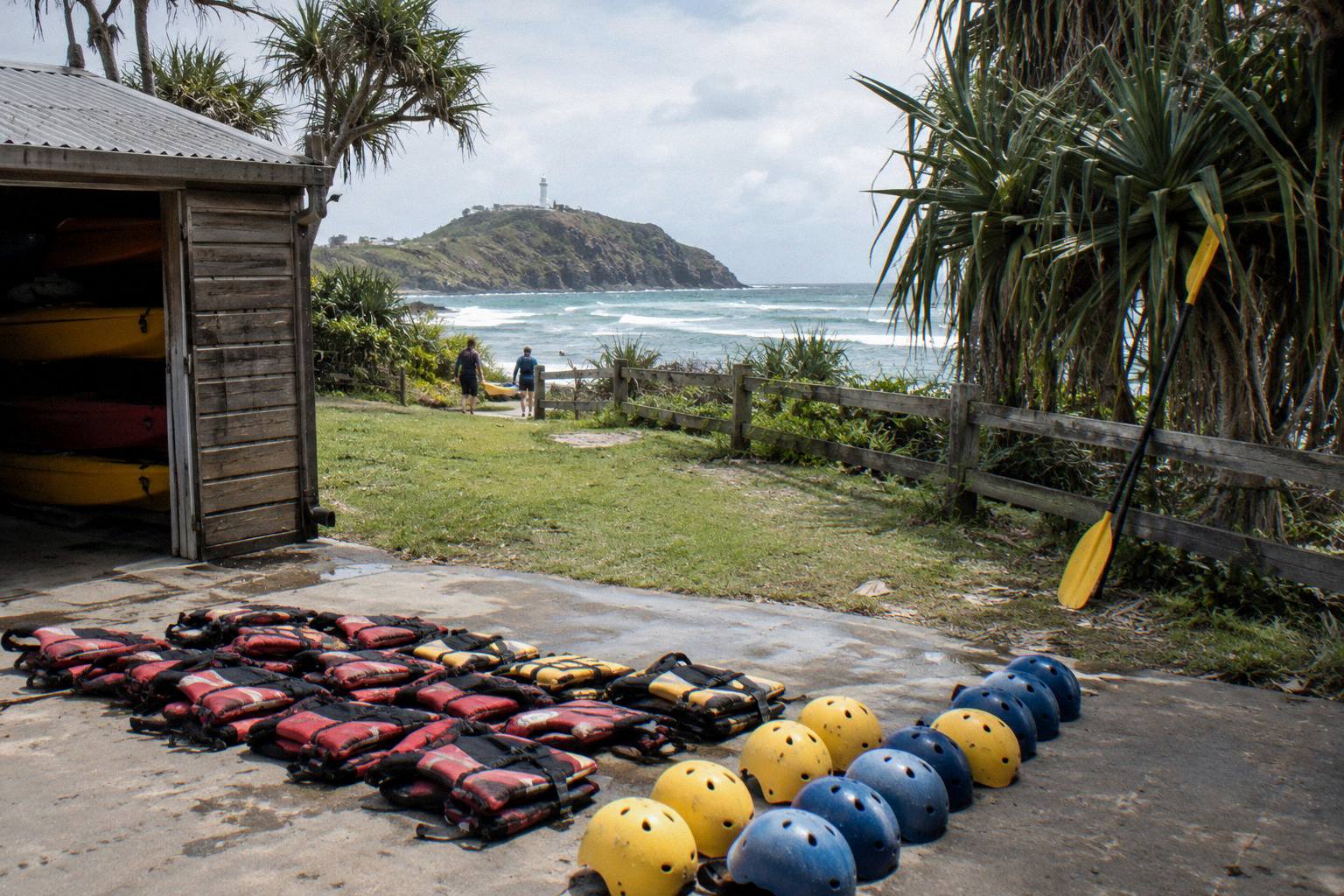
According to the operators, their stated safety case on the water rests on four points: every guide is a surf lifesaver, all paddlers are provided with life jackets, the kayaks are sit-on-top doubles, and trips run in a guided-only format with no hire. Go Sea says life jackets go on everyone and that non-swimmers are welcome once they tell the guide. Cape Byron Kayaks supplies lifejackets and helmets, and states non-swimmers are not accepted on its ocean tour at all. The National Parks service rates the Go Sea tour's difficulty as Medium and cautions it is not recommended for people with chronic back injury or pregnant women. Beyond that, no operator page makes a numerical safety claim of any kind.
Neither operator's page treats sharks as a topic, which is worth a plain reading rather than an assumption. A reader who wants to know whether guides carry deterrents, follow a protocol, or log sightings will find nothing stated, and the booking desk is the right place for that question before paying. The one comfort the sources do offer is structural: a paddler on these tours is never alone on the water, always in a double kayak with a partner or guide, always wearing a life jacket, and always inside a group led by someone both operators call a surf lifesaver.
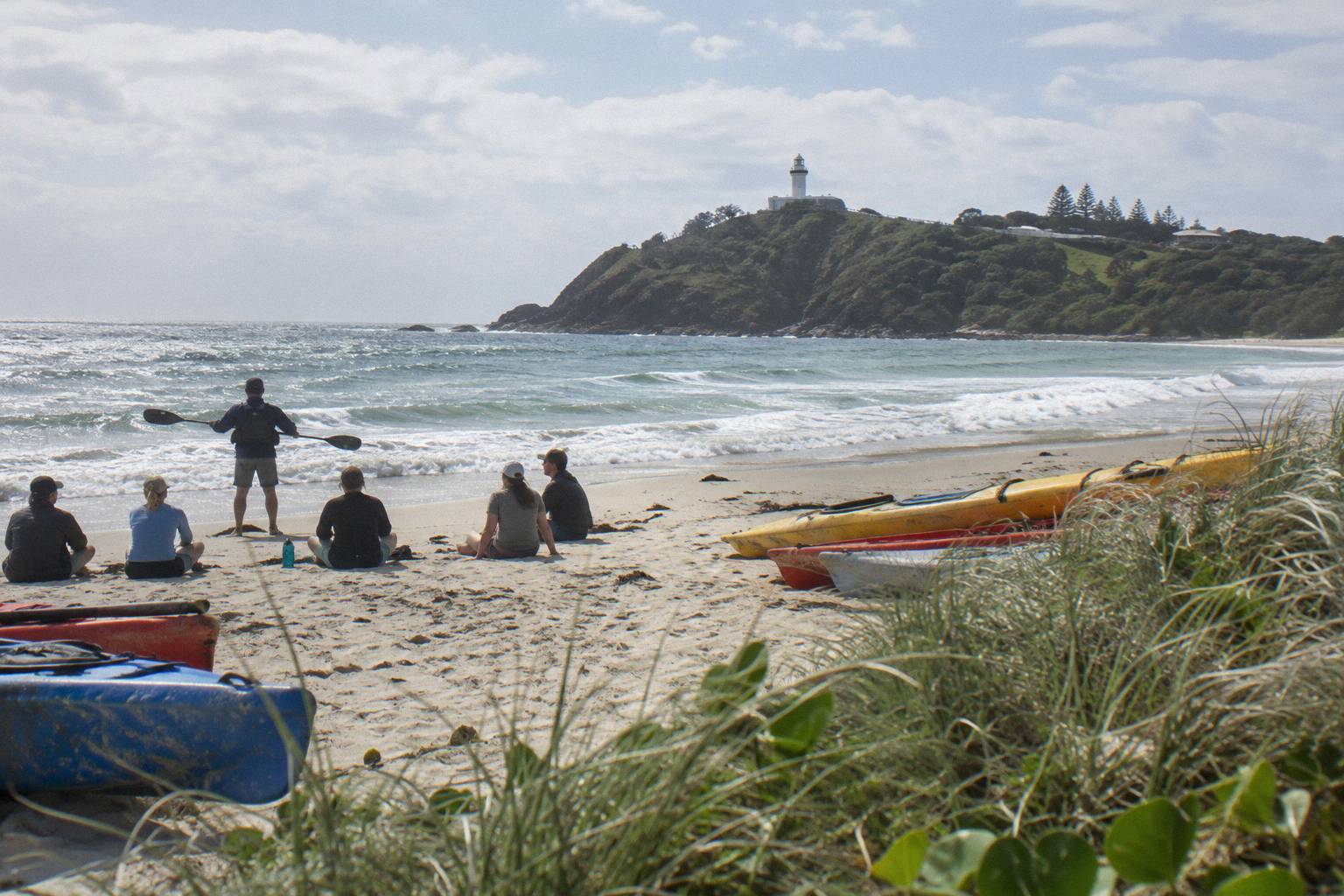
The two operators frame their safety details differently, so keep them separate rather than blending them into one rule. Go Sea's FAQ accepts non-swimmers and says the crew is told, life jackets are on all, and its own home page recommends the calmer Brunswick River tour for anyone unsure in the surf. Cape Byron Kayaks takes the opposite line on swimming: no non-swimmers, escorted back with no refund, and confident open-water paddlers only. The can non-swimmers do a Byron Bay kayak tour question gets its own full treatment elsewhere; the point here is that both operators set explicit, stated, different bars.
Weather cancellation is the other stated safety mechanism. Go Sea cancels for unsafe wind or large swell and says rain is often fine, and direct bookings get a full refund if the operator cancels for unsafe conditions. Cape Byron Kayaks says rain does not stop its tours, dolphins being permanently wet, and its wildlife guarantee return tours need 24 hours notice to rebook. Neither page frames cancellation around wildlife; it frames it around wind and swell. More detail on that sits in the Byron Bay swell and cancellations guide.
| Stated safety element | Go Sea ocean tour | Cape Byron Kayaks ocean tour |
|---|---|---|
| Guide type | Surf lifesavers, per operator | Surf lifesavers, per operator |
| Life jackets | On all paddlers, non-swimmers accepted | Lifejackets supplied, plus helmets |
| Non-swimmers | Accepted, tell the guide | Not accepted, escorted back, no refund |
| Kayak type | Mostly sit-on-top doubles | All double sit-on-top kayaks |
| Hire option | None, coastline not suitable for rental | None, fully guided group tours only |
| Stated difficulty | Medium, per National Parks | Not stated |
Who Each Tour Suits: Ages, Swimming And Fitness
The two ocean tours set different bars, and the sources never merge them: Go Sea takes children from 5 with an adult and accepts non-swimmers, while Cape Byron Kayaks takes children from 5 at one adult per child, requires paddlers 16 and over to swim 25 metres unassisted, and refuses non-swimmers. The Brunswick River tours drop the minimum age to 3, and the whale watching boat tour, which never leaves the deck, is simply not recommended for under 5s, back problems or pregnancy. No operator states an upper age limit anywhere. Anyone with a medical condition gets the same advice from every angle: check with a doctor and tell the operator when booking.
The swimming rules deserve exact wording because they differ sharply. Cape Byron Kayaks' FAQ says all participants aged 16 and over must be capable of swimming 25 metres unassisted, while its booking page words it as 18 and over; give both readings their source and ask the desk which applies to your group. Go Sea's FAQ says the opposite in plain terms: it often has non-swimmers, they wear life jackets, and the guide is told at booking or on arrival. A nervous swimmer therefore has a real choice between operators, not a single industry rule.
Fitness and medical wording differs too. Cape Byron Kayaks asks for a reasonable level of fitness and lists back, neck, shoulder, hip and heart conditions and pregnancy as participate at your own risk. Go Sea does not recommend kayaking after 15 weeks of pregnancy, and the National Parks page for its tour adds the chronic back injury caution. The stand up paddle nature tour requires paddlers to be able to swim and be comfortable around water. For the fuller suitability picture across ages, the Byron Bay kayak tour with kids guide works through family bookings.
For a traveller whose shark worry is really a deep-water worry, the river options change the question entirely. The Brunswick River scenic and sunset tours with Go Sea run about 2 hours on flat water with a minimum age of 3, and Go Sea itself recommends the river for non-swimmers. The kayak tour versus SUP and hire comparison covers the calmer formats side by side.
| Tour | Minimum age | Swim requirement | Stated fitness note |
|---|---|---|---|
| Go Sea ocean tour | 5, children with an adult | None, non-swimmers accepted | Not recommended for chronic back injury or pregnancy after 15 weeks |
| Cape Byron Kayaks ocean tour | 5, one adult per child under 16 | 25 m unassisted at 16 or over per FAQ, 18 or over per booking page | Conditions and pregnancy at own risk |
| Brunswick River tours | 3 | None stated | Not stated |
| Stand up paddle nature tour | Not stated | Must be able to swim | Not stated |
| Whale watching boat tour | Not recommended under 5 | None | Not recommended for back problems or pregnancy |
The Marine Park Rules That Shape Every Paddle
Both dolphin kayak tours paddle inside Cape Byron Marine Park, where zoning rules govern every stroke: sanctuary zones cover 6,118 hectares, or 27.5% of the park, while habitat protection zones add another 4,271 hectares, or 19.2%, including East Cape Byron. Those boundaries set where each tour travels and how paddlers behave on the water. The June 2018 zoning user guide states sanctuary zones are no-take and that activities which do not harm animals, plants or habitat are permitted, which is the legal frame the tours operate inside. Both kayak operators hold the licences commercial operators need: National Parks lists them as licensed commercial tour operators, and Cape Byron Kayaks cites the Cape Byron Conservation Area Trust, Byron Shire Council and NSW Maritime. (DPIRD zones and regulations.)
The zoning detail matters to a nervous reader for one reason: the park is a managed place with rules written down, not open water where anything goes. The user guide also records that commercial vessels will not be granted whale watching permits east of Cape Byron or within 1 km of the Cape Byron Lighthouse, a constraint on boats rather than kayaks, but one that shapes where the whale-season traffic concentrates. The Cape Byron Marine Park kayak guide unpacks the zones at full length.
One caution on licence claims: no source documents any Byron Shire rule about commercial launches at Clarkes or Main Beach beyond the licences above, so claim none. NPWS places the Cape Byron Kayaks tour from Clarkes Beach, in Walgun Cape Byron State Conservation Area, a short walk from the town centre, and Cape Byron Kayaks itself says the tour leaves Clarkes Beach and catches up with the dolphin pod at Wategos Beach. Go Sea checks in opposite 58 Lawson Street at Shed 1; Cape Byron Kayaks at Shed 2, opposite 60/62 Lawson Street. Everything else covered here is indexed on Byron Bay Dolphin Kayak.
How Close Can A Kayak Get To Dolphins And Whales?
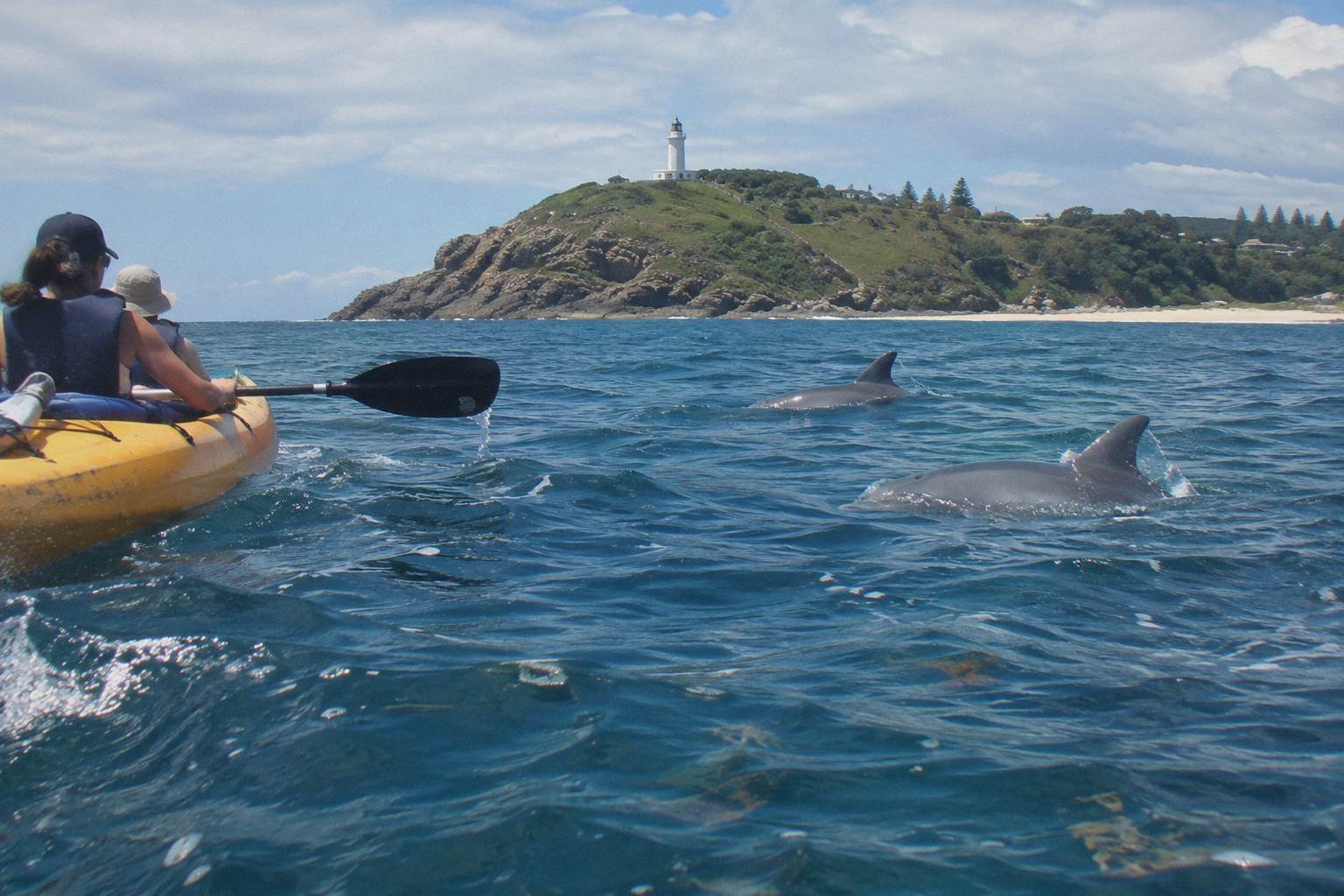
NSW approach rules count a kayak as a vessel: no closer than 50 metres to a dolphin and 100 metres to a whale, with caution zones at 150 metres and 300 metres respectively, and a kayaker may never deliberately approach a dolphin closer than the limit. The rules come from NSW Environment and Heritage, whose vessel definition explicitly includes non-motorised boats, surfboards, surf skis and kayaks. Operators must approach from the side at least 30 degrees to an animal's direction of travel, never from behind and never waiting ahead, at constant slow speed with negligible wake. Only three vessels may sit in the caution zone at once, and if a calf is present, entry to the caution zone is not allowed (NSW Environment and Heritage approach distances).
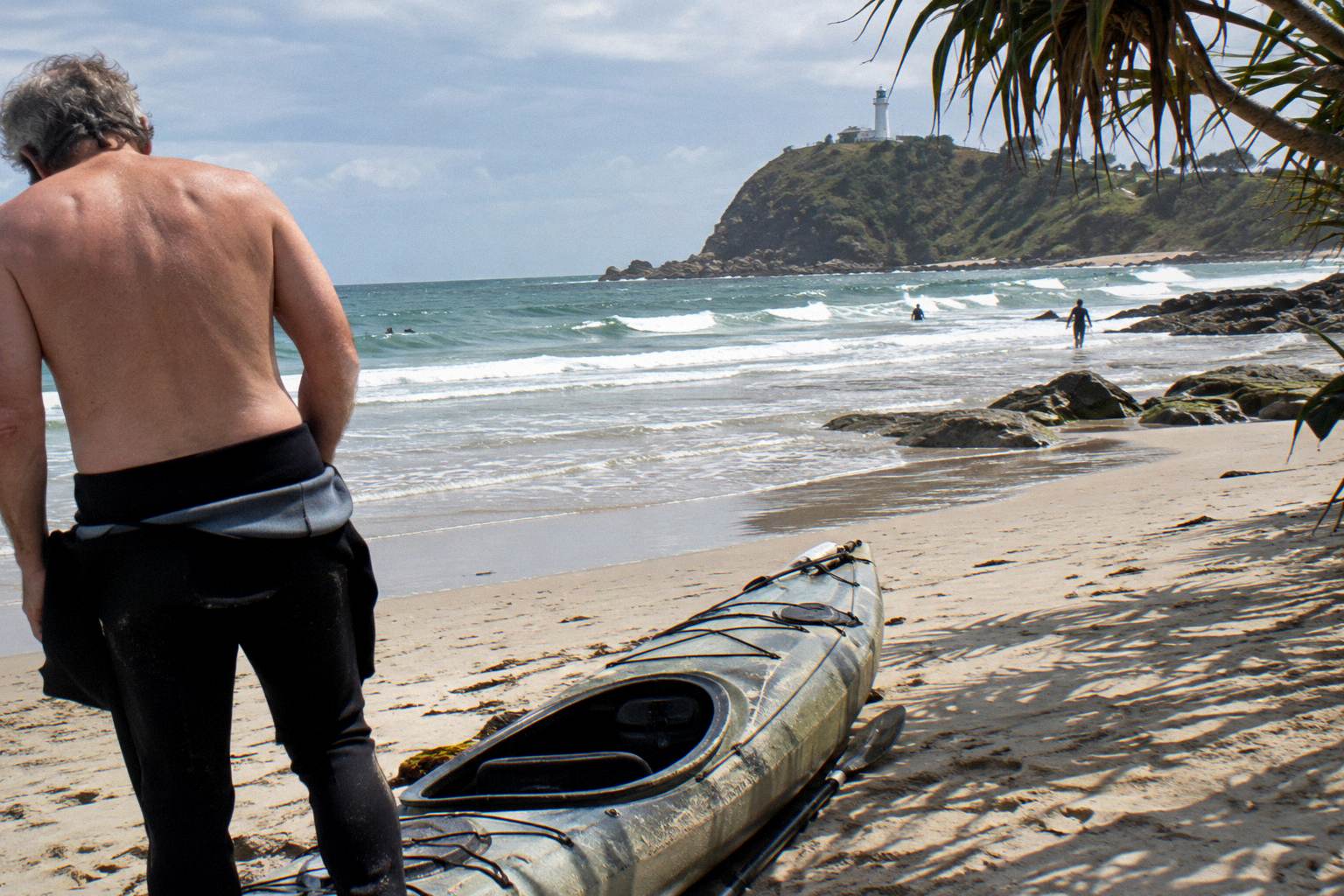
These distances answer a related worry nervous bookers often carry: the tours do not chase, touch or swim with the dolphins. Cape Byron Kayaks says it in its own words, observing strict rules about approaching wild animals in NSW and watching the dolphins from the kayaks. Swimmers in NSW may enter the water no closer than 50 metres to a dolphin, and once in the water must keep at least 30 metres away, so a swim-with-dolphins experience is not a product anyone lawfully sells here. The is it possible to swim with dolphins in Byron Bay question has its own article.
| Situation | Dolphin | Whale |
|---|---|---|
| Vessel, including kayak, no closer than | 50 m | 100 m |
| Caution zone radius | 150 m | 300 m |
| Calf present | No entering the caution zone | No entering the caution zone |
| Swimmers may enter water no closer than | 50 m | 100 m |
| Swimmer minimum distance in water | 30 m | 30 m |
| Mostly white animal | 500 m | 500 m |
The practical effect on the water: the guides position the group where dolphins commonly pass, hold the legal distances, and let the animals decide the rest. Cape Byron Kayaks says dolphins appear on about 90% of its tours, from a resident pod it numbers around 300, and its FAQ answers a straight No to "do you always see dolphins?". Go Sea says simply that most tours spot dolphins. Those are operator claims about dolphins, attributed, never promises, and the shark question has no equivalent claim from anyone.
A Quieter Option: The Brunswick River Tours
For a reader whose real hesitation is the open ocean rather than sharks specifically, the Go Sea Brunswick River scenic kayak tour runs about 2 hours on flat water from Brunswick Heads, minimum age 3, with life jackets included and no stated swim requirement. The meeting point is the Brunswick Heads Scout Hall on South Beach Road, a 20 minute check-in before departure, and Go Sea itself recommends the river format for non-swimmers. It carries no rating on its booking page, so nothing is said here about one, and no price is stated either: ask the operator.
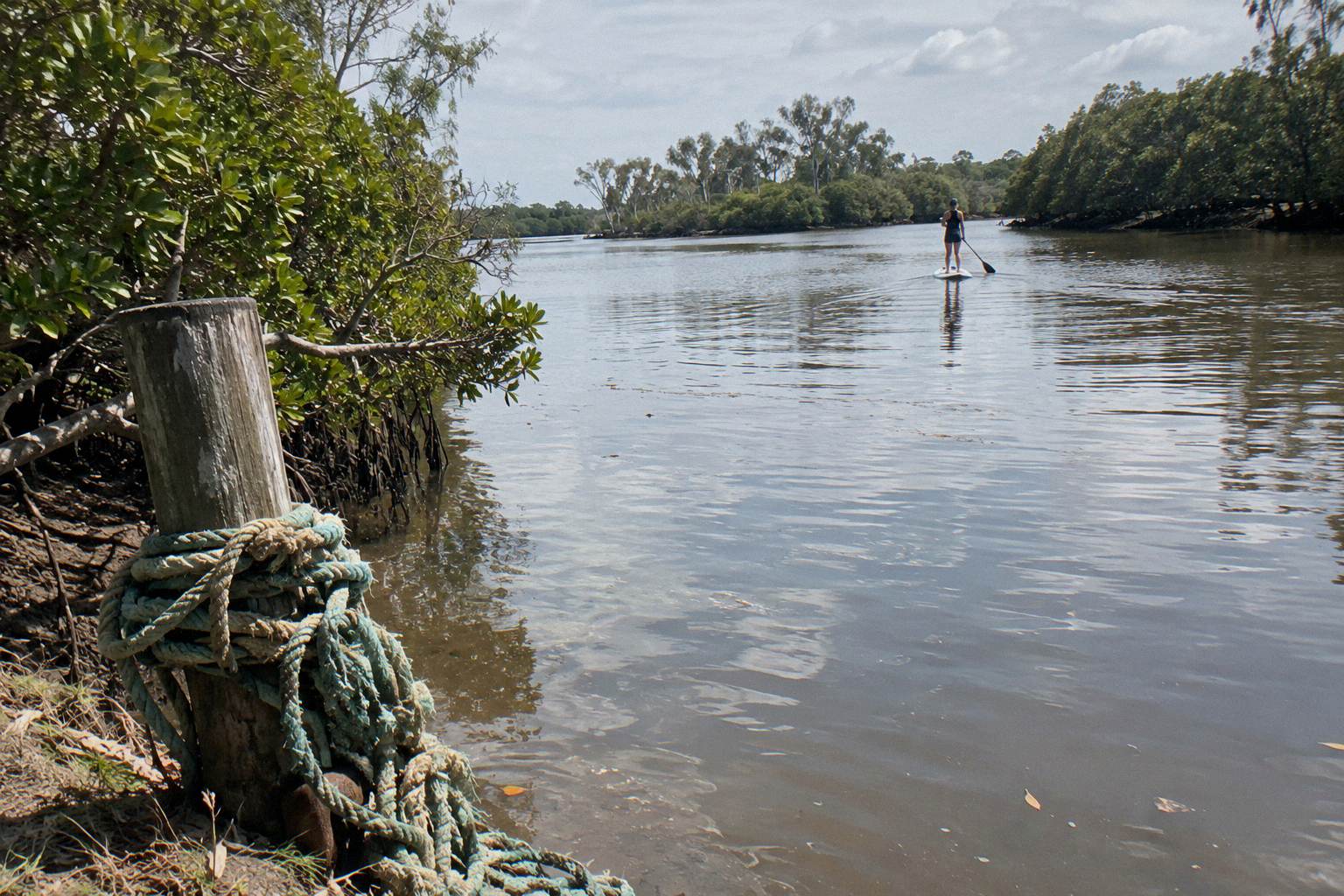
The river tours trade surf, swell and the wave-surf return for still water and mangrove edges, which changes the risk conversation completely without anyone needing to say the word shark. The sunset version runs from 40 South Beach Road on the riverside of the same hall, with a mix of single and double kayaks chosen on the day. Neither river tour involves dolphins or the open coast; they are adjacent days out, not substitutes for the ocean experience.
Deciding between the ocean and the river comes down to one question: is the goal dolphins in open water, or a calm paddle with wildlife on the banks? If dolphins are the point, the ocean tours are the only stated option, and the nervous energy is better spent on choosing the operator whose swim rules fit the group, both of which are covered above.
What Trips People Up Before The Dolphin Paddle
Almost every pre-paddle problem comes from the same four spots: assuming the two operators share one swim rule, expecting a promised sighting, mixing up the meeting points, and reading one price into a booking where only one price is stated. Nail down those four details and the rest of planning tends to fall into place. Cape Byron Kayaks refuses non-swimmers while Go Sea welcomes them, so a family with one hesitant swimmer must pick carefully. No tour guarantees dolphins; both ocean operators instead offer a free return tour, never a refund, if the wildlife promise is missed. The two ocean tours check in at different sheds on Lawson Street, and the river and boat tours leave from Brunswick Heads and Ballina entirely. Only Go Sea states a booking-page price, from AUD 59 per person, changing by date; every other figure is asked for at the desk.
The swim-rule mismatch deserves the most attention because it is the one that turns people away on the day. Cape Byron Kayaks' FAQ says 16 and over must swim 25 metres unassisted; its booking page says 18 and over; a family with a strong 17-year-old swimmer should confirm which applies before booking. A non-swimmer on that tour is escorted back without a refund, in the operator's own words. Go Sea's tour instead pairs non-swimmers with a life jacket and a told guide. Neither rule is softer or stricter in the abstract; they simply serve different groups.
Second, treat the wildlife guarantee as a return ticket, not insurance. Cape Byron Kayaks' no-dolphins policy is a free, non-expiring, non-transferable return tour, rebooked by phone with a card hold. Go Sea's version lets you paddle again for free if no dolphin, turtle or whale appears. Neither is money back, and both need the operator's stated notice windows for cancellation. The what happens if no dolphins appear article walks through the mechanics.
Third, arrive at the right shed. Go Sea meets opposite 58 Lawson Street, Shed 1, at least 20 minutes before departure. Cape Byron Kayaks checks in at Shed 2, opposite 60/62 Lawson Street, 15 minutes early, then leaves from Clarkes Beach. Fourth, budget from the one stated number: Go Sea's from AUD 59 per person, with every other tour priced on request. Bring what the operators list, bathers, towel, sunscreen, hat and a small water bottle for Go Sea, and let the what to wear and bring guide handle the rest.
The choice between the two ocean tours rarely comes down to safety claims, since both state surf lifesaver guides, life jackets and doubles. It comes down to the swim rule, the group's ages, and price, of which only Go Sea's from AUD 59 is stated. A reader still uneasy about open water after all of the above has the river tours at Brunswick Heads, flat, family-priced on request, and aimed from age 3 upward, or the whale watching boat from Ballina, which asks no swimming of anyone.
Common Questions About Sharks On A Byron Bay Kayak Tour
Are There Sharks On A Byron Bay Kayak Tour?
Sharks live in Cape Byron Marine Park, and DPIRD names them among the park's animals, but neither kayak operator states anything about shark sightings, species or risk on its tours. The stated safety case is surf lifesaver guides, life jackets, double sit-on-top kayaks and a guided-only format. Ask the operator the question directly when booking.
Do The Byron Bay Kayak Tours Guarantee Dolphins?
No tour guarantees dolphins. Cape Byron Kayaks says dolphins are seen on about 90% of its tours and answers No to always seeing them; Go Sea says most tours spot dolphins. Both offer a free return tour, never a refund, if the wildlife promise is missed.
Can Non-Swimmers Join A Dolphin Kayak Tour?
Go Sea accepts non-swimmers who tell the guide; life jackets go on everyone, and Go Sea recommends its Brunswick River tour for non-swimmers. Cape Byron Kayaks does not accept non-swimmers and requires paddlers from its FAQ's age of 16, its booking page's 18, to swim 25 metres unassisted.
Are The Kayak Tours Guided Or Can You Hire A Kayak?
Both ocean tours are guided group tours only. Cape Byron Kayaks states its tours are fully guided, and Go Sea says the coastline is not suitable for rental kayaks. No hire option exists with either operator.
How Close Does The Kayak Get To The Dolphins?
Under NSW approach rules a kayak is a vessel and may go no closer than 50 metres to a dolphin, with a 150 metre caution zone, no approaching from behind or waiting ahead, and no entering the caution zone when a calf is present. The tours observe the dolphins from the kayaks; there is no swimming with them.
What Cancels A Byron Bay Kayak Tour?
Unsafe wind or large swell cancels the ocean tours; both operators say rain is usually fine. Go Sea gives direct bookings a full refund when it cancels for unsafe conditions, and both operators offer free return tours when the wildlife promise is missed, subject to their stated notice windows.